
Autumn = pumpkin season! As soon as autumn starts, we bring the pumpkins back home for soup, curry, casseroles and of course Halloween. But then always comes that task: do you really have to peel such a pumpkin? Good news: for different types, the peel can simply stay on. That saves work and waste. There is only one important point to keep in mind when you want to eat a pumpkin with the skin on.
Can you eat the peel of a pumpkin?
The short answer: yes, you can eat the peel of many edible pumpkin varieties. Whether it is tasty depends on the type, ripeness, and how you prepare it. The peel of a bottle pumpkin, an orange Hokkaido, a winter pumpkin, and a green kabocha are usually soft enough to eat during cooking or roasting. With a young pumpkin, the peel is often thinner and softer than with an older one. The peel of a spaghetti or nutmeg pumpkin can, on the other hand, be thick, fibrous, or tough. As for the taste and texture, we think that for the latter two: no, we’ll leave the peel alone.
Here's what you need to know about pesticides on pumpkins
However, there is an important point to consider when it comes to pumpkins. When setting the legal limit for pesticide residues, it is assumed that you do not eat the pumpkin peel. Therefore, the focus has mainly been on the flesh. This is particularly noticeable because the peel of a bottle gourd simply disappears in many people’s soup or casserole dish. Eating a pumpkin with the peel once is not a problem according to the Food Safety Agency. If you leave the peel on more often? Then choose preferably an organic pumpkin. These are now also often available in regular supermarkets and can be identified by the organic seal, sometimes as a brand on the peel. Wash the pumpkin – also an organic pumpkin – under running water for 15 to 20 seconds before use and clean the tough outer skin with a vegetable brush. This is done because on the peel also other dirt and pathogens There may be some that you can rinse off with water.


There are many varieties of pumpkins. Each has its own taste and preparation method. Two extremes are the organic supermarket pumpkins that you can even eat with the peel, versus the decorative pumpkins that are completely inedible.
Be careful with ornamental pumpkins
Since we’re talking about Halloween anyway: not every pumpkin is meant to be eaten. Ornamental pumpkins can contain toxic substances that have a very bitter taste and therefore belong only on the autumn table. Pumpkins from the supermarket or from the market that are sold as vegetables can be safely eaten. If the pumpkin comes from your own garden and it tastes strikingly bitter, spit it out and don’t eat any more of it. According to the Food Safety Agency, such bitter pumpkins can cause nausea, abdominal pain, vomiting and diarrhea, among other things.
Peel the pumpkin or not?
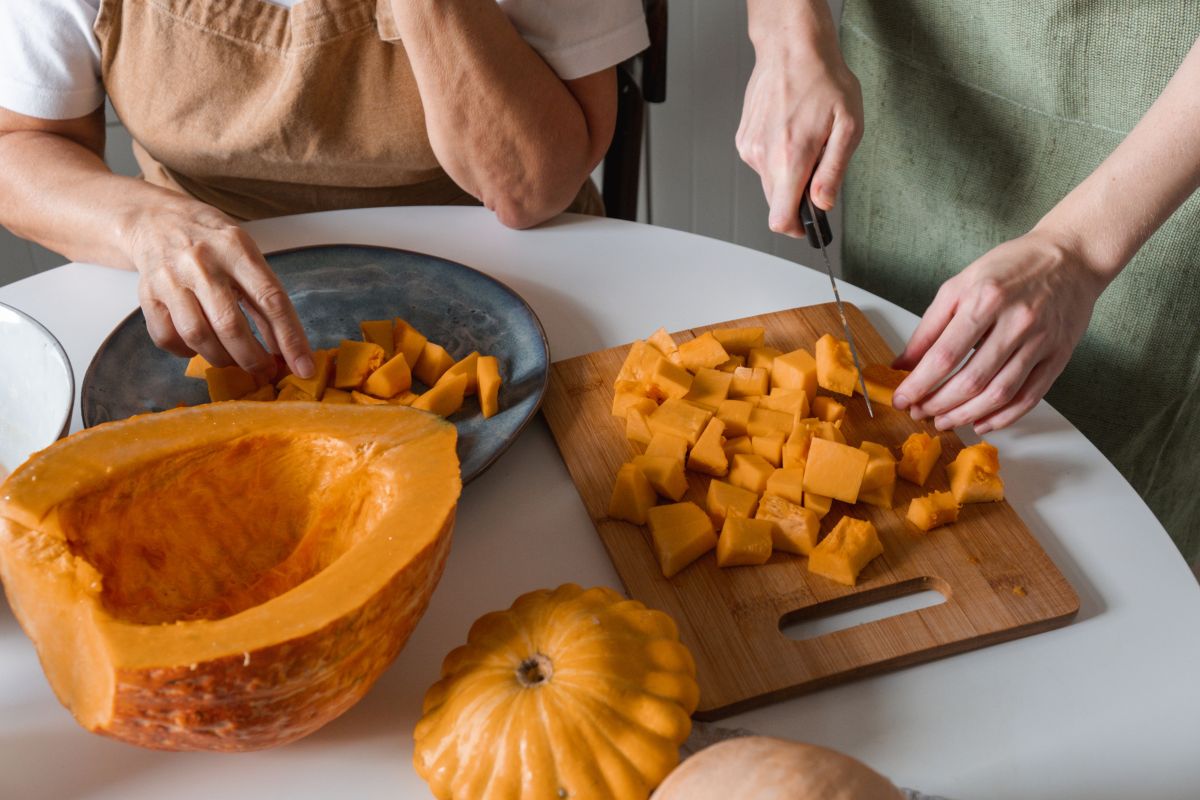
Are you planning to eat the pumpkin peel? Then always choose an organic pumpkin. If you have an organic bottle pumpkin, Hokkaido pumpkin, winter pumpkin or kabocha, you can usually save yourself the peeling process. Wash the pumpkin thoroughly, remove the seeds and cut it into pieces. The peel will soften naturally during cooking or roasting. Moreover, the peel contains fiber and useful plant compounds. This way you get something extra, throw away less and get ready faster. A win-win situation!
You might also find this interesting
- Also see: Is it better to peel fruit and vegetables because of pesticides?
- Also see: High or low pesticide use? These fruit and vegetables stand out!
- Also see: PFAS on fruit and vegetables, not a nice idea!
Sources: National Geographic, The Guardian, Scientific American, Discover Magazine, Consumer Reports, AD.nl, Nutrition Centre, World Cancer Research Fund, RTLnews.nl, Nutrition Centre. Photo credits: Cottonbro, Pexels (main image), rest: Sibel Barış, Pexels (pumpkin), Angela de Vlaming (hand-held organic pumpkin), Gundula Vogel, Pexels (decorative pumpkin).