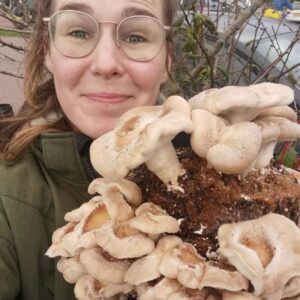
As soon as autumn begins and sweet chestnuts fall from the trees, it is time for this warming foraging recipe. This chestnut and wild mushroom soup is creamy, earthy and perfect for cold days. Made with sweet chestnuts (not to be confused with the inedible horse chestnut) and fresh wild mushrooms. Foraging expert Katja Wezel from wilderlust.nl show how to make a delicious autumn soup from it.
Sweet chestnuts versus horse chestnuts
In the Netherlands, two types of chestnut occur that are often confused: the sweet chestnut (Castanea sativa) and the horse chestnut (Aesculus hippocastanum). You know, those chestnuts you used to make little figures out of with cocktail sticks. And funnily enough, these two aren't even related to each other. The sweet chestnut is edible and has been used in cooking for centuries. The horse chestnut, on the other hand, is not edible and cannot be used in dishes.
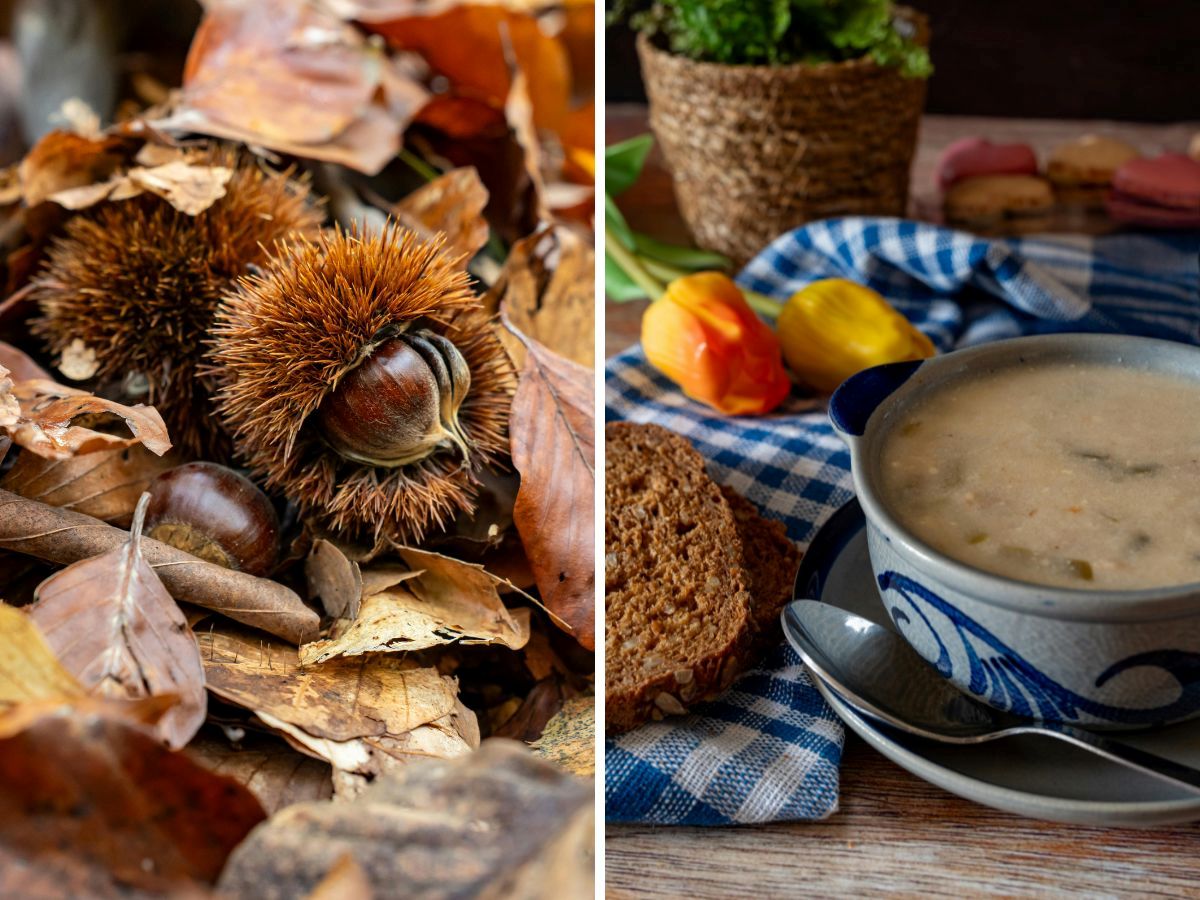
The sweet chestnut can be recognised by its hedgehog-like husk with many fine spines and by the tree's pointed, lanceolate leaves. The nuts are usually found in groups of two or three together in such a spiny husk. The horse chestnut, by contrast, has a hard husk with sturdy spikes, a palmate leaf and smooth, round nuts without the characteristic ‘tuft’ that you do see on sweet chestnuts. The husk of a horse chestnut usually yields only one or two nuts.
Where and when do you find sweet chestnuts?
The sweet chestnut is a widely planted tree in the Netherlands and is found mainly in parks and deciduous forests, particularly on nutrient-rich, damp soils. You will find it relatively often in the south-east of the country and on somewhat higher ground. The tree flowers in June and July, but as a collector you will hardly notice this. With this tree, it is all about the nuts. From September through to November, the chestnuts fall from the tree by themselves. Good news: you do not need to climb, therefore. It is, however, useful to wear gloves, because you often still have to open the prickly husk of the sweet chestnut yourself. Sometimes there are mainly empty or shrivelled husks under the tree, but keep searching: amongst them you will often also find fine, large and filled nuts.
What can you do with sweet chestnuts?
Only the nut of the sweet chestnut is edible. You can prepare them in various ways. You might know them from holidays, where roasted chestnuts are sold on the street. You can easily do the same at home: in the oven, in a pan, or by boiling them. Please note: always make a cut in the shell, otherwise the chestnuts will explode instead of roasting properly.
Once cooked, sweet chestnuts are wonderfully versatile. You can make chestnut puree, chestnut soup, chestnut cream for desserts or even a coffee substitute. Combined with mushrooms, that soft, slightly sweet flavour really stands out, which is exactly why this chestnut and wild mushroom soup is such a wonderful autumn classic. Here it is!
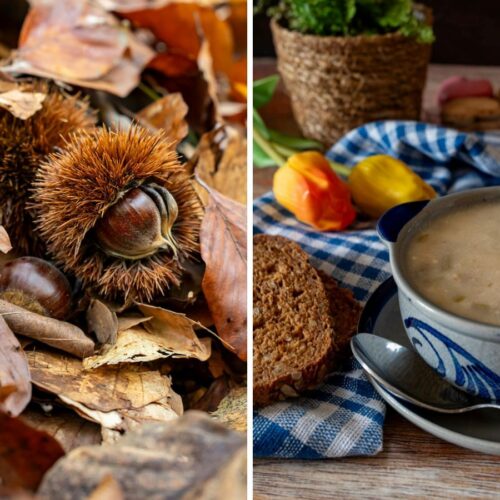
Chestnut and wild mushroom soup (with sweet chestnuts)
Kitchenware
- pan
- (saucepan)
- hand blender
- sieve
- cutting board
- knife
Ingredients
- 1 leeks
- 1 red onion
- 1 spring outing
- 250 g sweet chestnuts
- 100 g fresh porcini mushrooms
- 1 l mushroom stock
- olive oil
- salt and pepper
- small handful of chopped parsley
Instructions
- Cut a slit into each sweet chestnut and boil them until tender. Let them cool slightly and peel the chestnuts.
- Finely dice the red onion and slice the leek into rings.
- Heat some olive oil in a deep pan and sauté the onion and leek for about 6 minutes.
- Add the peeled chestnuts and mushroom stock, and leave the whole thing to simmer gently for 30 minutes.
- Meanwhile, slice the wild mushrooms and fry them in a saucepan with olive oil, salt and pepper until cooked.
- Finely slice the spring onion and add it to the mushrooms once they are off the heat.
- Blend the chestnut mixture with a hand blender for 30 minutes, then pass the soup through a sieve.
- Pour the soup into soup plates and place the mushroom and spring onion mixture in the centre.
- Garnish with chopped parsley and serve immediately.
Neat game picking
Foraging and creating your own recipes is great fun, but don't forget: foraging is officially forbidden in the Netherlands and is often only tolerated. In some places stricter rules apply or it's strictly prohibited. And you're also not allowed to pick certain species. So always forage with respect for nature: only for your own use, never take more than you need, and leave enough for animals and other nature lovers. Want to know more about what to look out for? Here is a handy overview of the game picking rules.
Would you also like to go on the road with Katja? Check out her website wilderlust.nl with all the information about its wild-picking walks and courses.
You might also find this interesting
- Also see: candied green figs.
- Also see: green tomato chutney.
- Also see: vegetable mushroom schnitzel.
Photo credits: left: Vladimir Srajber, Pexels (sweet chestnut), right: Guvo, Pexels (mushroom soup).