
Do you actually need to peel fruit and vegetables because of pesticide residues? We regularly get that question from readers. And honestly, we ourselves often stand doubting with a cucumber in one hand and the vegetable peeler in the other. Do you leave the skin on for the fibre and vitamins, or is it better to remove it just to be safe? Time to peel back the layers on this issue, pun intended.
Peeling fruit and vegetables because of pesticides: is that necessary?
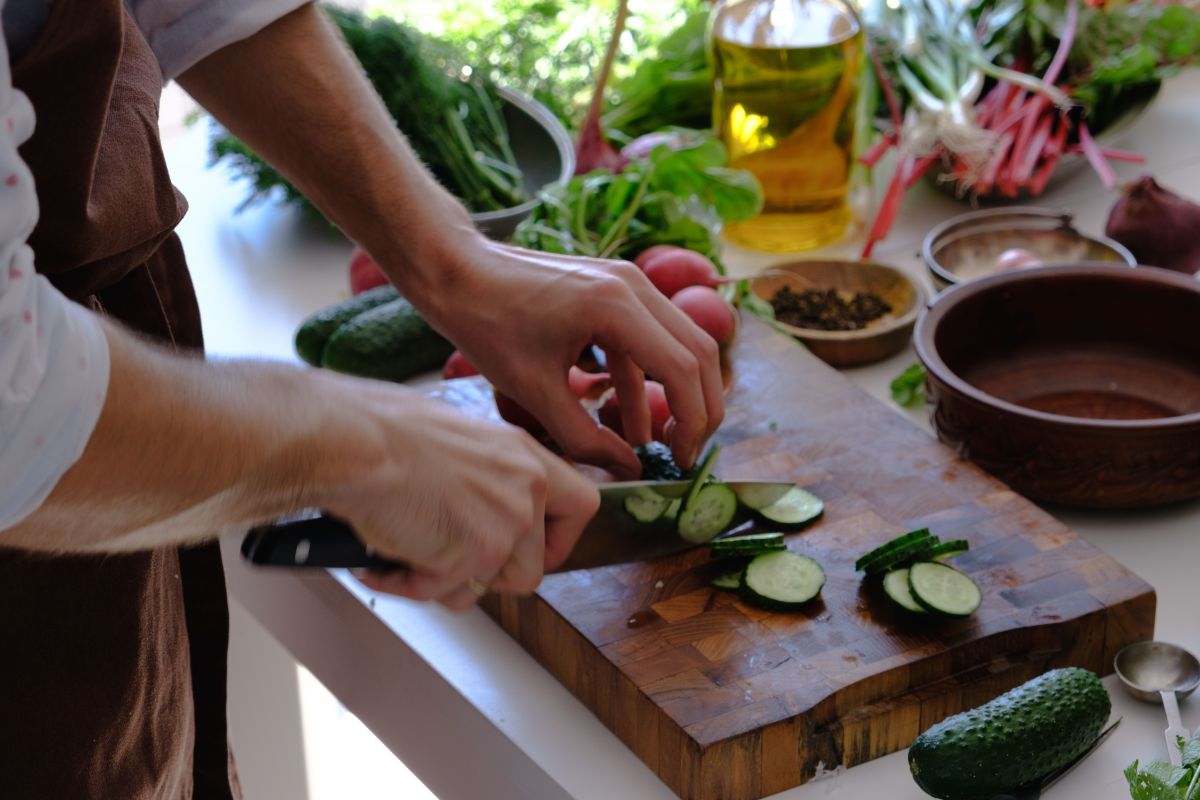
Let's start with the most important question: do you ingest fewer pesticides if you peel fruit and vegetables? Part of the residues on the outside does indeed disappear with the peel. But peeling is far from removing everything. After all, some pesticides are absorbed by the plant and are therefore also present in the flesh of the fruit. Moreover, for most types of fruit and vegetables, peeling is not necessary. In the Netherlands, strict rules apply to the amount of residues that are allowed to remain. For products whose peel we normally eat, such as apples, pears and cucumbers, the whole fruit, including the peel, is taken into account when establishing these standards.
How do we know that? The Netherlands Food and Consumer Product Safety Authority (NVWA) inspects fruit and vegetables for pesticide residues. Products of which we normally eat the outside are tested with the skin on. According to the Netherlands Nutrition Centre (Voedingscentrum), the health risks of the residues found in the process are negligibly small. In comparable measurements in America, fruit and vegetables are washed beforehand and sometimes peeled, just as you would do at home. The residues found there were therefore measured after a normal wash. It is not an unwashed apple straight from the tree. Washing and peeling therefore help, but do not remove everything.
Wash fruit and vegetables with baking soda or vinegar?
And baking soda or vinegar then? We are often asked whether that removes more pesticide residue. Research has been done into that too, it turns out! Baking soda makes the water less acidic and can therefore indeed help break down some pesticides on the outside. Acidic agents, such as vinegar, can actually work better for other pesticides. In a study on treated lettuce, for example, water with rice vinegar removed a significant portion of the pesticides. But what they also saw is that the result can vary per pesticide and also per type of fruit or vegetable. A smooth apple skin is simply different from a head of lettuce. Baking soda and vinegar therefore never guarantee the removal of all residues and do nothing against agents that have been absorbed by the plant. Long story short: hold fruit and vegetables under cold running water for 15 to 20 seconds, rub them clean and, in the case of firm skins, optionally use a clean vegetable brush. Soap or washing-up liquid is not necessary!
Are fruit and vegetables with their skins on healthier?
Then the other side of the doubt: by peeling it, are you also throwing away the healthiest part? We sometimes hear that, too. It is true that in and directly beneath the peel there are often extra fibre, vitamins and other useful plant substances. Exactly how much varies considerably depending on the type of fruit or vegetable. For example, a kiwi skin contains about twice as much fibre as the flesh, and about half of a potato's fibre is in the skin. Yet the familiar claim that almost all vitamins are found directly under the skin does not hold true for every type. The flesh also contains plenty of nutrients. For apples, cucumbers, courgettes and other types with a soft, edible skin, our conclusion after reading the research is therefore simple: just leave it on if you like it. Make sure you wash it thoroughly for 15 to 20 seconds first, though. This way you get some extra fibre, which is good for your bowels and keeps you feeling full for longer. Moreover, you throw less away and you are done more quickly. Not keen on the taste or texture? Then you can just peel it; the flesh remains healthy.
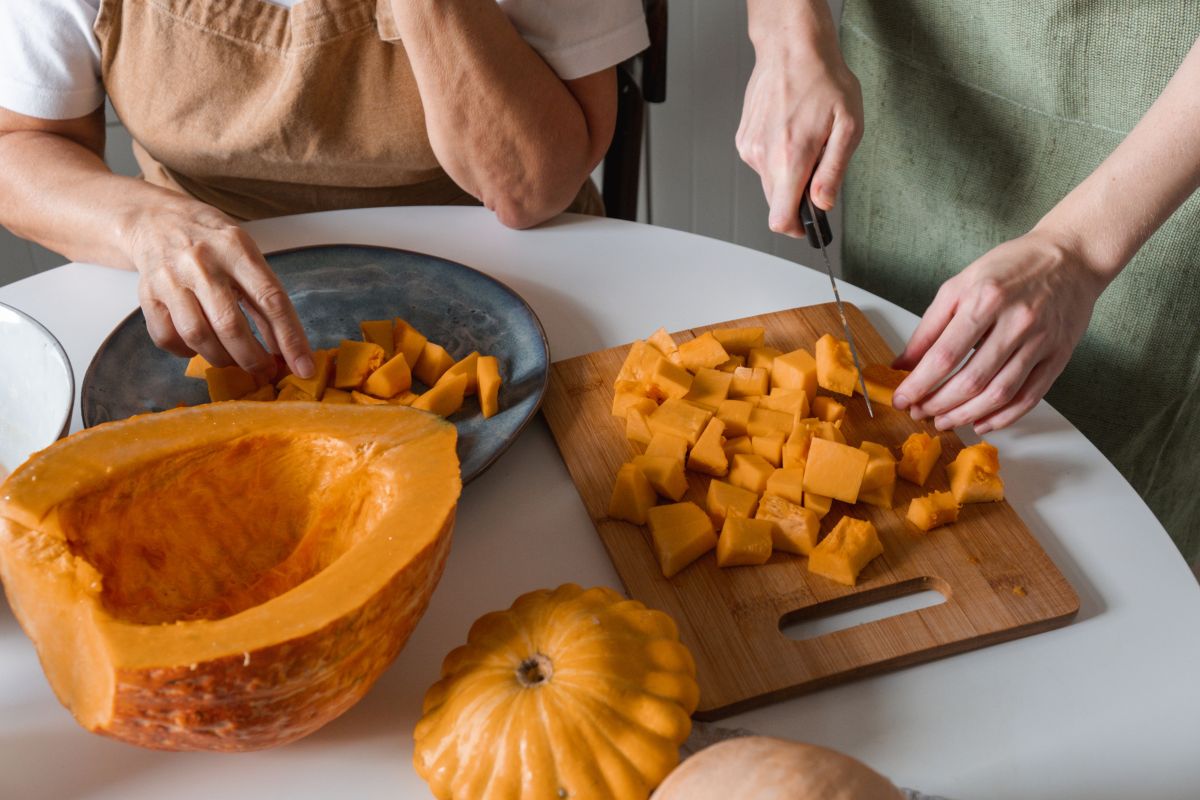
Another detail we had never considered: sometimes a skin can be perfectly edible, while the setting of the legal limit for pesticides assumes that you do not eat it. With pumpkin, therefore, the focus was mainly on the flesh, whereas the skin of a butternut squash in particular often becomes so soft during cooking that you can easily eat it. That does not mean a bowl of pumpkin soup with the skin included is suddenly unsafe. If you want to leave the skin on by default, the Netherlands Nutrition Centre does advise choosing organic.

Peeling your fruit to ingest fewer pesticides sounds logical. But unfortunately, pesticides are often already throughout the whole fruit.
To peel fruit and vegetables or not?
Now that we have completely peeled back the question, as far as we are concerned the vegetable peeler can simply stay in the drawer for an apple, cucumber, courgette and lots of other types of fruit and vegetables. Peeling because of pesticides is usually unnecessary. Moreover, with the peel you get some extra fibre and prevent food waste. Do wash fruit and vegetables for 15 to 20 seconds under running water and scrub firm skins clean with a vegetable brush if necessary.
Do you want to ingest as few pesticide residues as possible and leave the skin on? Then choose organic where possible. Especially with skins that have not been included when determining the legal limit, such as the skin of a butternut squash that you might just cook along with it. You should also wash organic fruit and vegetables, because with that you wash away dirt and potential pathogens. Simply not keen on the skin? Then you peel it off. Fortunately, fruit and vegetables also remain healthy without the skin. The most important advice from the experts: do not let worries about pesticides put you off eating fruit and vegetables. Non-organic fruit and vegetables are still a much better choice than no fruit and vegetables at all.
You might also find this interesting
- Also see: PFAS on fruit and vegetables, not a nice idea!
- Also see: High or low pesticide use? These fruit and vegetables stand out!
Sources: National Geographic, The Guardian, Scientific American, Discover Magazine, Consumer Reports, AD.nl, Nutrition Centre, World Cancer Research Fund, RTLnews.nl. Photo credits: Andrey, Pexels (main image). Ivasee, Pexels (peeling apples).