

One costume for one night, plastic spider webs for the window and a pumpkin that goes into the trash can after Halloween. In Great Britain and the United States, Halloween brings a lot of waste. Now we celebrate Halloween here less extravagantly, but replace the scary costume with a carnival outfit and the candy run with Saint Martin and it becomes quite recognizable. We take a look at Halloween: how polluting is the holiday and how can it be done with less waste?
How polluting is Halloween? British figures show this
How harmful Halloween really is cannot be quantified in one number. Costumes, food and decorations are by no means all made, used and discarded in the same way. But British research does provide insight into the waste pile behind the celebration. In 2017, the environmental organization Hubbub estimated that seven million Halloween costumes were thrown away in the United Kingdom annually. Two out of five costumes were only worn once. One night of trick-or-treating and that was it. That makes such a costume very fast fashion.
A creepy suit full of plastic
Such a witch’s dress or vampire mask is often just plastic in disguise. In a 2019 British sample, 83 percent of the material in Halloween costumes was plastic, mostly polyester. Add the millions of discarded costume suits and you arrive at a horror of over two thousand tons of plastic waste per year, according to the researchers. That’s just in the United Kingdom alone. That’s the same weight as 83 million plastic cola bottles. Scary? Quite so!
But the plot twist: luckily, a new outfit isn’t needed for a night of horror. Dive into the costume box or borrow the witch hat that lies in a friend’s attic. Add some black clothes and you’re ready to go. Did you go as a witch last year? No one really wakes up from that. And children who have outgrown their costumes are often perfectly happy with a swap day: take off their too-small vampire costume and swap it for a pirate costume from the next-door neighbor. Tip: The thrift store often has a nice selection of costume clothing, even for kids!
Millions of pumpkins that no one eats
Things get quite scary even with pumpkins. The same environmental group Hubbub estimated, based on a 2023 British survey, that over thirty million pumpkins would be bought each year for being crushed. Nearly sixteen million of those would not be eaten. A lot of soup that never makes it to the table, when all those pumpkins were grown and transported. Note: not every pumpkin is suitable for soup. Ornamental pumpkins are only for decoration and can even be toxic.
With a edible pumpkin, you can go two ways: a scary face in front of the door and something delicious on the table. And that’s already a tip: choose an edible pumpkin. The fresh fruit pulp that you cut off when you peel it can be used immediately in a soup, curry or casserole. No desire to peel it? Give a whole, edible pumpkin a face with loose paper eyes and a mouth. After Halloween, you can remove those and still use the pumpkin in the pan as long as it’s still good.
When reading about Halloween stories from abroad, you often read that thrown away pumpkins emit methane at the landfill. That occurs when organic material is broken down without oxygen. But you can’t just apply that waste route to the Netherlands. Here, residual waste is burned. Separately collected gft is composted or fermented first, in which case the biogas is collected. So take the candles and decorations out of your discarded pumpkin and put the leftovers in the general waste container.
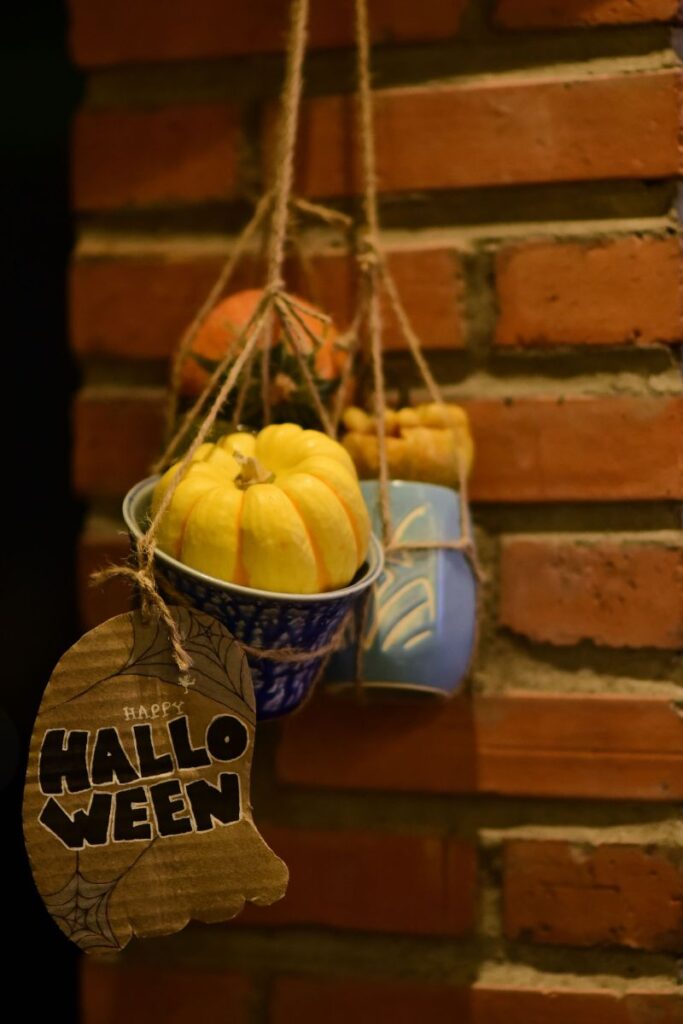
How polluting is Halloween: In the Netherlands it probably isn’t too bad, but worldwide the waste is huge! Choosing to eat an edible pumpkin that you can simply eat after Halloween is already a good step!
Plastic spiders are allowed to come out of the box more often
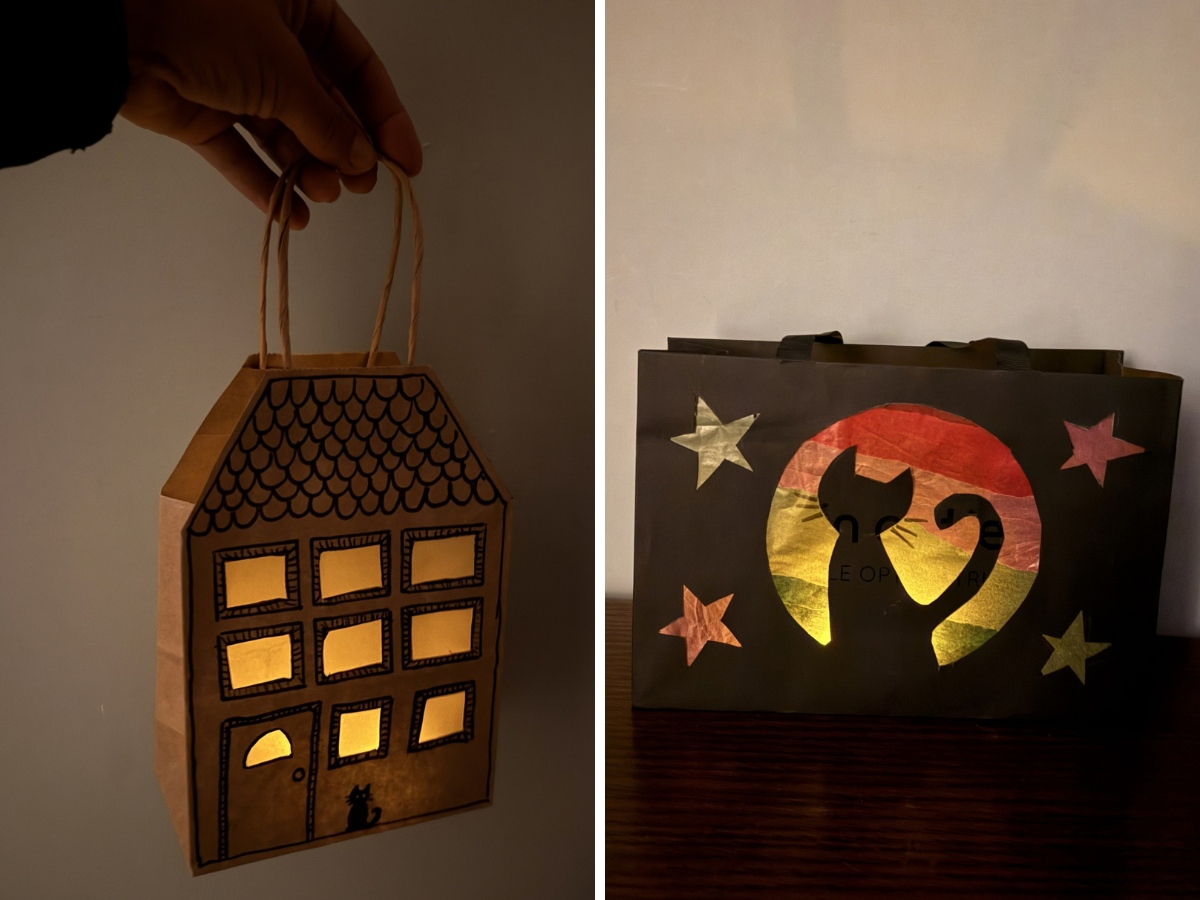
A skeleton by the front door, bats in the window and spider webs in the hedge: with Halloween you can really get creative. If you keep those things in a box in the attic for next year after October, that’s fine. But it really gets scary when everything goes in the trash after one night and you fill a shopping cart again a year later. So: that plastic decoration you already have can last for years. You don’t need to buy a wooden or paper version of it because it looks greener. Keeping everything together in a box saves searching next year and double purchases. Still have an empty corner? Take a look in the thrift store or cut out bats from old cardboard. A worn bedsheet can also serve as a ghost. Even a ghost doesn’t have to be new!
Giving out candy for Halloween without a mountain of extra packaging
Halloween involves candy, just like Saint Martin’s Day. And with all that candy often comes a lot of wrappers. Prepackaged candy creates more packaging waste, but when you go door-to-door it’s very practical and hygienic. So such a wrapper has a function. An extra serving bag with a ribbon and a plastic toy adds extra stuff. The candy itself is festive enough. At a party at home, you can simply place the candy or cookies on a tray. And for the candy run, that basket or last year’s bag can be used again. The loot still fits perfectly in there.
From Halloween to Saint Martin and Carnival
How much waste do Dutch Halloween celebrators produce, we are not told by these British figures. But the costumes, plastic decorations and candy wrappers are also recognizable here. Just like at Saint Martin’s Day and Carnival. The preparation for such a celebration can therefore be perfectly started in the attic, at the thrift store or in the neighbors’ costume box. There probably already has enough for a good party.
You might also find this interesting
- Also see: the coolest sustainable carnival outfits.
- Also see: looking for environmentally friendly makeup.
- Also see: Can you eat the peel of a pumpkin?
Sources: Hubbub, Fairyland Trust, Hubbub, @ecowithrada, Nutrition Centre, Milieu Centraal, Milieu Centraal. Photo credits: Daisy Anderson, Pexels (main image), rest: Sóc Năng Động, Pexels (pumpkin).