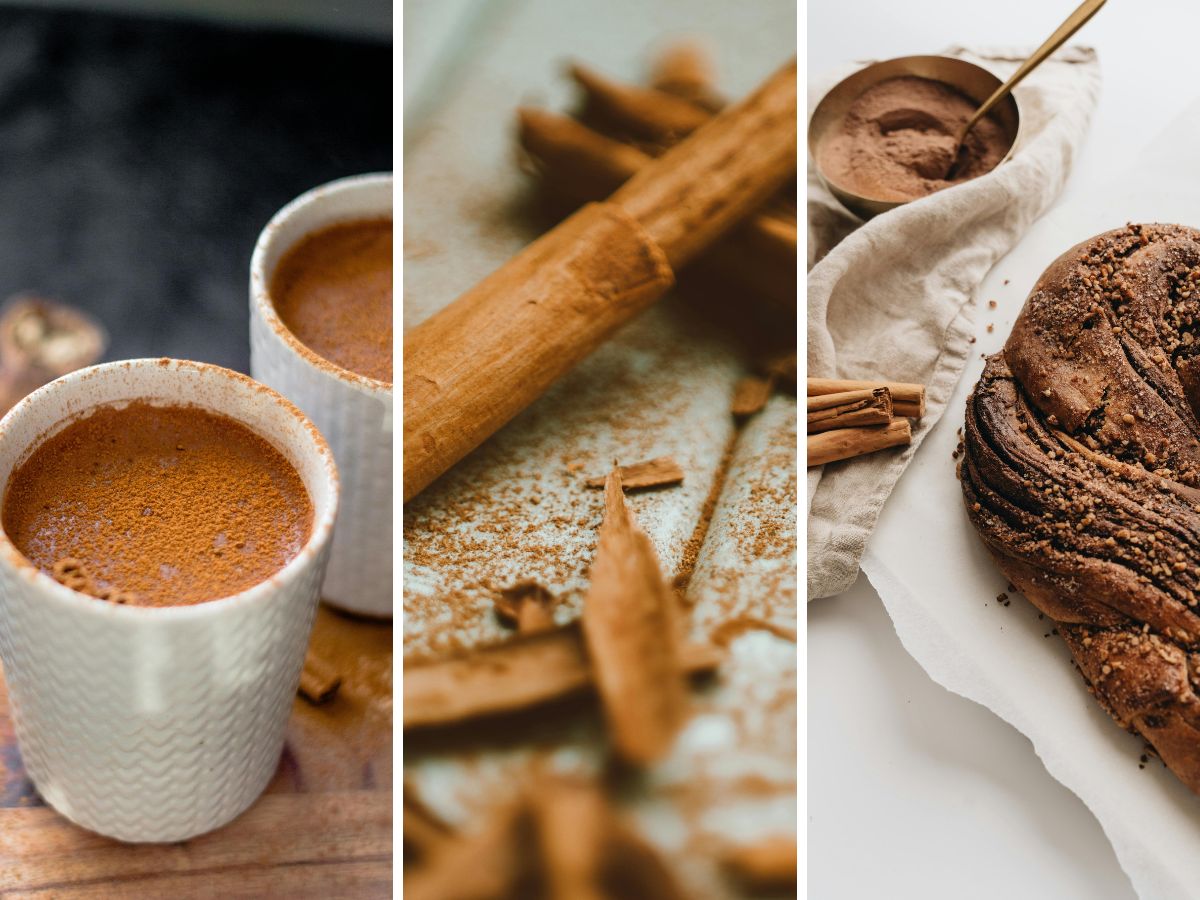

Cinnamon is one of the most popular spices in the world. And that's not surprising: you can use it in both savoury and sweet dishes. From apple pie to chilli. Did you know that different types exist? Sometimes it's called Ceylon cinnamon, sometimes Cassia cinnamon, but often just cinnamon. What is the difference between these types? And can you make a sustainable choice? We've found out for you!
Kaneel is een specerij gemaakt van de binnenbast van bomen uit het geslacht Cinnamomum.
Cinnamon is a spice and has been used for many years all over the world. It was already used in ancient Egypt and has also been written about in the Bible and Chinese writings. Cinnamon comes from a tropical tree, namely the bark of the cinnamon tree. The bark of the tree is used for making it. For this, the bark of the cinnamon tree is harvested and then the outer bark and middle bark are removed. What remains is the thin inner bark which rolls up by itself. These rolls are dried into cinnamon sticks. Some of the harvest is then ground into cinnamon powder. This is how you eventually find it in the shop: in ground form in jars or as sticks in trays. The colour, smell and taste can vary. As can the price. What's the story there?
The difference between Cassia and Ceylon
Cinnamon trees grow all over the world, but only in warmer regions. Think of places like China, India, Sri Lanka and Vietnam, for example. Because the trees are in different locations, you also get different types and qualities of cinnamon. The two best-known types are Cassia cinnamon and Ceylon cinnamon.
- Cassia cinnamon (Cinnamomum Cassia) primarily comes from China, Vietnam and Indonesia. This type of cinnamon is sometimes also referred to as ‘Chinese cinnamon’ or ‘Indonesian cinnamon’. You can recognise this type of cinnamon by its thick, hard and dark brown cinnamon sticks. It has a somewhat spicy and sharp flavour. This type of cinnamon is widely available, which is why the price is considerably lower than Ceylon cinnamon.
- Ceylon cinnamon (Cinnamomum Verum) originates from Sri Lanka. This name refers to the colonial past; the Portuguese used to rule this country and thus held a monopoly on the cinnamon trade. The sticks of Ceylon cinnamon are thinner, light brown in colour, and resemble parchment-like rolls. The powder has a warm, sweet, and mild flavour. This type of cinnamon is considerably more expensive than Cassia cinnamon.


You can find this spice in shops as a powder or as sticks.
Cinnamon harvest divided into grades
But we're not there yet: besides different types of cinnamon, there are also different grades. The harvested bark of the cinnamon tree is divided into five grades: A, B, C, D, and E. The harvested bark is classified into different quality grades. Often, the lower down the harvested bark was on the cinnamon tree, the higher the quality. Cinnamon quills are made from the highest quality bark. The lower quality cinnamon is ground into cinnamon powder. And that's how this spice finds its way to our supermarket.
Cinnamon from harvest to the shelves
In the supermarket, jars of ground cinnamon often lack information about their origin. And that's not surprising. Most spices are bought up by large traders from various locations and then combined. Often, these traders look for the best bargains, meaning they sometimes mix harvests from different years and with different flavours. This is done to ultimately achieve the best result for the shop. If you buy cinnamon in the supermarket, it is almost always a mixture of different types of Cassia cinnamon. Simply because this is the cheapest type of cinnamon. And what about cinnamon sticks? You can see better which type of cinnamon you are buying there. Are they hard, thick sticks? Then it is Cassia cinnamon. The thinner and finer sticks are Ceylon cinnamon. You will also see a (large) price difference between Cassia and Ceylon cinnamon sticks.
Differences in cinnamon flavour
We've mentioned it before: the cinnamon you buy in the supermarket is often a mixture of different types of Cassia cinnamon. This naturally impacts the purity of the product, but also its freshness and flavour. Furthermore, it is very difficult, practically impossible, to determine exactly where the cinnamon in your jar comes from, whether it's grown sustainably, and whether the farmers have received fair compensation. Fortunately, there are a number of brands from which you can buy cinnamon with confidence, for example from the Danish brand Mill & Moutar or the Dutch brand The Good Spice. These brands work closely with farmers, ensuring you not only get high-quality spices but also that the farmers receive a fair price for their harvest.
Health benefits of cinnamon
Finally, a word on the health benefits. Cinnamon is lauded in many places: it's said to aid digestion, help stabilise blood sugar levels, and be packed with antioxidants. It's also been used for centuries to treat various ailments, such as nausea or menstrual complaints. But before you get enthusiastic and start eating a lot of cinnamon, be aware that this spice also contains coumarin, a natural flavouring agent. Consuming too much of this can be harmful to your liver and kidneys, and may even be carcinogenic.
A small amount of coumarin certainly won't do any harm, but we don't recommend eating tablespoons of it every day. Incidentally, Ceylon cinnamon contains much less coumarin, so if you're a real enthusiast, it's best to opt for that. Then you'll also be more certain that your cinnamon is of really good quality.
The long road from cinnamon to your plate
As you’ve noticed, it’s still quite difficult to find out exactly where the cinnamon on our plates comes from, how it was grown, whether farmers have received fair compensation, and whether the cinnamon is actually still fresh. This spice travels a long way before it ends up in the supermarket. And there, it remains unclear to you what exactly is in your jar. Fortunately, there are already a few brands committed to a sustainable and fair cinnamon industry. Hopefully, they will set a good example for the rest!
You might also find this interesting
- More herbs and spices These salt alternatives you really want to know!
- Do you love this green powder too? Is matcha as green as it looks?
- Comes from afar too: How sustainable is coconut?
Sources: KRO-NCRV, The Good Spice, Wikipedia. Photo credits: main image: left: Vovkapanda (Pexels), sticks (with ice): Roman Odintsov (Pexels), pastries: Alleksana (Pexels).