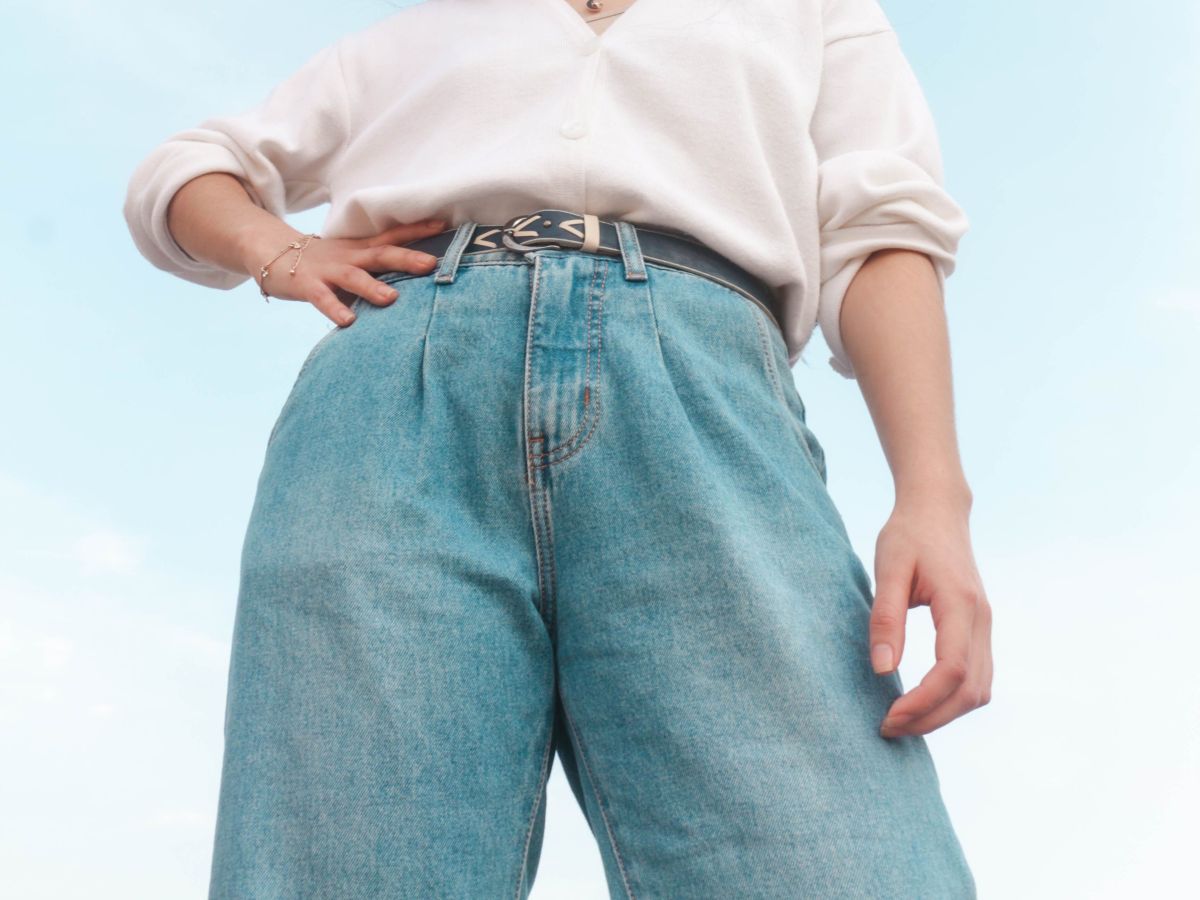

‘Do you have any other good tips for sustainable jeans?’ We get this question quite often. thegreenlist.nl. And we understand that, because jeans are a garment that almost everyone wears (and often one of which is just a little too unworn in the closet). However, behind a regular pair of jeans often lies a rather polluting story. That’s why we’ve put together a list of sustainable jeans brands that tackle the issue better.
The perfect sustainable jeans?
We as Dutch people are crazy about our jeans. To give you an idea, let’s throw in some figures. For example, 85% of the women wear jeans three times a week. The average Dutch person has 5.4 in their closet. And every year, about 45 million of them are sold in the Netherlands. Forty percent of people buy a new pair of jeans at least once a year. And then there’s this: 29% say that it feels better than sex to fit into an old pair of jeans again. Well, that says something about how attached we are to those jeans, doesn’t it?
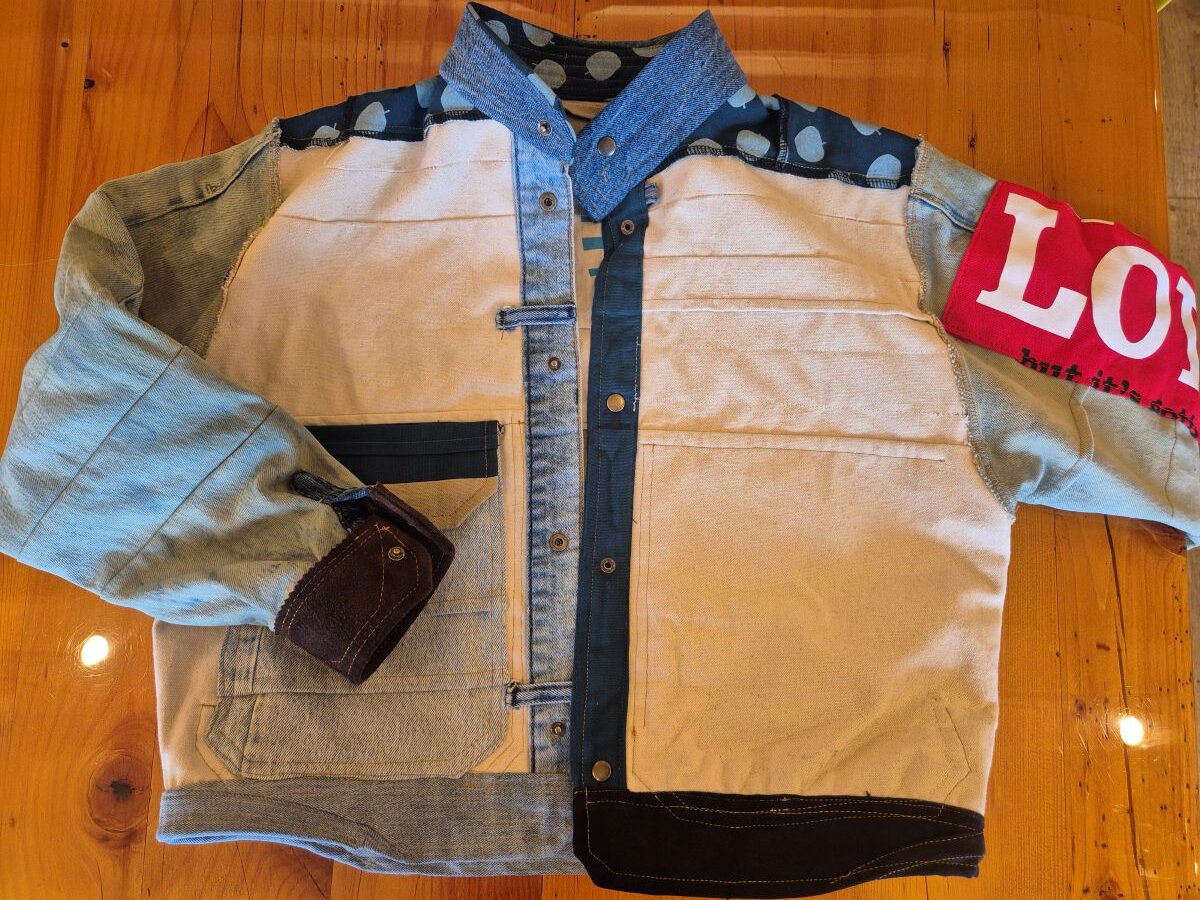
But love has a dark side too. Jeans are one of the most environmentally harmful pieces of clothing to make. On average, one pair of jeans requires about seven thousand liters of water. For comparison: that’s enough to shower about a hundred times. Meanwhile, a significant portion of those 5.4 pairs of jeans hardly ever gets worn in the closet. So the most sustainable pair of jeans is actually the one you already have. But if you still want to buy a new one, do it consciously. Choose a sustainable pair that fits well, feels comfortable, and that you’ll wear for years. That might be the most important step.
What should you look for when buying a sustainable denim jeans?
If you want to buy sustainable jeans, there are a few things to keep in mind. Basically, not very different from other clothing items we have previously looked at, such as underwear, sportswear, and socks. Start with the material. For example, choose certified organic cotton with a GOTS certification or jeans that also incorporate recycled cotton. Some brands blend the cotton with a small amount of Tencel. This is a soft fiber made from wood from sustainably managed forests. It makes the fabric softer and can help reduce water and chemical use in production. But there’s more!
Also, look at how the jeans are produced. The dyeing of textiles is one of the biggest causes of water pollution worldwide. Certifications such as OEKO-TEX Standard 100 and GOTS show that stricter standards are being applied to harmful substances.
And then there’s the little piece that’s often forgotten: who actually makes your jeans? A good brand is open about this. Where is the jeans made, by whom, and under what circumstances? Many sustainable jeans brands produce in Europe or together with small-scale ateliers in countries like India, Turkey, and Tunisia. Better denim brands also show which makers they work with. If you can follow the production process, you’re usually already a lot better off.
Finally, and we might sound a bit like your mother now: fit is really important. The biggest mistake is a pair of jeans that just don't fit right. Still, a little too low waist, too tight, too stretchy or a model that is already out of fashion after just one season. So buy a pair of pants that you feel comfortable in and that you want to wear for years to come.
The coolest sustainable jeans brands
We have put together a list of some sustainable jeans brands that we think do better than the rest.
ARMEDANGELS
Well, ARMEDANGELS is probably the most obvious brand to start this list with. This German fashion brand wants to make sustainable fashion accessible to a wide audience. This is reflected in their extensive collection with many different jeans models, sizes, washes, and colors. An important part of this is their so-called DetoxDenim. With this, they show that even your favorite jeans can be produced without harmful chemicals and pesticides, something that still often happens in conventional denim production. Their jeans are made from (certified) organic cotton, recycled fibers, or a combination of these. In the online store you can quickly see where and by which workshop your jeans are made. Great. If your jeans do break down, you can have them repaired through Mended, a platform that works with brands and local makers to repair clothes so that you can wear them for longer. (You’ll see this repair service mentioned several times in this list.)
Kings of Indigo
Fit, fit, fit. At Kings of Indigo they are a bit obsessed with the perfect fit. And that makes us at thegreenlist.nl I am a big fan of this Amsterdam-based sustainable jeans brand. Their jeans often fit perfectly. But they also do well when it comes to sustainability. Kings of Indigo They use a lot of certified organic recycled cotton and Tencel for softness and some stretch. What we also love: they encourage repairing instead of replacing. Their store in the Negen Straatjes in Amsterdam even has a repair workshop and the brand gives a three-year warranty on every pair of pants. You can have your jeans repaired there, but also just at a local tailor. The costs can be claimed up to twenty euros. That saves on shipping and is also good for the local economy!
MUD Jeans
MUD Jeans They made the first denim pants from 100% post-consumer recycled cotton (that is a denim made from discarded clothing or textiles from consumers, for example from textile containers). Not surprisingly, because their entire mission revolves around circular denim. Their jeans are made from organic and recycled cotton and typically contain up to 55% recycled denim. If your jeans are worn out, you can return them so that the fibers are reused for new jeans. This way, the material remains in the loop. That circular thinking is also reflected in their lease concept. Instead of buying a denim, you can also lease one. Why not? After a year, you can keep it, exchange it, or return it for recycling. This way, a pair of jeans is worn for as long as possible and as little as possible is lost. If your jeans do break, you can have them repaired through Mended (where you can get them again), so you can wear them for even longer. The brand is also B Corp certified. Funny fact: together with IKEA, they created a circular cover for the KLIPPAN bank, Made from recycled denim.
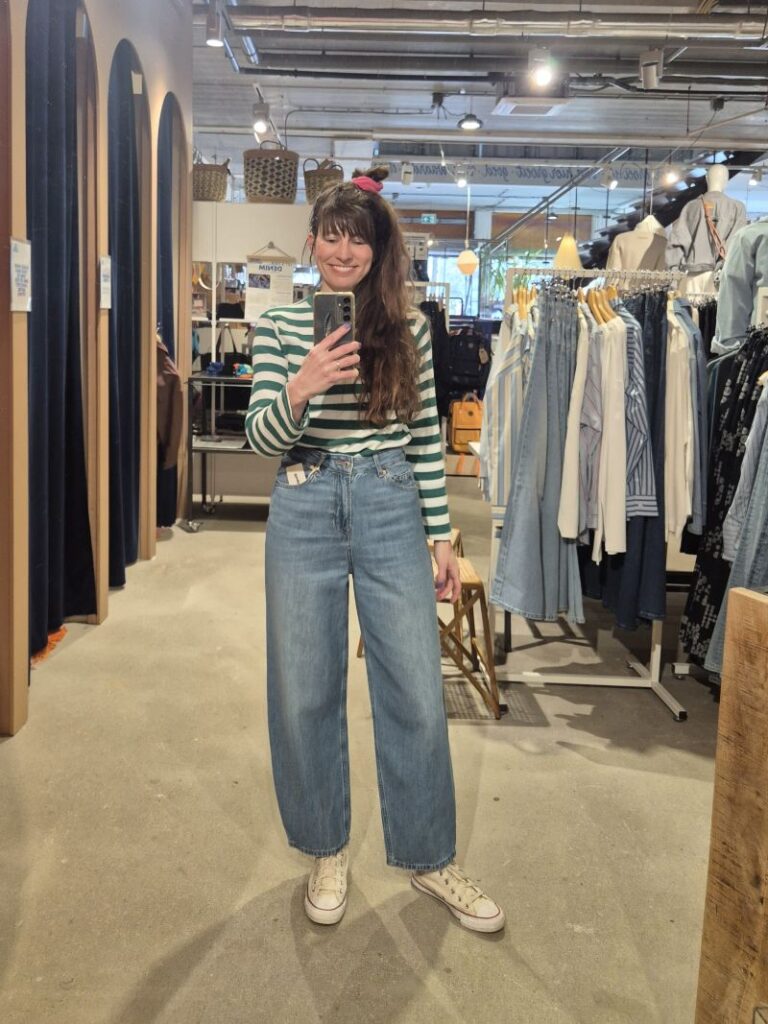
A personal favorite of Saskia: these Kings of Indigo jeans (model Leila).
Nudie jeans
Nudie Jeans From Gothenburg, Sweden, the idea revolves around one simple concept: jeans that you don't replace, but repair and wear again and again. Their goal is to ‘forever jeans’ to make. Jeans that only get better with age and eventually can even become vintage instead of waste. You can see that in everything they do. For example, you can have your Nudie jeans repaired for free and unlimited times at one of their stores. repair shops Worldwide. If your pants are really worn out, you can return them for recycling and get a discount on a new pair. The materials are also of high quality. They only use GOTS-certified organic cotton, are Fairtrade certified, and replace the leather label with a paper alternative made from FSC-certified Jacron. The result: a sustainable pair of jeans that is made to last and that you, if you’re lucky, will cherish for years to come.
Kuyichi
Kuyichi doesn’t really start with the pants, but with the farmer. The brand stems from NGO Solidaridad, which saw with its own eyes how much pollution and poverty lurks behind the cotton industry in Peru. That origin is still felt. Kuyichi was one of the first denim brands to fully opt for organic cotton and has been working with an Organic Cotton Only policy since 2016. They now also use regenerative cotton, alongside natural materials like Tencel and Ecocell. They also simply show where their sustainable jeans are made, with an overview of the factories and suppliers. Also nice. In addition, Kuyichi affiliated with the Fair Wear Foundation, which means they are actively working to improve working conditions in their production chain. If your jeans break, you can have them repaired through Mended. And since they replaced the leather patch with jacquard, their jeans are now also practically vegan.
Thinking MU
Thinking MU is a Spanish brand from Barcelona that is known for its colorful clothing. But besides those striking shirts and sweaters, they also make ‘regular’ jeans. And hey, maybe those have a good story too! The brand uses a lot of organic and recycled materials, including certified organic cotton. Thinking MU They are also super transparent about how their clothing is made. Each garment has a QR code on the label. If you scan it, you can see exactly where your jeans were made, where the fabric came from, where the garment was dyed, and what the garment’s ecological and social footprint is. By the way, you can also find that information in the webshop.
Lanius
Lanius is a German brand that has been around for decades and is one of the pioneers in sustainable fashion. They are completely focused on women and are known for their timeless style, even in their denim collection. Their denim is made from GOTS-certified organic cotton, sometimes mixed with Tencel for a softer feel. feel. They avoid harmful chemicals, for example when bleaching and dyeing the fabric. The production takes place in Turkey, with a stable denim partner with whom they have been working for years. Both the factory and the laundry are GOTS certified and fair working conditions are actively monitored. What you get: a classic jeans made from sturdy cotton, without any synthetic frills, that lasts a long time and fits perfectly.
Joline Jolink
Joline Jolink Is a Dutch designer who approaches sustainable fashion on a very small scale and in a personal way. From her Fashion Farm in Welsum (Overijssel), she works on a different way of making clothes, closer to nature and with full control over the process. Her jeans also fit into that vision. They are made from, among other things, organic cotton and are designed so that they are better recyclable, for example by removing labels. In addition, part of the collection is made from waste materials, which are precisely the starting point for the design. What really sets her apart is that she not only wants to produce more sustainably, but also wants to change the system. With small batches, a resale program, and experiments on her own farm, she shows how fashion can also look like this.
Wunder[work]
Wunder[work] Show that sustainable denim goes beyond just organic cotton. The German brand looks at the entire chain: from material to finishing and even the smallest details. Their jeans are largely produced in Europe to reduce transport and carbon dioxide emissions and are made from GOTS-certified organic cotton and fibers like Tencel. What’s striking is that they also go the extra mile in their finishing: they avoid harmful chemicals during washing and use much less water than conventional denim production. Even the details are on point. Buttons are made from vegetable-based ‘ivory’ instead of plastic and labels are made of cotton or recycled paper. With this, Wunder[werk] shows that sustainability isn’t just one choice, but in everything you do.
Godfried Jeans
Godfrieds It might be the most artisanal brand on this list. And that’s official, because the founder is a recognized craftsman. In their workshop in Belgium, they make jeans the way it used to be meant to be: by hand, from sturdy selvedge denim from Italy or Japan, and without stretch. The idea is simple: you buy a raw, unwashed jeans and wear it yourself until it becomes a unique piece that perfectly fits your body. Everything is done locally and on order, allowing you to fully customize your jeans. From fit to back pockets: you decide. The pants are made from certified cotton and are also fully compostable. Even the buttons are made of Corozo, a plant-based alternative.
Jyoti – Fair Works
Jyoti is not a standard denim brand, but it started with a simple idea: creating honest jobs for women in India. From that mission, the brand continues to work with local, women-led organizations that provide work, income, and independence. Their jeans are made from natural materials such as GOTS-certified organic cotton and Tencel, and are therefore completely biodegradable. But Jyoti They look beyond just production. They want you to wear your clothes for as long as possible. That’s why they organize repair cafés where you learn to repair your own clothes, and they have a resale program. If you bring in your old item, you choose how you want to use it: you get a portion of the proceeds back or donate it to a charity.
Levi's
Yes, you read that right: even your trusty 501 has a greener side. Levi's is big enough to make a real positive impact, and they do that too: the brand is part of Fashion for Good. They use Better Cotton, They use organic cotton and hemp cotton. With the Levi’s Secondhand program, they take back their own jeans and sell them second-hand through a number of stores, and there is a repair service available.
Your favorite sustainable jeans brand?
Whether you choose a circular denim skirt from MUD Jeans, a bespoke Belgian denim skirt from Godfrieds, or the trusty 501: the most important thing is to choose a pair that really fits you. One that you wear for years and that makes you happy every time you put it on. Because the most sustainable denim skirt is always one that doesn’t hang in the closet. Has your jeans really had its best time? We’ll show you how to make it last even longer. cute bag van maakt. Do you have any good tips for giving your old jeans a new lease of life yourself? Let us know! We’d be happy to share them with the rest of you.
Sources: Metronews.nl, Libelle.nl, Vogue.nl. Photo credits: Wilson Montoya, Pexels (main image), thegreenlist.nl.