
Along the Amstel, people were shocked after the Amsterdam Marathon. The runners had crossed the finish line long before, but gel wrappers, cups, sponges and other litter lay along the route for weeks. When we drew attention to this on social media, it soon became clear that this was no isolated incident. After other running events too, many runners and local residents recognise the same picture. Fortunately, experienced marathon runners also shared plenty of solutions. We have put together the best tips from our community.
A marathon is all about health, but how healthy is it for the surrounding area?
Anyone running a marathon often prepares for it for months. Attention is paid to nutrition, sleep and a healthy lifestyle. Precisely for this reason, it feels galling that so much litter is left behind along many marathon routes afterwards. Gel packaging, cups and sponges might seem small, but with tens of thousands of participants, that quickly adds up to a huge mountain of waste. Some of it is cleared away, but certainly not all. Packaging blows away, ends up in verges or ends up in ditches and rivers via rainwater.
We live close to the Amstel and regularly walk along the marathon route. It was striking how much litter was left behind. Even weeks later, we were still coming across gel wrappers and other litter during a walk. One thing became very clear from the many reactions: that huge mountain of rubbish simply does not belong there. According to experienced marathon runners, there are plenty of ways to significantly reduce litter during running events. What are they? We have listed them below.


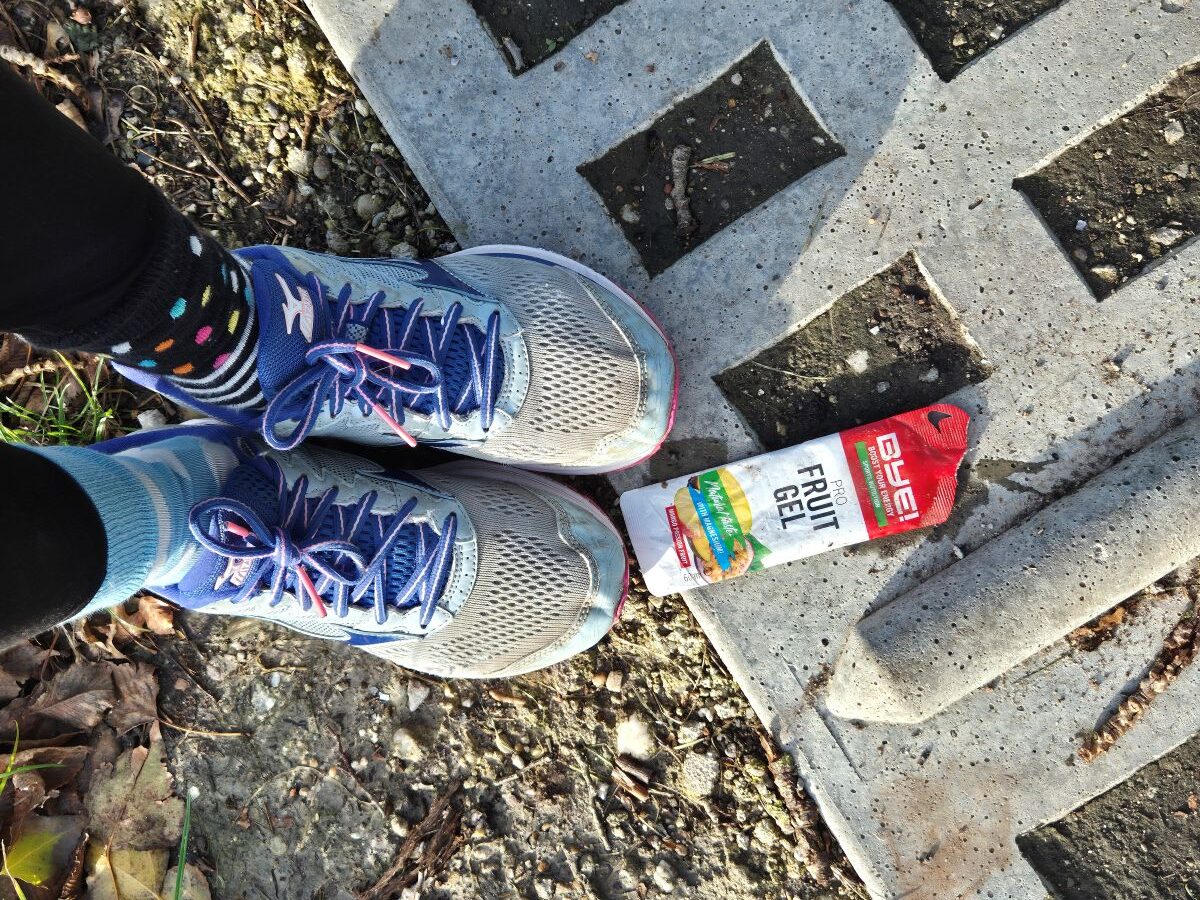
This kind of packaging was lying along the Amstel after the Amsterdam marathon. Many followers are annoyed by all the litter during sporting events.
Tips for a cleaner marathon without litter!
Following our call, we received hundreds of responses from experienced marathon runners, trail runners and other athletes. Their ideas show that the solution does not lie solely with the runner. Organisers, manufacturers and even the spectators can also help to keep marathons a lot cleaner. These are the tips from our community!
For participants
- Just stuff your empty gel and bar wrappers back into your pocket, trail vest, sports bra or down the waistband of your shorts.
- Bring your own collapsible cup and have it filled at refreshment stations.
- Use a small waste bag that you attach to your trousers, race number or rucksack with Velcro.
- Take a refillable energy gel flask instead of single-use packets.
- Plan to take a gel just before a waste disposal point, so you can throw away the wrapper straight away.
- Just keep empty packaging in your hand until you come across a rubbish bin.
- Hand your waste to a volunteer or supporter along the side of the road. Hold out your hand and you will see that people will take it from you.
- Ask yourself whether you really need energy gels, or if, for example, fruit is also an option.
- Use sponges only when they are really necessary, for example in extreme heat.
- Do not take it for granted that ‘the organisation will clear it up anyway’.
For organisers
- Make waste zones larger and more clearly visible.
- Do not place rubbish bins solely directly after a water station, but over a longer distance.
- Give participants clear instructions about waste in advance, for example via the newsletter, at the start and along the route.
- Actively speak to participants about litter during the competition.
- Use warnings, time penalties or disqualification for deliberately discarding waste outside the litter zones, as in some trail runs, triathlons and Ironman races.
- Have participants write their race number on gel packaging so that discarded litter can be traced back to them.
- Switch to refillable cups or have participants bring their own cup.
- Take a critical look at disposable sponges and other disposable products.
- Distribute fruit, crisps or other unpackaged food where possible.
- Make sure the entire route is thoroughly cleaned and not just the start, finish and refreshment stations.
- Organise a litter-picking marathon or a joint cleanup afterwards.
- Provide rubbish bags to supporters so that they can collect waste directly.
For manufacturers
- Develop refillable packaging for energy gels.
- Develop edible packaging.
- Develop biodegradable packaging (and incorporate, for instance, flower seeds into biodegradable packaging).
- Reduce the use of single-use packaging.
- Develop alternatives to the current gel packaging.
A zero-waste marathon
After seeing a marathon course full of litter, a waste-free marathon might seem unachievable. Yet the many reactions from experienced runners showed that things can indeed be done differently. There are plenty of levers for participants, organisers, spectators and manufacturers alike to pull. Many solutions are already being applied at trail runs and other sporting events. That proves it can be done! And if manufacturers meanwhile work on refillable, edible or compostable packaging, we are already a very long way there. So: good luck with your next race. Hopefully, after the finish line, you will take home not only a great time, but also your empty gel packet.
You will probably find this interesting too
- Also see: this is how you manage to make strength training a real part of your routine.
- Also see: nice list of more sustainable sportswear brands.
Sources: denuk.nl.