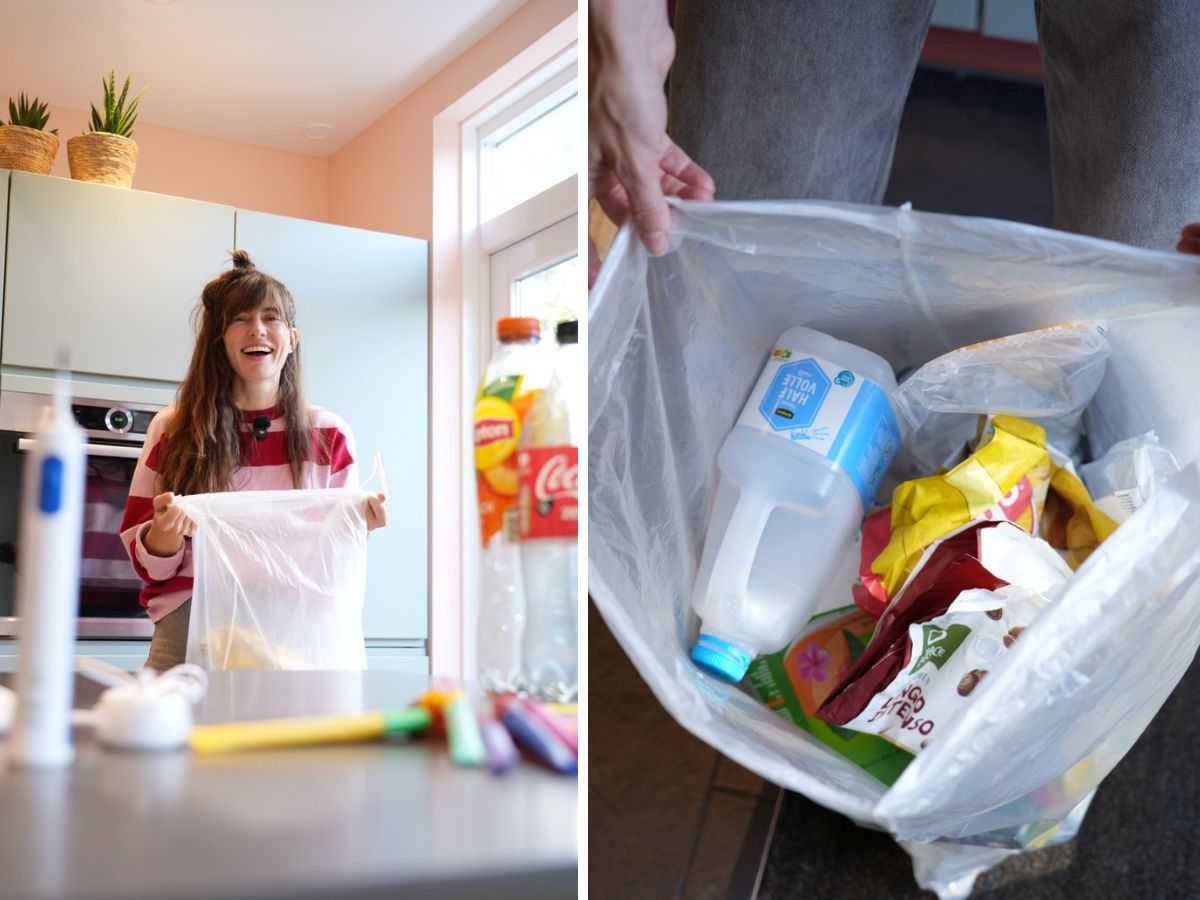

Plastic packaging in the PMD, statiegeldfles returned to the store, and hard plastic in the residual waste. The klinks simply, until you reach a chip bag, You have a broken toothbrush or plastic toys in your hands. Because plastic isn't all the same for your trash can. We are laying From which plastic where does it come from and most importantly: why?.
Plastic packaging: usually PMD
Let’s start with perhaps the most common plastic waste in the home: plastic packaging! Think of an empty shampoo bottle, the plastic container for your herbs, or a bag containing vegetables. These are allowed under PMD: plastic packaging, metal packaging, and drink containers. At least, if your municipality collects PMD separately. In some municipalities and neighborhoods, PMD is allowed in the household waste. That doesn’t mean all those packaging items go to waste: with this ‘separation’ machines extract PMD from the household waste later, after which it is still sorted for recycling. So always check how things are arranged in your municipality.
A handy thing to remember: PMD is intended for packaging. A plastic shampoo bottle is therefore PMD, but a broken pencil, multi-purpose folder or plastic toy car is not. Even though those are also made of plastic. If you’re unsure, ask yourself three questions: is it a packaging (that has been used), does it come from a household and is it empty? Three ‘yes’ answers? Then it qualifies for the PMD. Here we explain this handy PMD trick in more detail.
Plastic deposit bottles: separate collection
Then we have plastic bottles with a deposit fee. They are made from PET, a type of plastic that is very easy to reuse. By collecting deposit bottles separately, the material remains clean enough to be used to make new bottles. Therefore, do not throw them in the PMD or other waste collection system; instead, take them to a deposit point. The deposit fee logo on the bottle tells you whether a bottle is subject to deposit fees. Curious about what happens to your bottle afterwards? We followed the entire recycling journey of a PET bottle, From the tollbooth to a new bottle.
Hard plastic object? Usually waste product
And then it gets even more confusing: what do you do with plastic items that have no packaging? A broken pen, multi-purpose folder or plastic toys do not belong in the PMD, but usually in the residual waste. Larger plastic items can often be taken to the environmental collection point. And be careful: if there is a battery or battery in it, or the device has a plug, then it is electrical waste and other rules apply.
Plastic and electric? No waste
An electric toothbrush may seem primarily a piece of plastic, but for waste disposal it is an electrical device. Small electrical devices can be returned to special collection points, such as those found in stores. Larger devices can be taken to the environmental street. This way, materials from the device can be recovered and recycled.
Still, there is doubt about which plastic should be used?
Because yes, even with the above rules, you sometimes encounter a case of doubt. The Waste separation guide Then your best line of defense is: type in ‘chip bag’, ‘big shopper’ or ‘electric toothbrush’, for example, and you’ll see where it fits. Also, check your own municipality’s rules; especially for PMD. That way, you won’t have to randomly guess where to put the trash can above the trash can!
Watch the video: we explain step by step which plastic belongs where:
You might also find this interesting
- Also see: This is how our packaging glass is recycled.
- Also see: from gft to compost!
- Also see: the recycling of our deposit tin!
Photo credits: thegreenlist.nl.