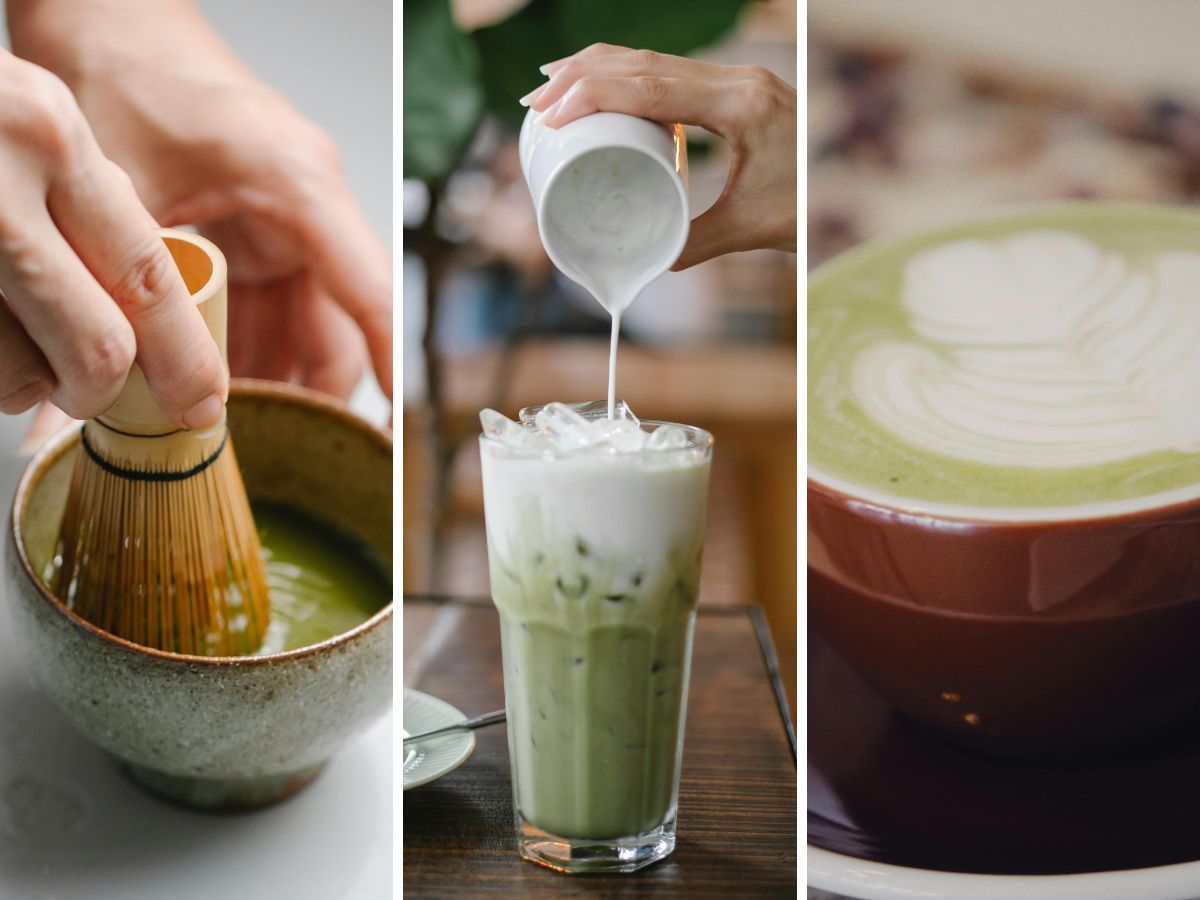

Matcha. You see it everywhere. Especially in the Randstad, a matcha latte is as common as a cappuccino. Fresh green, fancy and - if fans are to be believed - super healthy. But what about the planet? Is matcha really green, as in sustainable? Corine - no matcha lover herself, but mother of an adolescent daughter who is a big matcha fan - found out for you.
What is matcha anyway?
Matcha literally means ‘ground tea’. It is powder made from the upper leaves of the Camellia sinensis, or tea plant. Yes, you read it right: an ordinary tea bush. Just before harvest, those plants are put in the shade. And that provides extra chlorophyll and thus that bright green colour. After picking, the leaves are steamed, dried and ground superfine. And that's the stuff you whisk into a drink with a bamboo whisk.
So matcha is not tea that you let steep, but tea that you drink - leaf and all. As a result, you also get everything in those leaves: antioxidants, caffeine, and a dash of L-theanine (for those in the know: which softens the effect of caffeine). Healthy? Definitely. Superfood? Meh, slight exaggeration perhaps. A cup of matcha contains about 3.5 mg of vitamin C - nice, but half a sweet pepper scores much higher at 90 mg. Where matcha excels: it gives a slower, milder caffeine boost than coffee. Ideal if you want to focus, but don't want to become a bouncy ball.
So how sustainable is matcha?
The hype is real: over 4,100 tonnes of matcha were produced in Japan in 2023 - almost three times as much as in 2010. This popularity is mainly due to the health claims, influencers, the alluring colour and the fact that matcha has now won its own place on every coffee menu. What you less often hear about: traditional Japanese matcha is also a surprisingly sustainable choice, but there are also less attractive options and even fakers on the market. About the good varieties: they are often grown organically in Japan, without the use of pesticides. The ceremonial variety is even harvested by hand and only the youngest, topmost tea leaves are selected.
In terms of packaging, matcha also scores points. You buy it loose as powder. The advantage: no tea bags that can give off microplastics and no unnecessary waste. And even when we look at the hard figures, matcha comes out surprisingly well. One kilo of matcha requires about 8,856 litres of water (more than double that for coffee). CO2 emissions, at 1.9 kg per kilo, are also considerably lower than the 15.3 kg for coffee. That's good news for matchalovers. But as so often: there is also a downside to this green story. Be sure to read along.


In Japan, producers grind matcha leaves into a green powder, which you can then use to make tea at home.
How (fairly) are matcha plants grown?
Matcha has a pretty good reputation compared to many other teas when it comes to working conditions and sustainability. This is partly because most matcha comes from Japan. And there, food safety and farming practices are generally more tightly regulated than, say, in India, China or Sri Lanka. Especially the more expensive, ceremonial matcha is all about quality, craftsmanship and small-scale cultivation. Many farmers work organically and, with good brands, you can often trace exactly where the green powder comes from.
Yet there is a downside here too. In 2025, Japan suffered a steep decline in the production of tencha (the leaves from which matcha is made), mainly due to extreme heat waves in the Kyoto region - accounting for about a quarter of national production. Farmers saw their crops reduced by 25%. The heat damaged many bushes. And with new plants that can only be harvested after five years, that's not a problem you solve overnight.
The wider impact of climate change is also being felt: longer dry periods, more erratic seasons and shifting harvest times are putting pressure on matcha cultivation. It is a delicate plant that requires a lot of precision. In short, not ideal in an unstable climate. And monoculture on plantations is also a risk. Since matcha is often grown on the same bushes for years, this can lead to soil depletion and loss of biodiversity. Fortunately, many organic producers turn to crop rotation, natural fertilisation and shade systems made of bamboo or solar tarpaulins.
And then there is the human side. With an ageing population in the agricultural sector, there are fewer and fewer young Japanese who want to learn the trade. That makes it harder to sustain the labour-intensive cultivation of ceremonial matcha.
We also discovered that it does not automatically mean that all Japanese matcha is sustainable and fair. Rising global demand has also led to higher production volumes. Especially for cheaper export varieties, there is less transparency about working conditions. There are signs of labour pressures among temporary seasonal workers during harvest - something that occurs across the agricultural sector, including in Japan. Tip: see if a brand tells something about its supply chain, methods and certifications.
Finally, pay attention to origin. Most high-quality matcha still comes from Japan, especially from regions like Uji, Nishio and Shizuoka. But increasingly, matcha also comes from countries like China, South Korea, Taiwan, Vietnam and even the US. Those varieties are often cheaper, but not always of the same quality - and sometimes even (deliberately) mislabelled as ‘Japanese matcha’. Fake so. So check the label carefully if you really want to go for quality.
Why is matcha powder so expensive?
That 30-gram pot for €8 is a bit steep. But there's a reason behind that price tag: the plucking is done by hand. Only the finest leaves are selected, followed by the whole process of steaming, drying, and grinding. So it's not surprising that good matcha costs a pretty penny. And be warned: cheap matcha is often of inferior quality – with stems or lower leaves – and you can tell. Bitter, astringent, flat. Or even worse: it's not even real matcha, but just finely ground green tea. Whereas a good quality matcha tastes soft and creamy, with that typical umami and a sweet, almost chocolate-like finish. So, if you're going for matcha, do it properly. Your taste buds (and the planet) will thank you.
So that's how green matcha is
Matcha scores surprisingly well on sustainability. At least, if you get your hands on a quality Japanese variety. Production is often organic, small-scale, and water and energy consumption is lower than for coffee. But it is still a product from afar. And not every matcha is produced fairly or transparently. Surfing on the matcha hype? Then choose organic matcha from Japan from a brand that shares its origins and production methods. And for kids: no more than one cup a day!
More green tips from thegreenlist.nl
- What about ‘regular’ tea, anyway? Read all about sustainable tea here.
- Also curious about how to drink coffee more sustainably? In this article, read all about a conscious bakkie pleur.
- Lighting a cosy candle? After reading these tips, you can enjoy eco-friendly candles with peace of mind.
Sources: Inside-out, Health Science, Heymatcha, Losetheekopen, Radar, Reuters, Tea & Coffee, Youth News, Keuringsdienst van Waarde. Photo credits: main image left and centre: Charlotte May (Pexels), main image right: Mizunokozuki (Pexels), matcha mother: Roselene de Koning, tea: Silviopelegrin (Pexels).