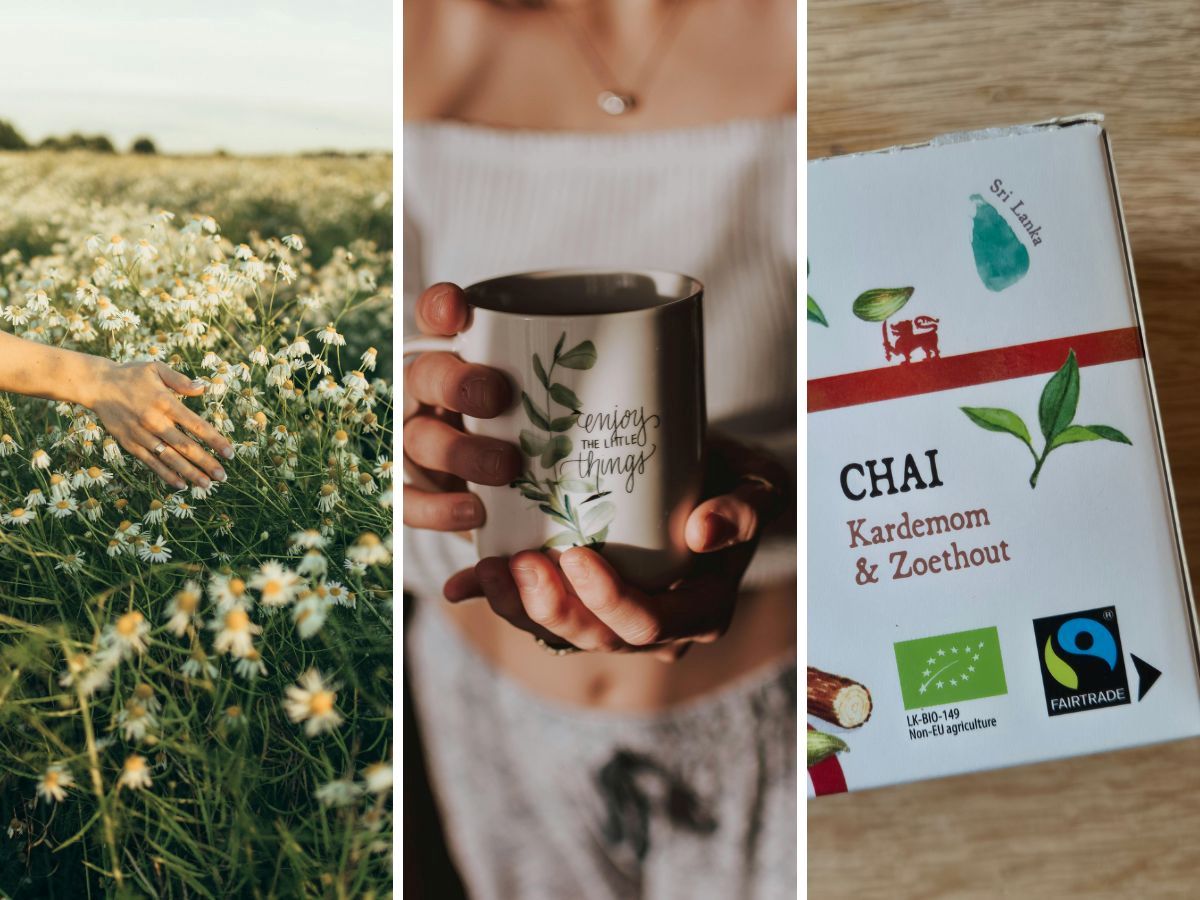

So much choice, but what is really good tea? Standing in front of the supermarket shelf, everything seems tasty and responsible. But appearances can be deceptive. Not every tea is organic, fairly produced or free of microplastics. And what does that bag really say? To help you choose, we have made a list of fine, sustainable tea brands in a bag, on sale in the (eco) supermarket or online.
Sustainable tea: here's what to look out for!
When you think of sustainable tea, you might immediately think of loose tea. And rightly so, as it often produces less waste. Top. But these days you can also make a fine responsible choice in bags. Although that does require some attention. Because not every tea bag is as ‘green’ as it looks. First of all, check the origin of the ingredients. Organic tea is grown without artificial fertilisers or harmful pesticides, with attention to soil, nature and biodiversity. That is a better choice anyway. You can recognise such tea by the EU organic label (that green leaf on the package).
There are also two well-known social labels to look out for with tea: Fairtrade and Rainforest Alliance. They both have different approaches. Fairtrade focuses mainly on fair trade: farmers get a minimum price as well as a premium to invest in their communities. Rainforest Alliance takes a broader view of sustainability, focusing on the environment, biodiversity and working conditions. Is one of these logos on your box of tea? Then you can be sure that steps have been taken towards a fairer chain.
And then, of course, you have the bag itself. What many people don't know: some tea bags - especially the luxury pyramid-shaped ones - contain plastic. They are therefore not (entirely) compostable and may even release microplastics into your tea. Since 2023, all tea bags (and coffee pods too) are officially allowed to be disposed of in kitchen and garden waste. Sounds good, but unfortunately that does not automatically mean they are all plastic-free. Want to know exactly how this works and what to look out for when choosing tea? In our article on sustainable tea we take you from tea plantation to the bag in your cup.
The tastiest sustainable tea brands
Time for the list: the tastiest sustainable tea brands in a bag. These brands pay attention to fair trade, organic ingredients ánd package their tea in the most eco-friendly way possible. In short: tea brands that totally fit your greener shopping list.
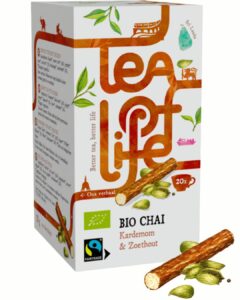
Tea of life
Tea of Life is one of those brands where everything fits. Fairtrade and B Corp-certified, CO2-neutral production and tea bags that are fully compostable, so no microplastics in your cup. The tea is not only grown in Sri Lanka, but also processed into the end product there. This keeps work and income local, which benefits the region. Per kilo of tea, the brand also invests 25 cents back into the environment through its own Fair Grounds Foundation. And the great thing is: you will find Tea of Life Just at Plus, Jumbo and Dekamarkt. The chai is a favourite here.
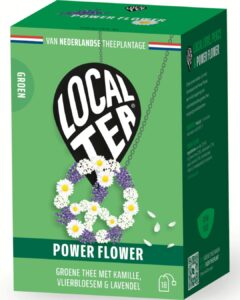
LocalTea
Tea from Dutch soil? Yes indeed! LocalTea does everything themselves - from growing to packaging - at their tea plantation in Zundert, Brabant. This makes the chain ultra-short and saves considerable CO2 emissions. The plants grow in unfired greenhouses and are processed locally into finished products. And that is not only more sustainable, but also fairer. LocalTea was created in response to the often opaque and unfair world of the traditional tea chain, in which large multinationals have too much power and workers on plantations hardly have a future. With their colourful boxes and quirky blends - such as Dutchess Grey, De Nacht Wacht and Koppie erbij - they show that sustainable tea can also be delicious and fun. For sale at Albert Heijn, Jumbo, Hanos, Sligro and via their own webshop, among others.
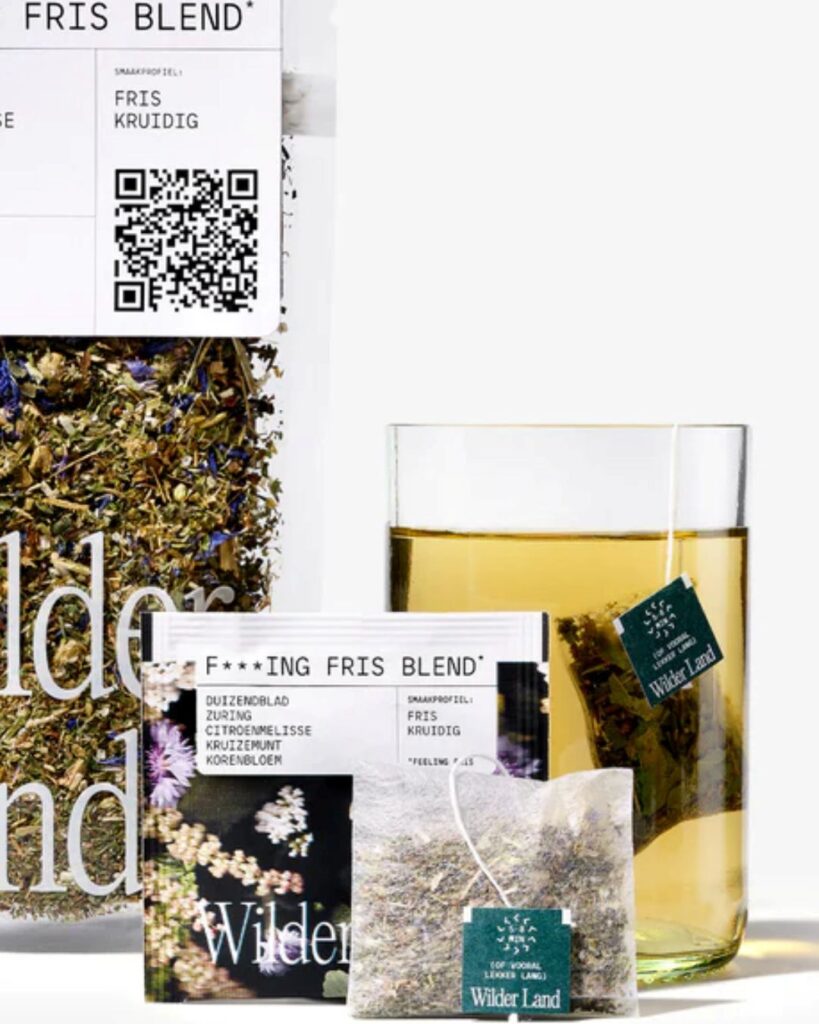
Wilder Land
Instead of getting spices from afar, they work at Wilder Land together with Dutch farmers to sow native (un)herbs and flowers in fields and meadows. They pick some of these herbs for their tea, leaving the rest for bees, butterflies and other insects to enjoy - good for biodiversity in the Netherlands. The tea bags themselves are fully compostable and thus microplastic-free. The blends come in cheerful, colourful boxes - sometimes they almost look like an egg carton full of surprises. You'll find flavours like Offline Blend, Boswandeling and Sunny Boy that celebrate the flavours of the Dutch landscape. Wilder Land tea not only contributes to your cup of tea happiness, but also to nature restoration and local agriculture. You can buy their products at Crisp, specialty shops or via the webshop.
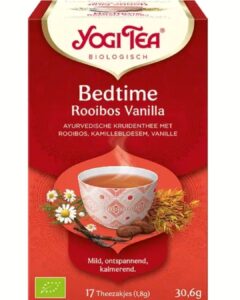
Yogi Tea
Yogi Tea - also known to some as Yogi Life - is about more than just flavour. This holistic tea brand is inspired by Ayurvedic philosophy, combining herbs and spices to balance body and mind. And they do so in a sustainable way: 100% organic ingredients, renewable energy production and, since 2023, all their locations worldwide are B Corp-certified. The tea bags are made of Manila hemp (abaca) and wood pulp: so no microplastics and unbleached. They also go the extra mile with their suppliers. They all use at least one form of regenerative agriculture - a way of farming that actively improves the soil and restores biodiversity, with even stricter requirements than organic farming. More than half even use several such methods. And with no less than 64 blends: from Licorice Mint to Classic Chai, your favourite is bound to be among them. You can find Yogi Tea at Jumbo, Holland & Barrett, Albert Heijn, Ekoplaza and Crisp, among others.
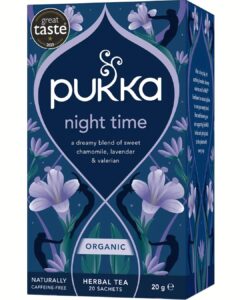
Pukka Herbs
Perhaps the best-known name in this list: Pukka Herbs. This colourful tea brand combines organic herbs with a clear mission for people and planet. Their tea bags are plastic-free, GMO-free - meaning no genetically modified ingredients have been used - and made from compostable material. The ingredients come from certified organic farms, and the brand is both Fairtrade and Fair for Life certified. The latter also guarantees good working conditions throughout the chain. Pukka is also actively committed to nature restoration: together with TreeSisters, they have already planted over 1.6 million trees. They are also working with the World Land Trust on projects in Guatemala, Vietnam and Mexico. And yes, they are part of Ekaterra, the tea company that evolved from Unilever - a fact that matters to some conscious buyers. Still, Pukka stays true to their sustainable ideals in execution, which is why we think Pukka definitely deserves a mention in this list. You can find them in (better) supermarkets.
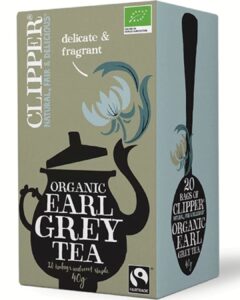
Clipper Tea
Also a familiar name, we suspect: Clipper Tea. This British brand was at the forefront of sustainability. They were the first in the UK to be Fairtrade certified and even helped to establish Fairtrade standards. They are now also B Corp-certified, their factory in Beaminster runs completely carbon-neutral and 98% of factory waste is recycled. In 2018, Clipper was the first tea company worldwide to switch to unbleached, plastic-free ánd GMO-free tea bags. And it's also socially sound: in Assam (India), where much of their tea comes from, more than 80% of tea pickers are women. And nice and easy: you can find Clipper at most supermarkets, such as Albert Heijn and Jumbo.
Hampstead Tea
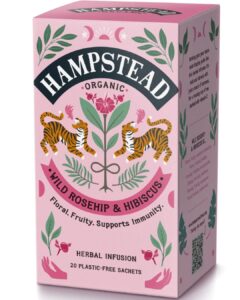
At Hampstead Tea you don't just drink a cup of tea, you taste a story. Founder Kiran moved from India to the UK and couldn't find tea there that both tasted good and was free of pesticides or microplastics. So she decided to bring it to Europe herself. Her mission yielded wonderful results: unbleached, plastic-free tea bags, Fairtrade-certified ingredients and a strong focus on organic and regenerative agriculture. One of their tea gardens in India - the famous Maikaibari Tea Estate - was even the first in the world to be certified organic. Not only that: 66% of this estate consists of untouched rainforest, where tea grows among leguminous crops, cloves and bamboo. An ecosystem as it was meant to be. Oh, and the packaging? Works of art in themselves, with colourful illustrations of tigers, among other things. You can find Hampstead Tea at Ekoplaza and Holland & Barrett, among others.
Which sustainable tea brands do you put on your list?
As you can see, sustainable tea comes in all types, flavours and stories. From locally grown leaves to organic herbs from an Indian rainforest. You can enjoy a cup of tea with peace of mind. And this list is just the beginning. During our search, we came across many more fine, sustainable tea brands in a bag. Also Simon Lévelt (also on sale at many supermarkets), Numi Tea, Ministry of Tea (great design making it instantly gift-worthy!) and Pyramid are also definitely worth exploring. Do you have another favourite sustainable tea tip that should not be missed? Be sure to let us know! Then we will complete the list. For now: turn on that kettle and enjoy it with consciousness.
Tea tip from an expert
Did you know that dipping your tea bag is not a good idea at all? According to tea sommelier Mariëlla Erkens, it affects the taste of your tea. By dipping, you bring out bitter substances that make the tea less smooth. Better: just let your bag infuse calmly, without rushing back and forth. Just be patient - it will only make that cup of tea taste better.
Source: Libelle
Photo credits: left: Maksim Goncharenok (Pexels), centre: Lil Artsy, (Pexels), right: thegreenlist.nl.