
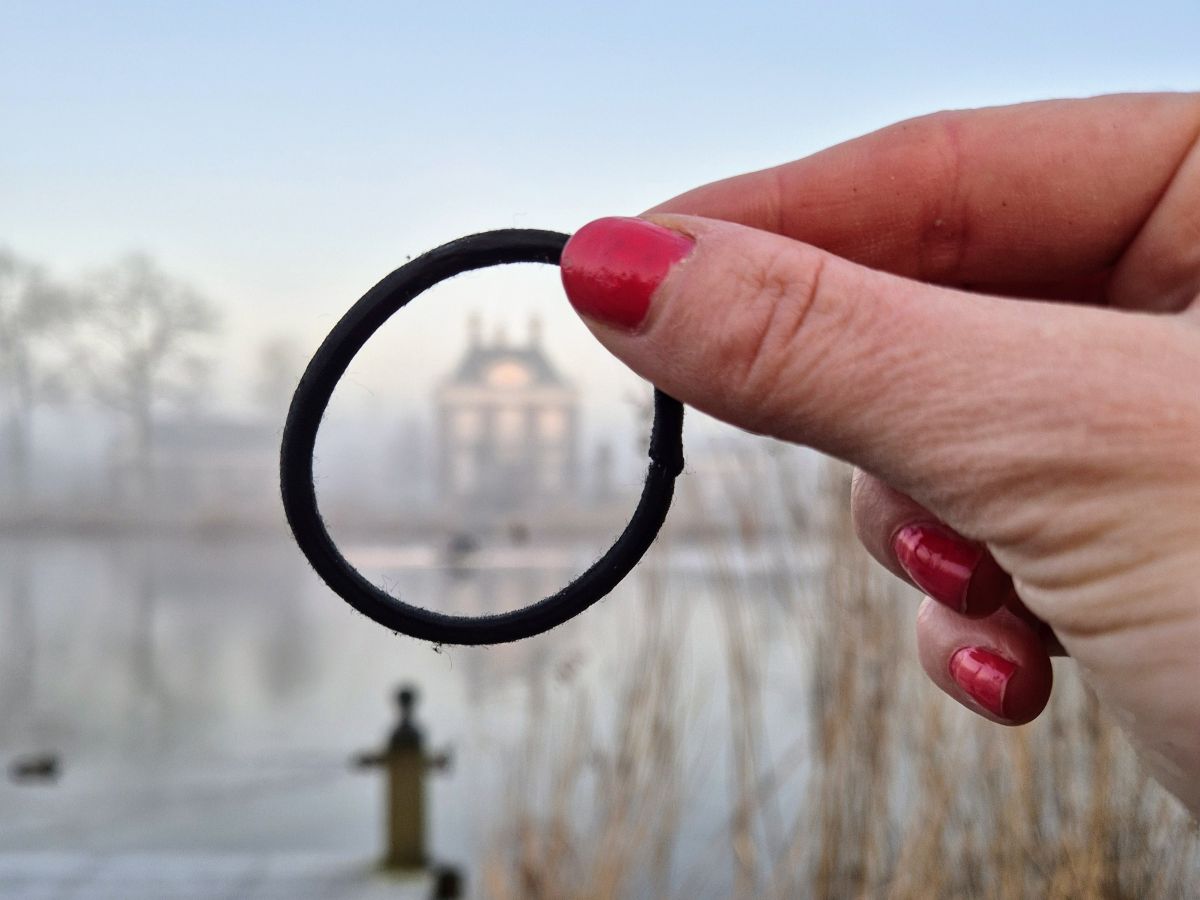

Saskia hasn't bought hair elastic bands for years. Yet her hair always sits neatly in a bun. Her secret? She just finds them on the street. Yep, really. At the beginning of thegreenlist.nl she got this tip from a few seasoned followers and she's been converted ever since. Why buy new rubber bands when they are literally there for the taking?
Finding hair elastic bands on the street
Hair elastic bands lie in bunches on the street. People with long hair lose them all the time: in the wind, while cycling or running, or very classically when you pull something out of your jacket pocket and a rubber band slips out unnoticed. Before you know it, it's on the street and stays there. A shame, because it's just litter. And not innocent either: birds mistake those thin rubber bands for worms. They eat them, sometimes even feeding them to their young, with dire consequences. Birds can get sick or die from them. At the same time, it is also an opportunity. We find them remarkably often in the city, at traffic lights or along the roadside while running. But also on the cycle path, and yes, even on the beach. Very occasionally you get really lucky and it's not a dull black rubber band, but a cute scrunchie. That one goes home with you. Hop, with the collection.
That picking up hair elastic bands is not quite universally accepted yet, you can read in the comments below this video.
Wash found hair elastic bands first
Found hair elastic bands may not sound so fresh. Although you might think of head lice, you need not fear them. These feed on blood and can only spread through direct hair-hair contact. On a rubber band, they survive a day at most. But of course, such a rubber band has been on the street for a while. Fortunately, you can make them as good as new again with a simple washing tip. Put them in a sock and tie it with, yes, another found rubber band. Then throw the bundle in with the towels, bedding or another 60-degree wash. After one wash, they will be clean and ready to use again. Easy right? This is how you give orphaned rubber bands a second life and never have to buy new ones again. Will you give it a try? Then share your finds on socials and tag @thegreenlist.nl. Like it!
What are hair elastic bands actually made of?
Most hair elastic bands consist of a mix of synthetic rubber or plastic (such as polyester or nylon) and cotton. The outside often feels soft, but the core is usually made of stretchy plastic. Not exactly good news for the environment, as this stuff hardly breaks down. So a lost rubber band can last for years. This is precisely why it is so smart to rescue them from the streets and give them a second life. Good for your hairstyle as well as for the planet.
Photo credits: thegreenlist.nl. sources: Parole, Omroep Gelderland.