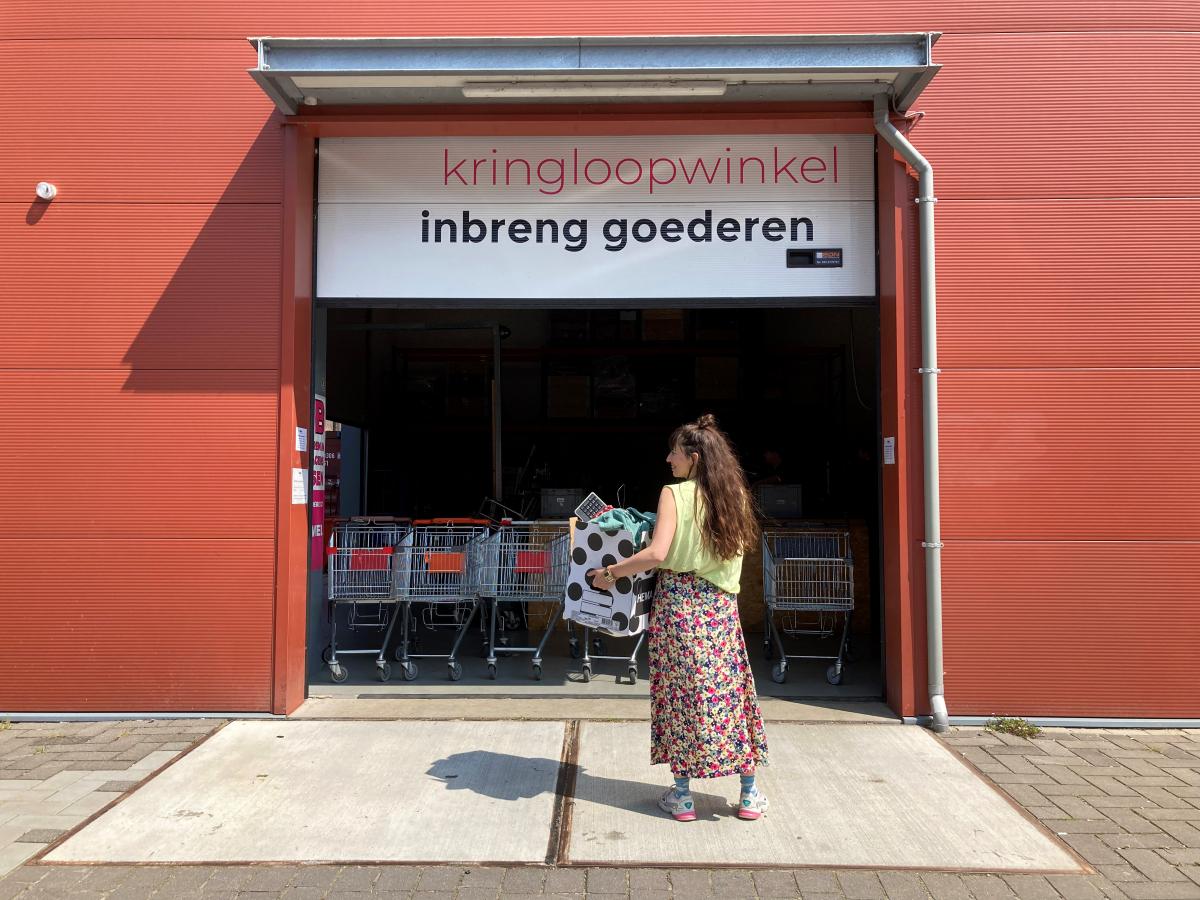

News reports pop up regularly about thrift shops that are bulging. The input is pouring in, faster than they can sort it. Among the hidden treasures, unfortunately, there is also a lot of junk. Stuff that is actually ripe for the dumpster, but ends up at the thrift store anyway. They don't always want that. Although some ‘junk’ is secretly quite welcome. Because what can no longer be sold can sometimes still be recycled. And that generates money to keep the charity shop running. Saskia took a look behind the scenes of her thrift shop De Boem in Amstelveen and discovered which items are still surprisingly valuable. So keep turning them in!
What will you make the circle happy?
Behind the scenes at the thrift store, it is clear: about half of what comes in is not saleable. People hand in stuff out of convenience or ignorance that really can no longer go into the shop. Everything has to be sorted out, separated and disposed of properly. That takes time and staff. So the message is clear: don't just bring everything to the recycling centre. ‘We are not a recycling centre.’ At the same time, there is also something valuable among that junk. Stuff that can no longer be sold, but is recyclable and brings in money so that your favourite cycle can keep going. So what do you make the cycle happy with? We will go through the most important flows with you.
Old metal is worth money!
Metal is at the top of the list. So yes, that old frying pan with worn non-stick coating should not be thrown in the rubbish unthinkingly. Also think about cutlery, broken lamps, metal dishes, tools, taps, door handles or a saucepan without a lid. Anything made of stainless steel, aluminium, copper, brass, lead or plain old iron is more than welcome. It is collected separately, carefully separated and prepared for recycling.
With a simple magnet, they can immediately see what is what. If it sticks, then it's iron. If it falls off, then you're dealing with a non-ferrous metal like aluminium or copper. And that brings in money. Old iron brings around 10 to 15 cents per kilo. Aluminium and stainless steel around 1 euro per kilo. Copper even more: around 1.50 euros per kilo. So waste is just raw material here.
Even larger metal items do not just disappear into the residual waste. Outside is the iron bin. Barbecues, bicycles, bed frames, broken exercise bikes and other large iron objects go in there. In short, anything made of ordinary iron goes in there. It is collected separately and this stream too can be properly recycled.


Visiting the thrift shop, not to shop, but to watch unsalable items being neatly discarded.
VIEW ALSO: thrift shop tips.
VIEW ALSO: Our search for eco-friendly pans.
Old electronics are also a goldmine
We go one door down to the next container. Old electronics are also worth more than you think. In fact, the thrift store actually likes to receive this kind of stuff. Think screens, old stereo towers, fans, keyboards and printers. At The Boom about 10 old keyboards come in every week and sometimes as many as six printers a day. Only the best ones make it to the shop floor. What can no longer be sold goes to a processor where the devices are taken apart and recycled. This is because those devices contain raw materials that are in short supply. Aluminium, copper and even small amounts of gold. Everything with a plug therefore belongs in the electrical bins. Most devices are tested first, unless it is immediately clear that they are really used up or hopelessly obsolete. A huge, bulky computer monitor from the 1990s, for instance, goes straight into the recycling bin.
Recycling old cables!
And then there are the cables. These seem worthless, but contain copper. And that is worth money. In fact, at around €1.50 per kilo, it is one of the most valuable raw materials for the cycle. If you hand in cables as they are, they go into the metal stream. Stripped, this waste stream would yield even more, but the cycle simply does not always have the time or capacity for that. That copper can be reused. And that is badly needed, because we simply have too little of this type of metal.
Recycling books: better do it yourself!
Then the books. That's where you really have to be critical. The cycle receives piles of yellowed paperbacks, old encyclopaedias, atlases and dictionaries. More than half of the books handed in are rejected. Mouldy copies, books that smell, are broken or dirty do not enter the shop anyway. Novels, children's books and recent non-fiction fortunately still sell well. But encyclopaedias and old atlases? Those remain. What cannot be sold disappears into a large paper container outside. When it is full, it is collected for recycling. The paper is turned into toilet paper, kitchen rolls, cardboard or new paper. Better than burning, for sure. But it does not provide the cycle with anything and mainly costs time. The urgent advice: do not hand in everything made of paper just like that. Only books that someone really wants to read. It is better to dispose of the rest yourself.
Clothing also gets a second life
Not all clothes handed in end up in the shop. Worn shirts, broken zips, bulging jumpers or socks without a partner are taken out. But that does not automatically mean waste. Textiles are collected separately at the cycle and collected for recycling. New yarn, insulation material, padding for furniture or cleaning cloths, for example, are made from it. However, as with books, there is usually no revenue model behind this. In fact, the disposal of discarded clothes often requires payment. So again: don't mindlessly hand in old clothes. Is it not saleable? Then take it to the textile container yourself. Small effort and the cycle will thank you.
What do and don't you hand in at the thrift store?
A thrift shop is not a rubbish station. But it is also not as black and white as ‘anything broken is not allowed’. Metal, old electronics and cables provide raw materials and sometimes money for the shop. So you really help the charity shop with that. With books and clothes, the situation is different. What cannot be sold can often be recycled, but costs money and manpower to dispose of. That is why we call on you to hand in old textiles and books yourself at the recycling centre. This way, you help the cycle make good use of their time and people and ensure that they can continue to do what they are meant to do: enable recycling.
You might also find this interesting
- Also see: From GFT to compost.
- Also see: This is how packaging glass recycling goes.
- Also see: this ruins PMD recycling.
Photo credits: thegreenlist.nl.