

As soon as you remove your nail polish, you'll know its smell again. That pungent, chemical aroma that wafts through your house in no time. Chances are, you'll then be busy with acetone, the main ingredient in most nail polish removers. But what is acetone, really? How does it remove that stubborn polish so quickly? And just as interesting: what does it do to your health? We've delved into it. And hooray: there are (more) natural alternatives that also do the trick.
Acetone in nail polish remover
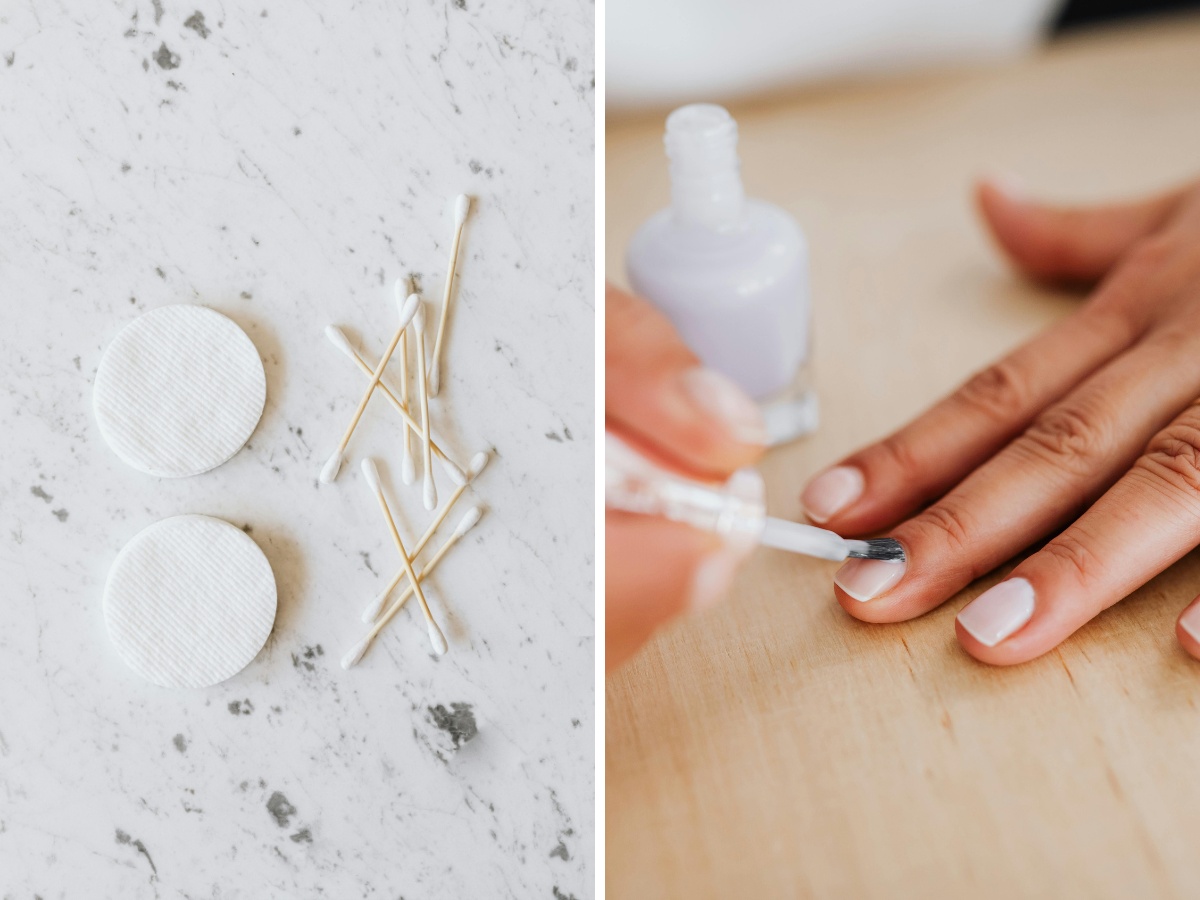
Whether you're going for a subtle sheen or bright red nails: there comes a moment when the polish has to come off, doesn’t it? Most people reach for that pink bottle of nail polish remover. Effective? Absolutely. Sustainable and healthy? Well, uh, no, not exactly. Let's start at the beginning. Acetone (in full: dimethyl ketone) is a colourless, highly flammable liquid. It's a powerful solvent. It's also used for making plastics, cleaning tools, and as a thinner for paint. And it's in your nail polish remover. There, acetone has one job: to turn the hard layer of your nail polish back into a liquid so you can wipe it off. Acetone breaks down the polymers (yep, the substances that actually make your nail polish hard) in your nail polish at lightning speed. Your polish becomes soft again, and you can wipe your nails clean with a cotton pad soaked in acetone. Well, clean….
Acetone is aggressive
Acetone is quick and effective, but also aggressive. It doesn't just dissolve your nail polish, it also strips the natural oils from your nails and the surrounding skin. The result: brittle nails, dry cuticles, and that familiar white film on your fingers. We're telling you nothing new when we say that inhaling acetone vapour isn't exactly a wellness experience. Although acetone isn't directly toxic in small quantities, frequent use can cause irritation to the airways and eyes. A case of ‘beauty is pain‘? Can't it be greener and healthier?


Nice polish, but how do you remove nail polish in an environmentally friendly way? Ultimately, you'll still reach for nail polish remover.
The greener alternative: acetone-free remover
On the shelves, you're increasingly seeing ‘acetone-free’ nail polish removers. Sounds good, but what's the active ingredient then? Usually, it's ethyl acetate. Is that a greener choice? A bit. Ethyl acetate is slightly milder for your skin and nails than acetone, but it's still a synthetic solvent. The big advantage is that it evaporates less quickly (so a less intense smell) and dries out your nails less extremely. But let's be honest: it's still a chemical substance.
Good news: you don't have to choose between chemical fumes or peeling nail polish. There are increasingly more bio-based removers on the market. These products don't contain acetone or ethyl acetate, but a natural solvent, such as lactate esters. These are substances made from fermented sugars. Or soy-based solvents. These two are biodegradable and often the removers are also enriched with nourishing oils.
Acetone is the fastest way to remove nail polish. But hey, it's an aggressive way (just check for that white film on your fingers again). Would you prefer a more sustainable bathroom routine? Then opt for a bio-based, acetone-free remover made from natural ingredients. It's an investment, especially in time, as natural removers aren't that much more expensive. Natural removers are just truly slower at working than aggressive acetone, but your nails will stay strong and, also nice, you won't be inhaling those chemical fumes anymore.
Nail polish remover can be avoided in these ways too!
You'll just have to see: your nail polish needs to come off and you're out of remover. Before you head out to the shed for the white spirit (don't you dare!), you can try these everyday tips:
- New layer of nail polish: this sounds crazy, but it works. Apply a thick new layer of polish over your old polish and immediately wipe it off with a cotton ball. The fresh polish makes the old polish liquid again.
- Lemon and vinegar: mix a splash of vinegar with lemon juice. Soak your nails in this for 5 to 10 minutes and try gently rubbing the polish off. It takes a bit of patience, but it’s 100% natural.
- Alcohol (minimum 70%): do you still have a bottle of rubbing alcohol or spirits (such as vodka) lying around? This can also be used as a mild solvent.
List of natural nail polish removers (free from acetone and ethyl acetate)
Many ‘natural’ removers (including ‘natural’ own-brand ones, for example) still contain ethyl acetate, the milder cousin of acetone. Below is a list of removers that truly only contain natural ingredients, such as lactate esters and bio-oils.:
- Benecos – Happy Nails Natural Removera budget-friendly star product often found in natural food stores. Uses natural alcohol and orange oil (limonene).
- Sante Naturkosmetik – Natural Nail Polish RemoverUses bio-alcohol and orange oil. Very affordable and effective.
- Fresh Therapies – Eden Natural Polish Remover: one of the best-known 100% natural removers. Contains bio-ethanol and has a grapefruit scent.
- Kia-Charlotta – Vegan Nail Polish Remover: entirely based on alcohol from plants and glycerine. Very mild, with eucalyptus and lemongrass oil.
- ProvidaA bio-alcohol-based remover with orange and citrus oil. It even has the Demeter quality mark, as the ingredients are organically grown. You do need to leave the cotton pad with remover on your nail polish for a bit longer (20 to 30 seconds) before you can wipe away the polish. Available at health food shops like Ekoplaza or Odin (range varies by branch).
- Kure Bazaar – Moisturising Dissolving Watera more luxurious option based on wheat, corn, and sugarcane. Does not dry out the nail at all.
- Gitti – Nail Polish Removera minimalist remover based on plant-based solvents and enriched with caring ingredients such as aloe vera. Gentle on your nails, subtly fragranced, and completely in line with Gitti's vegan and sustainable approach.
Finding more sustainable nail polish remover
Acetone works quickly and effectively, but it's not the freshest choice for your nails or your indoor air. Fortunately, there are now alternatives based on plant-based solvents that are milder and smell less chemical. They work a little more gently, but they get the job done in the end. Do keep in mind that natural removers feel a bit greasier due to the added oil. If you want to paint a new colour immediately afterwards, wash your hands with soap first; otherwise, your polish won't adhere as well. Conclusion: no nail polish remover is perfectly green, but there are certainly options that are a step in the right direction. Cheers!
You might also find this interesting
- What about nail polish, then? We have already looked into whether sustainable nail polish exists.
- Removing glitter make-up? Here's how to remove glitter without harming the environment.
- Looking for eco-friendly sunscreen? View our list of favourite sustainable SPFs here.
Sources: RIVM, Where is it?, Milieu Centraal, ResearchGate. Photo credits: main image and painting nails: Karola G (Pexels), cotton pads: Tara Winstead (Pexels).