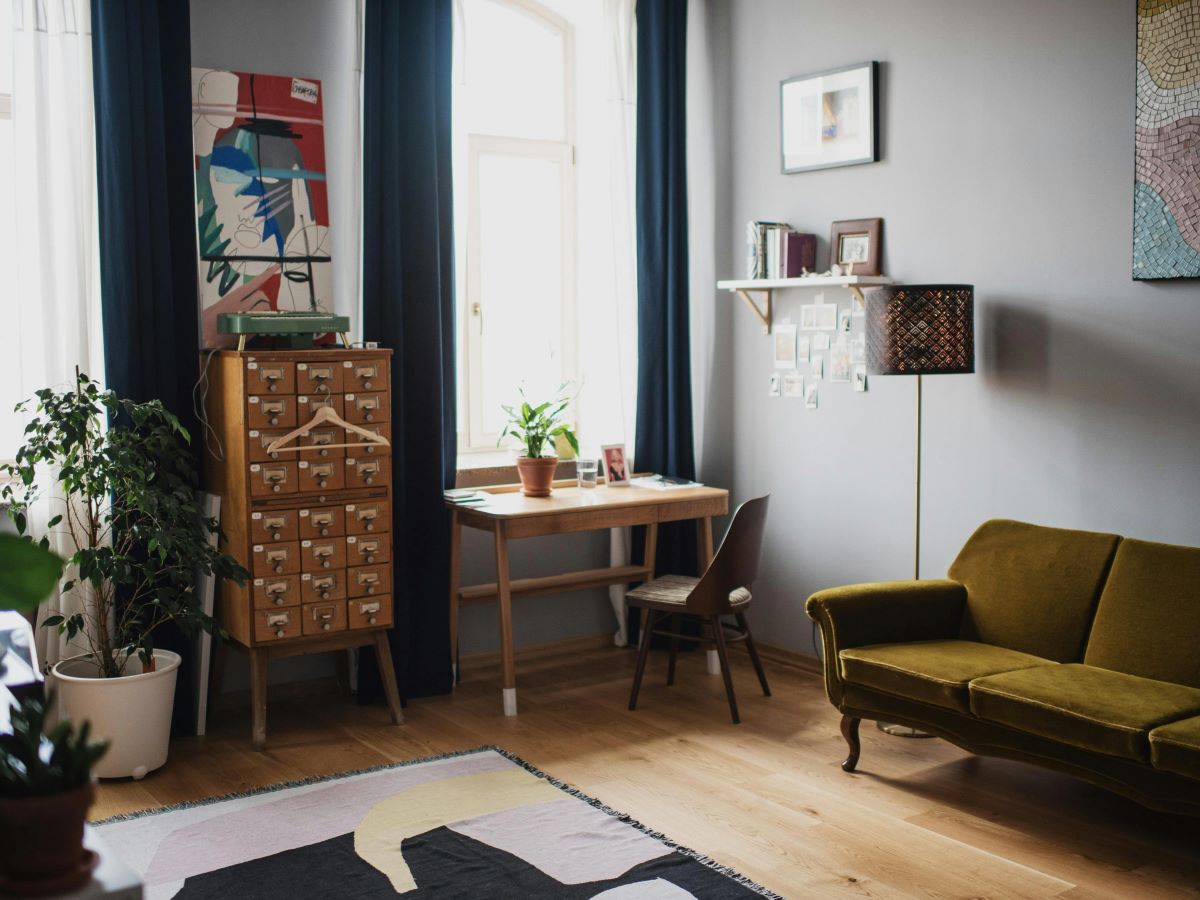

For us, sustainable living is not just about insulating or using less gas. It is also about what you already have in your home. That second-hand cupboard, that vintage rug, that refurbished dining table. Stuff with a story and value. But what happens to all those carefully collected treasures if a fire breaks out or a storm damages your roof? A home insurance is then not a boring detail, but part of sustainable living. Because those who live truly consciously also protect what is already there.
Second-hand is also value
Anyone who buys a lot second-hand will know: your home may not be full of design classics from a showroom, but it is full of stuff that you have deliberately picked out. A thrift store cupboard made of solid wood. A vintage lamp you've had rewired. A second-hand sofa that will last for years after a new upholstery. That is sustainable. Because what you reuse does not have to be produced again. But we often forget one thing: second-hand items also represent value. Sometimes even more than you think. Not only financially, but also in time and effort. And that's exactly where it goes wrong if you don't have a good overview in case of damage.
What falls under your house and what under your stuff?
When we talk about protecting, we quickly come to the difference between your house and your contents. Anything attached to your home is part of the house itself. Think of your roof, a fixed floor, solar panels or a built-in kitchen. You arrange that through your home insurance. Everything you can theoretically take with you when you move is part of your household contents. Your furniture, clothes, laptop, crockery, art and yes, even those second-hand finds. For those who live consciously, that distinction is important. Because carefully put together, largely second-hand furnishings can add up to a hefty sum. And if you have to buy that again, it not only costs money, but also resources and production.
Make a household effects list, including your thrift store finds
This is an important step! Many people do not have a complete overview of what is in their home. Or they underestimate the value. ‘Oh well, it's only second-hand,’ they may think. But add it up. An antique dining table, a designer chair via Marktplaats, a good second-hand washing machine, a collection of LPs... It adds up quickly. Making a simple household effects list will help you get a grip. Take photos. Write down what you paid approximately or what a similar item costs now. Keep receipts or screenshots of purchases where you can!
Those who list it alongside coverage of a contents insurance with Allianz Direct is better able to assess which risks are already covered and which are not. This way, you avoid underinsurance and are less likely to need to buy new items in case of damage.
Sustainable living is also about reducing risks
Green living is not only about investing, but also preventing. Good insulation and ventilation reduce the risk of moisture and mould. A well-maintained roof prevents leaks. Smoke detectors and a safe electrical installation reduce fire risk. These may not be exciting topics, but they belong here. Because the less damage, the less you need to replace. And the less you replace, the less new production is needed. It can be that simple.
Combine prevention with sober certainty
We are not of the doom-and-gloom variety. But we also know that things can happen. A storm that loosens roof tiles. A leak at the neighbour's house. A short circuit while you are just proud of your refurbished lamp. Those who make their homes more sustainable often think of insulation, solar panels or a heat pump. Logical. But making your home more sustainable also means making sure you don't have to start all over again when damage occurs. In a nutshell, it comes down to this: making do with what you have for as long as possible,
repair where you can and make sure your investments are protected. And that may feel less romantic than a new thrift store find, but just as important.
Photo credits: Ksenia Chernaya (Pexels).