
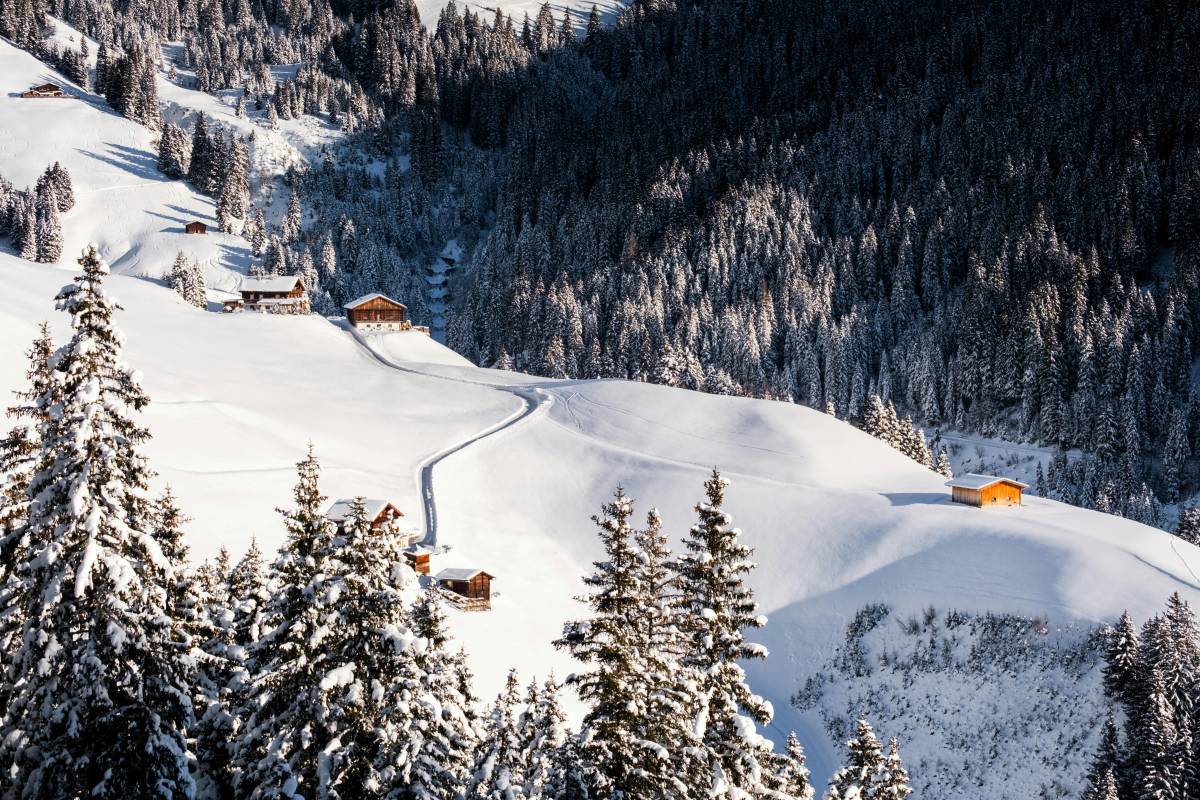

The ball is in the court: you're going on another winter sports trip. Will it be parking your skis at a stube in Austria or having lunch overlooking Mont Blanc in France? Whichever destination you choose, these days you can enjoy the snow and be mindful of the planet. In collaboration with TUI, we share a few tips you can look out for when booking your trip.
1. Choose eco-labelled accommodation close to the slopes
When booking your winter sports, you can gain a lot by paying attention to your accommodation. Preferably choose accommodation with an eco-label such as Green Key. This usually means that the hotel or flat takes measures to save energy and water, separates waste properly and handles cleaning products and food consciously. Also, these accommodations often support local initiatives or work with staff from the region.
In addition, it is smart to choose accommodation close to the ski lift or slopes. The less you have to drive or commute back and forth, the less emissions you cause. And: it is also just really relaxing to strap on your skis straight from your flat.
2. Go on winter sports by car (or train)
The way you travel largely determines the environmental impact of your winter sports. And the nice thing about winter sports is: most destinations are relatively close. France and Austria are perfectly accessible by car or train, and the group bus is also - maybe not your favourite, but definitely a sustainable choice. The train in particular is gaining in popularity, both for winter sports in Austria as for winter sports in France. And prove those sporty holidaymakers wrong: you travel in comfort, can read a book on the way and often get off close to your destination.
Going by car? For electric drivers, travelling in France and Austria is doable - the charging network there is now excellent. Whether you drive electric or not: think snow chains, vignettes and environmental stickers.
3. Choose your ski area consciously
It is not just how you travel and where you sleep that matters - the area itself can also be more sustainable. Some ski resorts are taking serious steps to reduce their carbon footprint. For example, they run (partly) on green electricity, invest in energy-efficient lifts or use technology to save water and power when making artificial snow. We have written extensively about artificial snow before. In both France and Austria, there are large areas at the forefront of this.
Want to be sure? Check the area's website. There you can often find more information about the ski area and how they deal with their energy consumption and the protection of their nature.
4. Avoid peak traffic if you can
It won't be feasible for everyone, but if you have the freedom: try to go on winter sports outside school holidays. Not only will you then avoid the crowds on the slopes and in the ski lifts, but you will also help spread the pressure on tourism a little better. For nature, locals and staff alike, it is just that little bit nicer. An additional advantage: travelling outside the high season is often a lot cheaper. More peace and quiet, fewer queues and the low season is also better for your wallet. Win, win.
Photo credits: Jonas Horsch (Pexels).