
You probably know the feeling: you start the week in good spirits with a fresh load of fruit and vegetables. You have bought just a little too enthusiastically, because on Friday evening there is still a forgotten courgette in the drawer and the bananas are suddenly brown. A shame, right? Not only for your wallet, but also for the environment. We have five ideas that will make you waste less food.
We waste lol
Food waste is a really big problem in the Netherlands. On average, as Dutch households we throw away over 33 kilos of edible food per person per year. That is almost 9% of all the food we buy and costs around 140 euros per person on an annual basis. Of that wasted food, fruit and vegetables together are one of the product groups that often end up in the bin, alongside bread and dairy. And that's a shame, because all those products have already cost a lot of land, water and energy to grow, transport and sell. Work that has literally been for nothing if it rots in your vegetable drawer or fruit basket.
And so with a few simple habits, you can really contribute to less waste of fresh fruit and vegetables. And that means less waste, lower grocery expenses ánd more respect for the effort that goes into your food.
1. Make a weekly plan (and freeze smartly)
A simple weekly menu really makes a difference. You buy in a more targeted way and avoid leaving ingredients lying around. Anything left over? Use leftovers in soup, curry or smoothie. And check what you can freeze: broccoli, peppers, spinach and bananas are perfect candidates for the freezer. Just slice them up and you're done. Some followers of thegreenlist.nl go a step further and also freeze their cutting waste, such as carrot butts, herb stalks and cauliflower or broccoli stems. Everything goes into a bag in the freezer, and once it is full, they make their own broth from it. A fragrant, flavourful base for soups, sauces or risotto. And you don't need any extra ingredients. Nice and economical and zero waste.
2. Know where you store your fruit and vegetables
Not everything has to (or should!) be in the fridge. A handy mnemonic: does it grow in a warm country? Then store it outside the fridge. Think bananas, mangoes and avocados. Does it come from a cooler climate? Then you can put it in the fridge, like apples, pears and broccoli. Also pay attention to which varieties you put together. Some fruits - like apples, peaches and bananas - give off ethylene gas. This gas speeds up the ripening process of other fruit or vegetables. For example, do you put cucumbers, lettuce or berries next to an apple? Then they spoil faster.
Additional tip: keep your vegetable drawer clean and dry. A damp drawer is more likely to cause mould and we don't want that.
3. Get started with pickling or fermentation
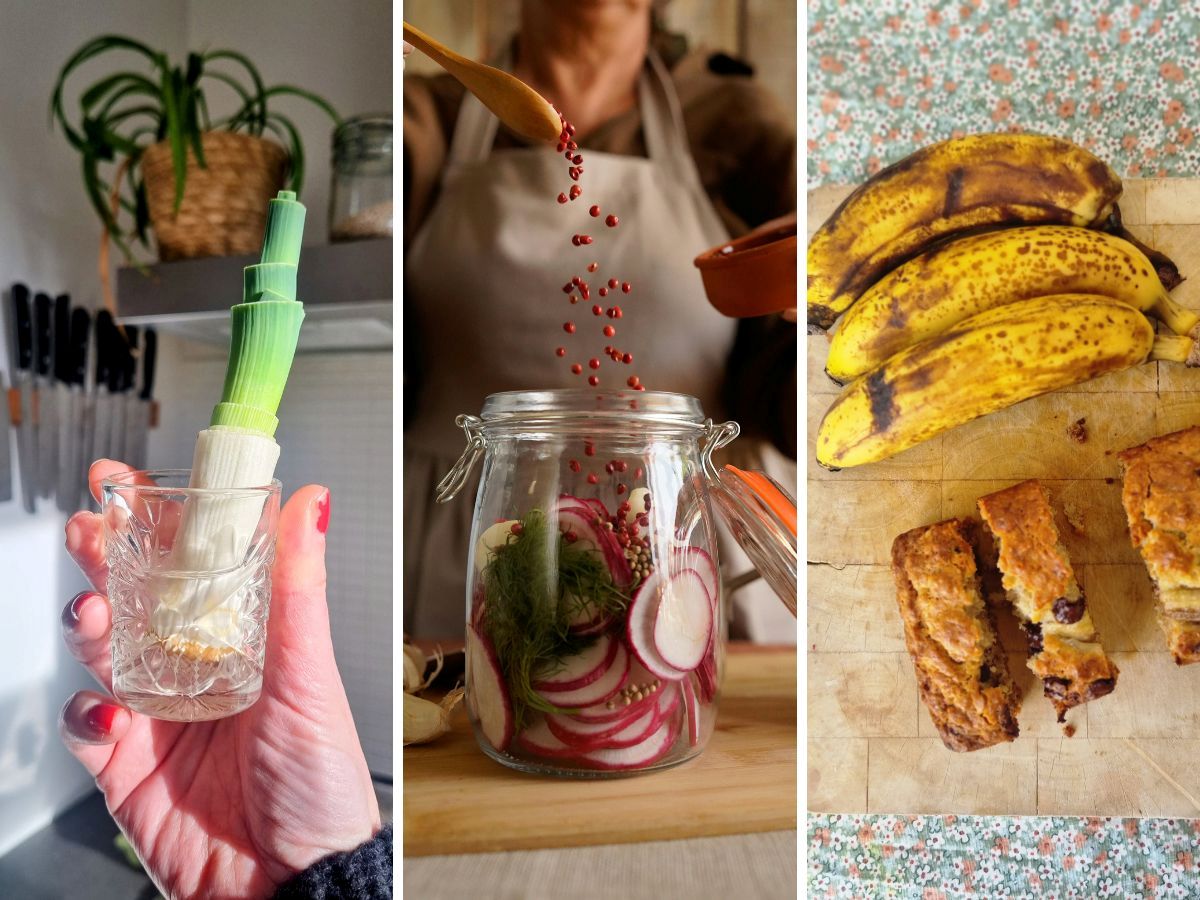
Making pickles is fun, tasty and sustainable. What you need? A leftover vegetable, a clean jar, some vinegar and herbs. In no time, you have a delicious side dish for on bread or with drinks. Fermenting - for example sauerkraut or kimchi - is also a good way to preserve vegetables longer. And bonus: it's good for your tummy.
4. Regrow vegetables
You can simply give some vegetable scraps a second life. Put the butt of spring onion, leek or pak choi in a glass of water and within a few days you will see new stems growing - really foolproof. You can also take cuttings of herbs like basil in water and repot them. Even ginger, garlic and lettuce can grow back if you store or plant them properly. It's easy, fun and surprisingly economical. Want to know more? In this article, read all about regrowing vegetables.
5. Save an orphan banana
Bananas with a spot or a crazy shape are often left behind in the supermarket. A shame! They are still just as tasty. Even better: the riper, the sweeter. Perfect for banana bread, smoothies or pancakes. So ditch that ‘perfect’ banana and adopt an orphan!
Wasting less fruit and vegetables: it can be that simple!
With a little planning, smart storage and a pinch of creativity, you can already save quite a lot of fruit and vegetables from the bin. Small effort, big difference - for your wallet AND the planet.
Sources: Milieu Centraal, Central Government & NPO Knowledge. Photo credits: left & right: thegreenlist.nl, centre: Hello Aesthe (Pexels).