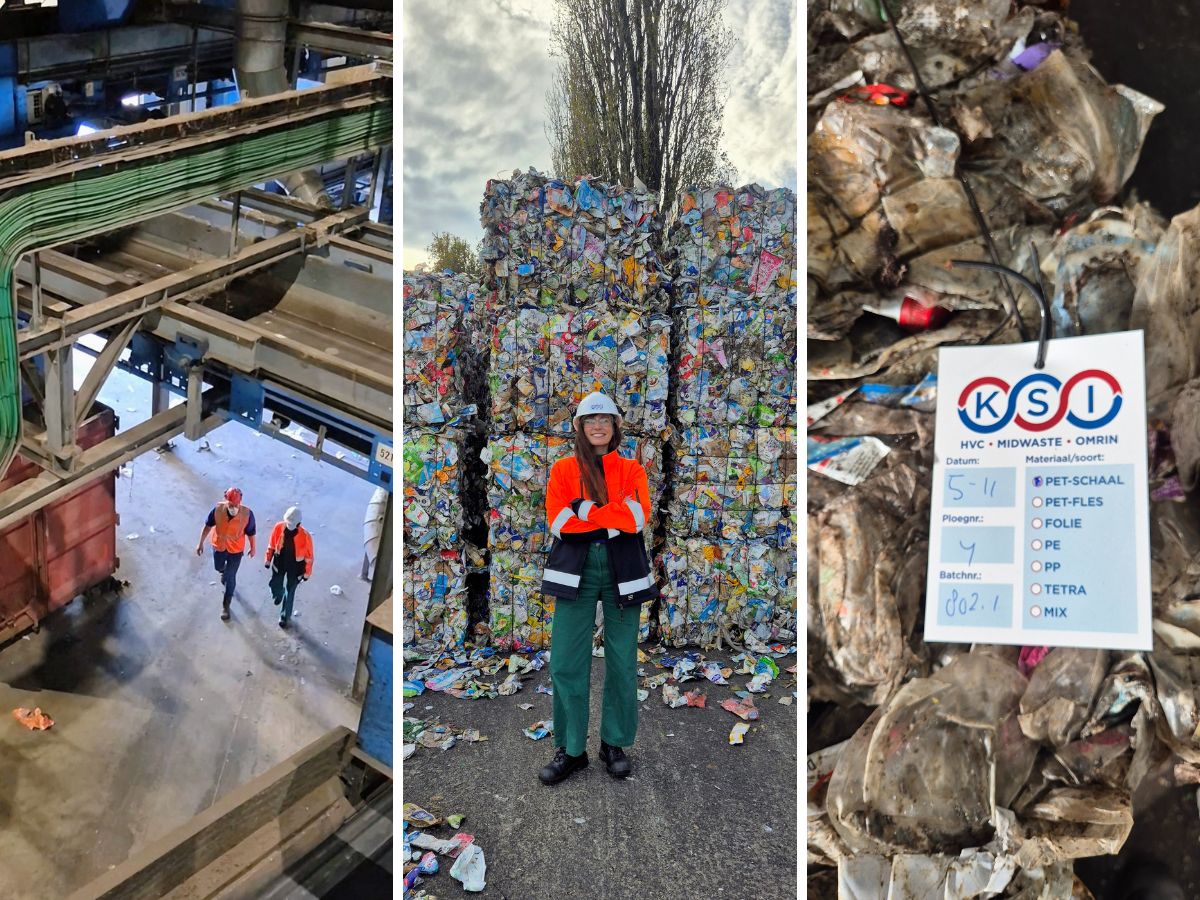
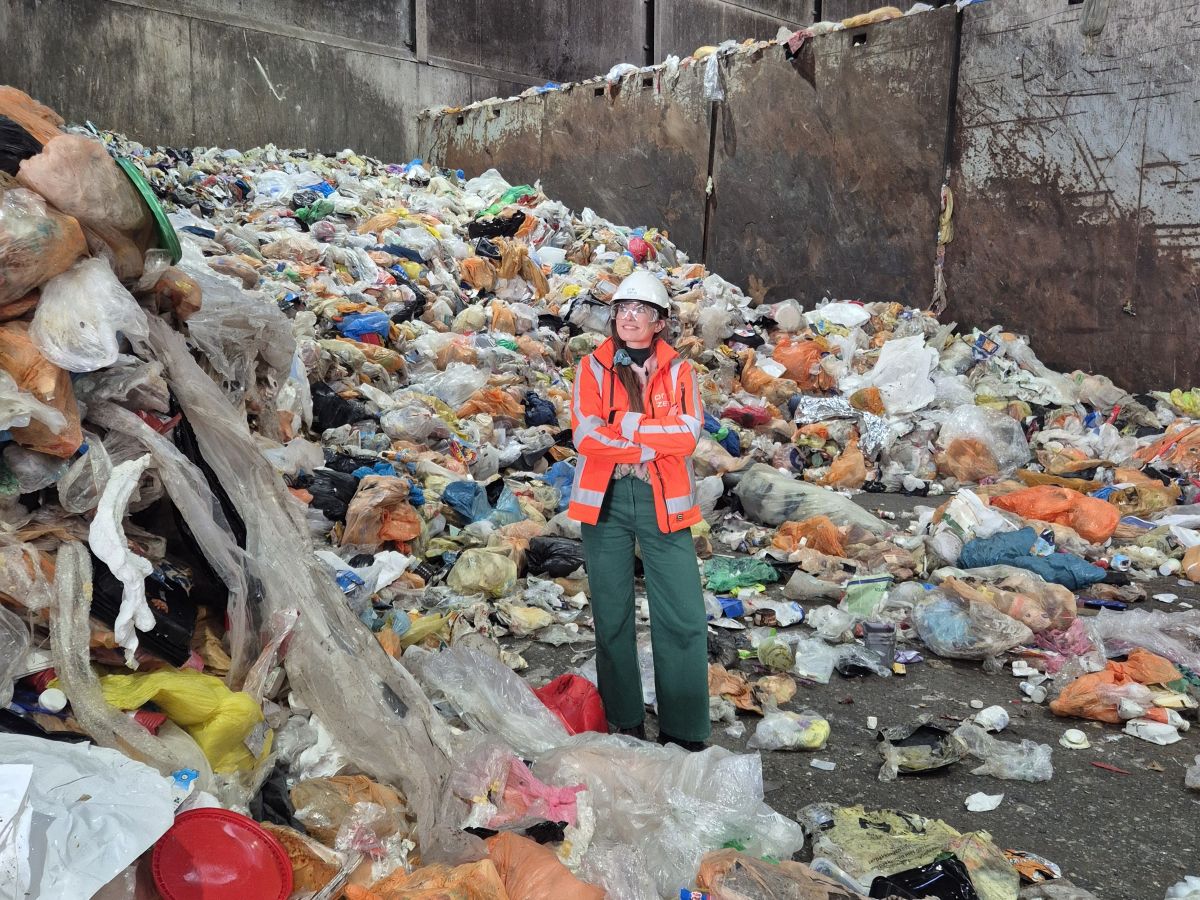

PMD stands for plastic packaging, metal packaging and drinking cartons and is collected separately in many municipalities. Good, because this waste stream is easy to recycle. At the waste processor, the materials are sorted so that they can serve as new raw materials. But then it has to be the right waste. And that, unfortunately, is where things still often go wrong. Saskia took a look at PreZero in Zwolle, which further sorts PMD. And there she saw how incorrectly collected waste causes delays, dirt, damage and sometimes even dangerous situations in PMD recycling. Ai.
This is what happens to your PMD after it is collected
In partnership with Verpact
Your full bin bag of plastic packaging, metal containers and drinking cartons is heading to the waste processor. And then? For most households, it is a blackbox. And so we decide to take a look at PreZero, a large waste processor in Zwolle that receives mountains of PMD waste every day. There, the PMD waste - also known as PBD in some municipalities - is sorted at lightning speed with clever techniques. Magnets take out the metal, windshifters blow up the light plastic packaging and infrared scanners recognise the different types of material. What remains are bales and containers of materials, sorted by material and sometimes also by colour. As many as 14 streams! All ready to be delivered to a recycler. Which will turn them into raw materials for packaging manufacturers, for instance.
It is great that we can turn our PMD waste into something new such as new packaging, plastic furniture parts, building materials or aluminium for cans. But that only works if the waste is right. And unfortunately that still often goes wrong. Too often, we throw other waste in with the PMD. Not only does this contaminate good recyclable material, but it also damages the machines or even forces them to shut down temporarily. Everything then has to be cleaned up or repaired by hand. As you can imagine, this is a time-consuming and costly job. And unfortunately, the reality is that this sometimes happens several times in one day. And that's a shame, because it is easily preventable. That's why we list the biggest problem cases for you, so that you hopefully never make this mistake again.


A small collection of what goes wrong with PMD recycling: the wrong materials are discarded with this waste stream, causing problems.
The biggest ‘jammers’: what goes wrong in PMD recycling
During the tour at PreZero, common problems became immediately apparent. Some items seem harmless, but cause huge inconvenience when sorted. These are the culprits that most often cause misery:
- Batteries: these belong in the small chemical waste, but unfortunately regularly end up in the PMD bag. Result: fire or even explosion hazard. A real danger to life! You can hand in batteries and small electrical appliances at supermarkets, garden centres, DIY stores and electronics shops. A handy mnemonic for this is: where you buy it, you can dispose of it.
- Toys and appliances: think plastic toy cars, markers or broken appliances. They are often plastic, but not packaging. And so they don't belong in the PMD, but in the environmental street.
- Full containers: a forgotten pack of yoghurt or custard? That makes for a dirty mess. The gunk contaminates other waste and makes machines dirty. Everything then has to be cleaned by hand. These packages can go with the PMD, but they must be emptied first.
- Garden hoses, plastic garlands, Christmas lights: flexible, long materials get tangled in the sorting machines. It takes a long time to get that out and the whole process grinds to a halt. Besides: these are not packaging either! You can hand this in at the waste disposal site.
Recognisable? Fortunately, with a simple mnemonic, it is easy to remember what can be added.
The mnemonic: 3 times yes = PMD
Are you in doubt about whether something can go in the PMD? Then ask yourself these three questions:
- Is it a packaging (been)?
- Does it come from a household?
- Is it empty?
Can you answer ‘yes’ three times? Then it's allowed in the PMD bag. So: an empty shampoo bottle, a can of tuna fish or a milk carton? Yes it is. But a plastic storage box, toy car, battery or old marker? You leave those out. They are not packaging and can seriously disrupt the recycling process or, worse still, cause a hazard.
More is allowed in PMD from now on
Because of the new rules, from 1 January 2026 more is allowed in PMD than before. This is due to smart sorting techniques and because clear(er) agreements have been made between municipalities and packaging companies. What is now also allowed in the bag - and not before - is, for example: a whipped cream aerosol can (empty!), plastic and aluminium coffee capsules (these are exceptionally allowed in the bag with their contents of coffee grounds, view the sorting process of coffee capsules) and a combination packaging of plastic and paper such as a bread bag with a plastic window. Want to know exactly what's allowed or not? Then check the new Do-Not list below.
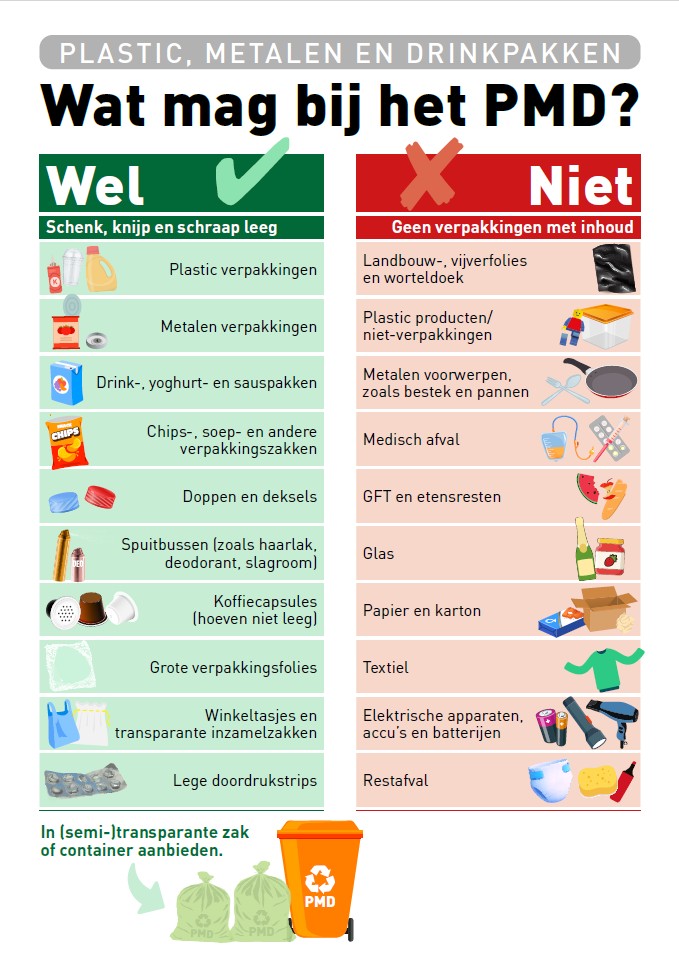
In doubt? Then waste separation guide.nl always a handy helpline for PMD recycling. Bookmark it. And remember: PMD is not waste, it is a raw material. Is PMD not collected separately in your municipality? No stress! Then it will be separated and recycled afterwards. Also great!
Learn more about recycling our waste
- Also see: This is how our packaging glass is recycled.
- Also see: from gft to compost!
- Also see: cleaning our sewers!
Photo credits: thegreenlist.nl.