

Arrgh! Thought you'd made a more sustainable purchase, turns out you've fallen victim to greenwashing! No! You have been vulgarly misled by clever marketing tricks. That ‘nice’ purchase turns out to be not so nice for the planet at all, no matter what was said about it. Unfortunately greenwashing, where companies and products pretend to be more sustainable than they actually are, is a major problem. In this article, we dive into this phenomenon. How can you recognise it and, above all, what can you do to avoid falling into the trap of misleading marketing?
What is greenwashing?
An oil company advertising their green energy, but at the same time concealing how much they still invest in fossil fuels, a clothing giant coquetting their ‘green’ label, but failing to mention that their ‘sustainable’ clothes are made in appalling conditions, an airline with a ‘fly green’ campaign... These are all examples of a marketing strategy where companies pretend to be greener or more sustainable than they really are. And this is called greenwashing. And it should not. It often happens through the use of misleading information, vague claims and unreliable labels. The term is an amalgamation of ‘green’ and ‘whitewashing’, indicating that companies want to polish their image without actually being environmentally friendly.
Greenwashing is not new
Greenwashing is not a new phenomenon. It was first named in the 1980s by environmentalist Jay Westerveld, who cited the reuse of towels in hotels as an example. Hotels started encouraging their hotel guests to use their towels for several days, ‘because it would be better for the environment’, but actually it was developed to save costs. Since this eye-opener there are unfortunately still many small and large examples of greenwashing passed. And still it happens. Even now that there is European legislation to curb such practices.
European legislation against greenwashing in brief
EU legislation prohibits vague environmental claims and misleading product information. Sustainability labels will only be allowed if they are officially certified. Warranty information must be displayed more clearly and there will be a special label for products with a longer warranty period
Source: europarl.europa.eu
Pay attention! Greenwashing is still happening
Despite increasing awareness of greenwashing, does not stop companies from going ahead with it, according to a number of more recent scandals. In 2024, for instance, the Advertising Code Committee ruled that fast fashion giant Primark was engaging in misleading sustainability communication. They had to, after sustainable fashion activist Sara Dubbeldam filed a lawsuit, remove banners from their shops with texts like ‘reduce CO2 emissions by 50%, so the planet can breathe again’ and ‘we make our clothes circular, so the earth can keep spinning’. And now you might be thinking: ‘not surprising that a company like Primark is doing something like this’. While this may not be surprising, it also happens to companies that present themselves as sustainable. This is how Follow the Money that Patagonia's clothes are made in the same factories and under the same conditions as those of notorious fast fashion chains. And cheerful Flower Farm has also been taken to task by the Advertising Code Committee for misleading advertising. They are not allowed to claim that buying their palm oil-free margarine prevents deforestation.


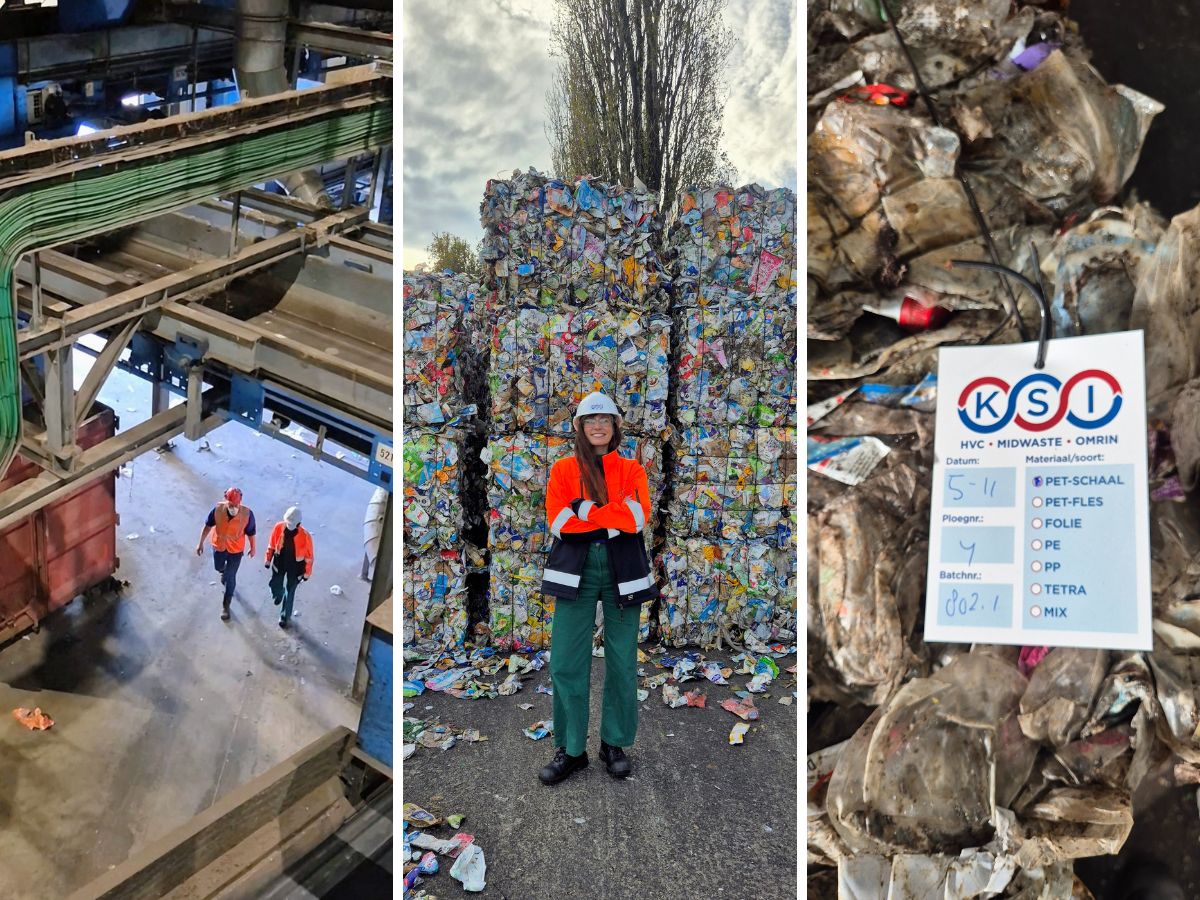
An example of greenwashing for which Primark has been taken to task. Photo taken by Sara Dubbeldam.
How can you recognise deception?
In short, greenwashing is a bad story. It misleads consumers and, in some cases, contributes to more environmental pollution and overconsumption. And while legislation should start curbing it, it won't disappear completely overnight, we think. We predict that some riots and cases will follow. How can you spot it? A red flag are vague terms like ‘natural’, ‘green’, ‘eco-friendly’ without concrete evidence. Also an alarm bell are misleading labels. These are unofficial - devised by the company - labels, often with convincing green logos, that have no value whatsoever. If you come across a label you are not familiar with, consult the Label guide from Milieu Centraal. Finally - and this one is nasty - partial truths are also a well-known trick. Companies then highlight an environmentally friendly aspect of their product, while deliberately leaving out the harmful aspects. A good example is an oil company with that green energy campaign or a fast food company proudly showcasing their plastic-free packaging.
This is how you spot greenwashing earlier
Now that you know, you obviously don't want to fall for this sales trick again. The tip: take a little more time to research the products you are buying. What can you find out about them? Does the product have good labels, can you find a reliable sustainability report from the company, or can you find other reliable recommendations or articles? Don't quite get there or have doubts? Then contact sustainability organisations that can help you further on sub-topics such as Milieu Centraal, Solidaridad, World Wildlife Fund, Greenpeace, Oxfam Novib, Environmental Defence, Plastic Soup Foundation, Peta, etc. Start following sustainable influencers who can give you ideas to find more sustainable alternatives. You can find the list of the cutest sustainable influencers here! Also very interesting to follow is OFFMODE, the Substack account of sustainable fashion expert Sara Dubbeldam.
Finally, don't be afraid to ask companies critical questions about their sustainability claims. Companies that are truly sustainable will be happy to be transparent. Do you have any questions or tips on how to greenwashing can avoid? Let us know via the follow and contact buttons at the bottom of this page!
Sources: greenwashingindex.com, theclimateclub.co, nu.nl, nos.nl, When Sara Smiles, Wed. Photo credits: Sara Dubbeldam.