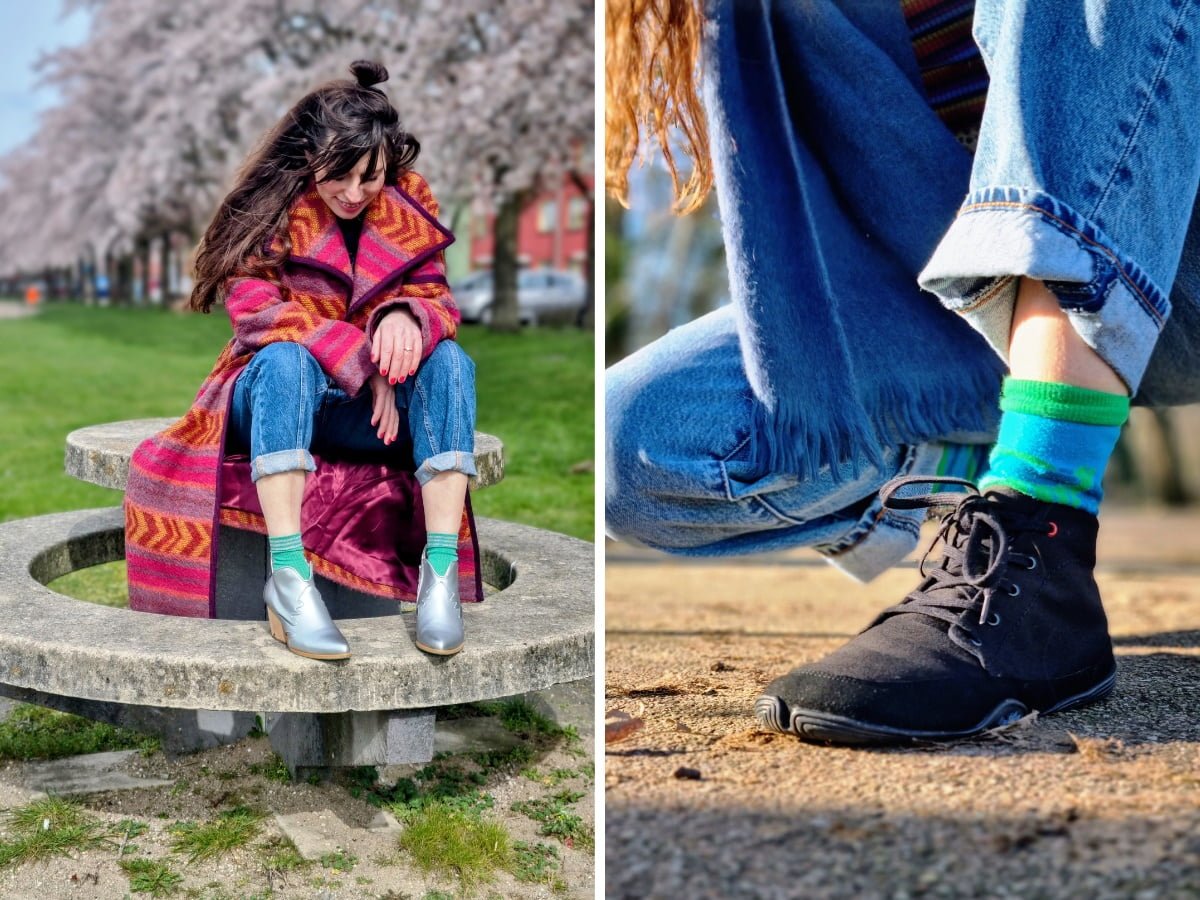

A lot is written about sustainable clothing. But what about sustainable shoes? Much less can be found about these. Is the production of shoes less burdensome than that of clothing? If only that were true. Unfortunately, there is a lot wrong in the shoe industry too. It is just often lumped together with the clothing industry. At thegreenlist.nl wanted to know more about it and went to investigate. What can you look out for when you need new shoes?
Looking for durable shoes
You would like to buy sustainable shoes, but are not sure how to recognise them? That's also quite difficult, because unfortunately a lot of greenwashing place. Things seem sustainable and green, but unfortunately they are not. You can read more about greenwashing here. It's marketing. Unfortunately. Still, there are some things to watch out for when you need new shoes. And let's get straight to the point: only buy shoes if you really need them. The average Dutch woman has 23 pairs of shoes at home. Wow, that takes quite a closet! She doesn't wear eight pairs of them, while she buys another four pairs a year on average. And so the shoe mountain, just like the clothing mountain, continues to grow rapidly.
So there is some profit to be made here. Does even the cobbler say your footwear is really beyond saving and it's time for a new pair? Then let's see how to find shoes that leave the smallest possible footprint on the planet. Nice pun, we thought.


Sustainable trainers made of eucalyptus from Giesswein and sustainable barefoot shoes from Wildling.
How are shoes made?
The negative impact of shoes starts during the production process. A trainer, for example, consists on average of 65 parts and about 10 different types of materials, which are often synthetic. So there is a lot involved in making a new pair of shoes, and you can probably imagine that making them puts a strain on our planet. Besides textiles, synthetics and/or leather, a lot more is needed to make a shoe such as rubber, glue, metal, dyes and coatings. Moreover, a lot of water and energy is usually consumed during the production process.
So finding out whether a shoe has been produced more sustainably is a tall order. But it is important since 70 to 90% of the total negative environmental impact of shoes occurs during the production phase. Fortunately, there are labels that can help us make a more sustainable choice. Well-known labels for shoes are EU ecolabel, B-Corp and Blauer Engel. Do you have a pair of shoes that has one of these labels? Then you are already a step - haha - in the right direction. But there is more you can look out for.
Where and by whom are our shoes made?
This is only one side of the story. Because not every environmental label says something about the working conditions of the people who made the shoes. Like our clothes, the vast majority of our shoes are produced under poor conditions. This is hard to find out, but companies that produce more fairly usually mention this on their website, for example that it was produced in a family-run factory in Portugal or another traceable workshop somewhere in the world. If this information is missing or you can't find out, you probably know enough. You can also check whether the brand is a member of the Fair Wear Foundation. If you can't find anything about working conditions, you can actually already assume it's not right. You can also pay attention to where shoes are produced. The further away, the more transport is needed and the more CO2 emissions are caused.
The material of our shoes
Another thing you can look out for when buying new or second-hand shoes is the material they are made of. There are a four types of materials commonly used for the uppers of shoes and we take a quick look at all four.
1. Learn
For centuries, shoes have been made of leather. The advantage of leather is that it is a strong and flexible material that lasts a long time. So in that respect, you can say that a leather shoe is a durable shoe. But unfortunately, leather also has some major drawbacks. It is a by-product of the meat industry where a lot of animal suffering takes place. And to turn animal skin into soft and supple material, the leather is tanned. This requires a lot of water and often involves a lot of chemicals. Not to mention the working conditions of the tanners. Want to know more about this? Keuringsdienst van Waarde devoted an interesting episode to this.
Do you still want to enjoy the benefits of leather, but with a smaller negative impact on people and the environment? Then choose leather produced chromium-free, preferably in Europe. Hallmarks that can help you choose more sustainable leather are: Leather Working Group, Blauer Engel, EU Ecolabel, Oeko-Tex's Leather Standard and IVN Naturleder. Examples of brands using more sustainable leather are: Aeyde, Veja, Think! and OTA.
2. Vegan leather (synthetic)
Plant-based leather sounds a lot more sustainable, but as we concluded earlier in this article, vegan leather is not necessarily more sustainable. Vegan leather is usually made of plastic, i.e. petroleum. And we need to get rid of petroleum. You also see more and more shoes made of recycled polyester, which is definitely a nicer option. Examples of shoe brands that use recycled polyester are Veja (trainers), Ethletic (trainers), Collection and Co and NAE. Fun fact: NAE stands for ‘no animal exploitation’.
3. Plant-based vegan leather
Plant-based alternatives to vegan leather could also be a nice alternative, such as pineapple leather or apple leather, but these materials are unfortunately still in their infancy - touché - resulting in limited supply. At NAE they have shoes made of pineapple leather and Giesswein Makes trainers out of leather from mushrooms. Agazi and ME.LAND make shoes from appelleer
4. Natural substances
However, you can find more and more sustainable shoe brands that use other natural materials for the tops of their shoes such as organic cotton, hemp or wool. Some fine brands include Mukishoes, Wildling (both barefoot), Ethletic and Nagna. Materials that are biodegradable can certainly be a more sustainable choice. Especially if the colour also comes from natural ingredients. You can find more about these and other materials in the article we wrote on clothing materials.


Wildling has shoes (including children's shoes!) made of natural materials and uses natural textile dyes.
Waterproof shoes: there they are again, PFAS
With some types of shoes such as hiking shoes, children's shoes or winter shoes, we like these shoes to be waterproof. In this case, the shoes have an additional waterproof layer. Unfortunately, this layer often contains PFAS, you know those ‘forever chemicals’ that stay in nature and our bodies forever. Bah! If you are looking for waterproof shoes and want to know more about this: read this article we wrote about hiking boots with PFAS.
Microplastics from shoe soles
Have you found durable shoes whose uppers are made of sustainable materials? Super! But do you know about the sole? Because the soles of most shoes are (partly) made of plastic. That this requires petroleum in production, you probably already knew. But did you also know that microplastics come off synthetic shoe soles while walking? This may seem like an insignificant detail, but a German study concluded that wear from shoe soles ranks seventh among the major contributors to microplastics. That is more than, for example, microplastics from plastic packaging (rank eight), washing clothes (rank 10) and microplastics from cosmetics (rank 17). There are not many alternatives yet, but if you have the option, preferably choose shoes with a sole made of natural rubber. Alternatives to synthetic shoe soles can be found in this article.
Sustainable shoes: second-hand shoes
Like clothes and most other stuff, buying second-hand shoes is a sustainable choice. Bah, second-hand shoes! Well that's not so bad, mind you. In fact, there is a huge supply of shoes that have hardly been worn. And you can save them from landfill. Now that's sustainable. Of course, if you can also find a sustainable pair of second-hand shoes, you're doing the right thing. Lucky you! Want to know more about buying second-hand shoes: we wrote an article about it earlier.
Running out of your durable shoes and then?
Shoes burden the environment not only while they are being made and worn, but also afterwards. You probably know the images of those huge piles of clothes in the middle of the desert. Well so there are a whole bunch of shoes among those too. All the chemicals and synthetic materials used in shoes can slowly end up in the environment through such a heap. And even if shoes are disposed of properly, it is still difficult to recycle them because they consist of so many different parts. So be careful with your shoes and try to wear them for as long as possible. If you really don't enjoy them anymore, maybe you can make someone else happy with them.
More fair fashion tips from thegreenlist.nl
- Need more inspiration for sustainable shoe and clothing brands? Then be sure to check out our list of sustainable fashion brands and shops.
- Suffering from cold feet? We have also listed the cutest sustainable slippers and slippers for you.
- Want to enjoy your hiking boots for as long as possible? Then take a quick look at our tips for maintaining hiking boots.
Sources: Niks Nieuws, Sciencelink, NEMO Kennislink, When Sara Smiles, Mirror. Photo credits: thegreenlist.nl & Kirsten Schoner (Giesswein trainer).