
Some 2.5 million Christmas trees are sold in the Netherlands every year. After Christmas? Get rid of them! Fortunately, many municipalities give the trees a useful purpose - for instance as compost, energy or wood chips for footpaths - but it is still a shame that a tree that took years to grow is discarded after only a few weeks. And so we were curious: is there another way? Spoiler: yes!
What to do with your tree after the holidays?
The Christmas tree has now become a typical example of a disposable product. As soon as the holidays are over, millions of trees end up on the doorstep for the rubbish service. Fortunately, they are not all simply burnt: in many municipalities, Christmas trees are collected separately and processed. They are shredded into compost or soil improver, or used as biomass in a waste-to-energy plant to generate electricity or heat. Sounds pretty okay, but it is still a shame that such a tree - which often takes eight to ten years to grow - has to give way after only a few weeks. Fortunately, there is another way. You can donate your tree to a good initiative or do something cool with it in your garden or neighbourhood. But beware: no matter how nice it smells, using Christmas tree needles in your food just like that is not a good idea. Many trees from regular cultivation have been sprayed or treated with chemicals.
Recycle your Christmas tree after the holidays!
According to tradition, from 6 January (Epiphany), the Christmas tree must leave the house again. But where to? Perhaps to the elephants at the zoo, a local brewery or a soap factory. There are surprisingly many original initiatives that will give your tree a second life. These are our favourite ideas!
Donate your tree to animals that feast on it
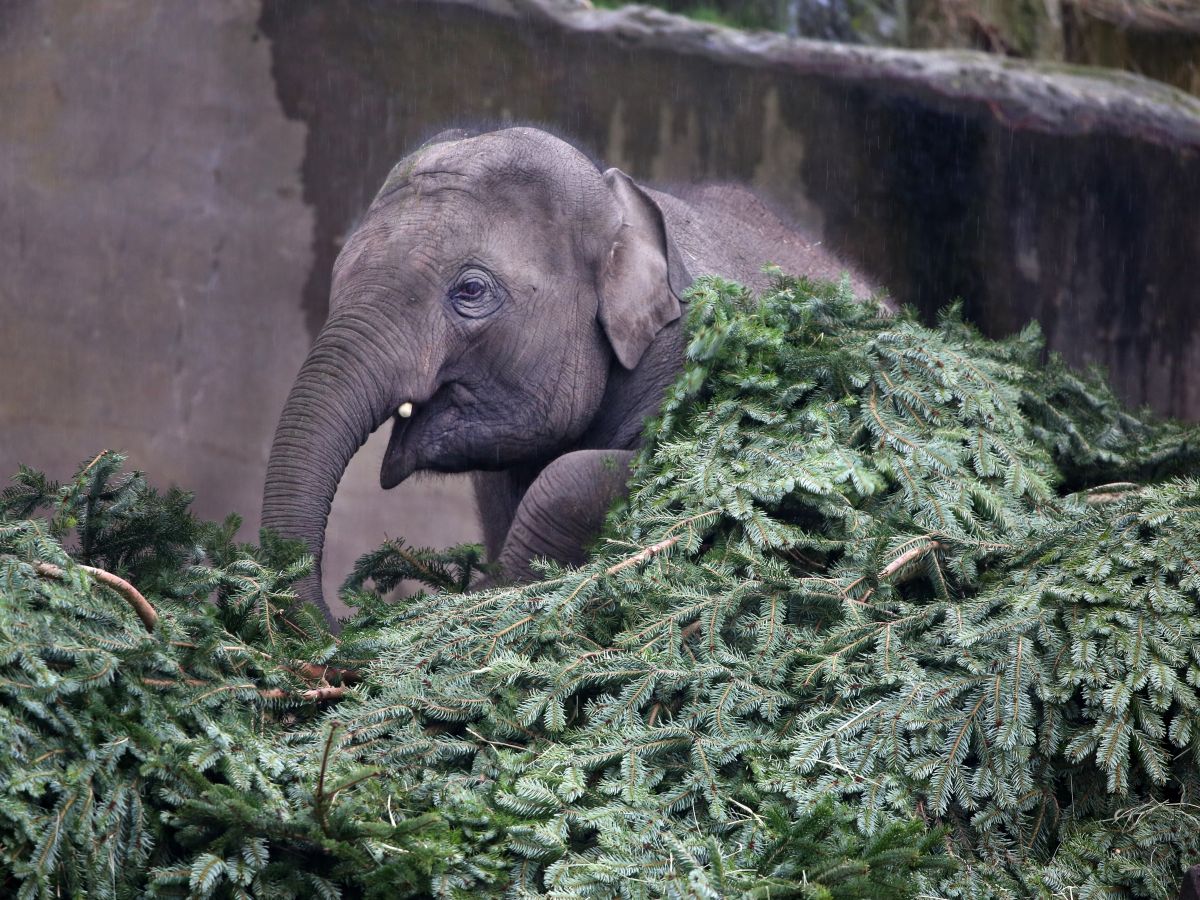
An unusual Christmas tree initiative we came across: at Artis, the tree gets a second life in the elephant enclosure. Earlier, for instance, the top of the enormous Dam Christmas tree - measuring up to 18 metres high - ended up in Amsterdam with the Asian elephants. The tree provides enrichment there: new smells, stimuli and play material. Thicker branches are for the elephants, thinner ones go to the hoofed animals. Whether this happens every year is not certain, but it does show that a Christmas tree can fulfil a beautiful function even after the holidays.
And not only in Amsterdam do animals find Christmas trees a treat: at several alpaca farms in the Netherlands, hundreds of trees are on the menu every year. The animals love them and benefit from them, as they suffer less from parasites after eating them. Scented like Christmas and completely circular, who wouldn't want that?
A soft bed for cows
We stick to the ideas with a high cuddliness factor. In Overijssel, a dairy farmer came up with an original use for discarded Christmas trees: he uses them as bedding for his cows. The trees are shredded and form a soft, airy soil in the free-range barn that also composts well. The needles quickly provide compostable material, the wood keeps things loose. And the best part? Those who hand in their tree can get a bucket of compost back after a year. This completes the cycle. Whether this initiative will return every year, we do not know, but it shows that even a discarded tree can still be of value - for the farmer, the soil and the animals.
From Christmas tree to soap or perfume
Your Christmas tree as a fragrant surprise? It can! Dutch soap brand NatureBar makes handmade soap from natural - and as far as possible circular - ingredients, using residual streams from Amsterdam, including therefore old Christmas trees. Their Pine Forest soap is made with pine needles and pine essential oil. The smell? Fresh and woody, just as you would expect from a fir. A second idea that we think is worth a mention is RUIK. This is a sustainable perfume brand that the smell DEN developed with pine needles and twigs, including from the Christmas tree that previously stood on Dam Square in Amsterdam. Instead of being burnt, this tree was given new life in a bottle of perfume. Cool!
A Christmas tree as a river protector
A Christmas tree that saves fish? Yes, that too is possible. In the English region of Cumbria, we saw a nice initiative come along via The Happy Activist. There, old Christmas trees are used to strengthen river banks. The trees are securely bolted to wooden beams along the bank. In this way, they provide safe hiding places for young fish, trap silt (keeping the water clearer) and help prevent erosion. Less risk of flooding and more life in the river - win-win!
@the.happy.activist Good action by those Brits! Do you also have a good recycling tip for old Christmas trees? Share it in the comments. Happy 2025!
♬ original sound - The Happy Activist
Cheers to your Christmas tree
Even after Christmas, your tree can still provide atmosphere... in a bottle. This is how Lowlander brews their Winter I.P.A. with hand-picked spruce needles from collected trees. The result: a fresh, spicy beer that smells like a winter walk in the woods. Botanical sommelier Maidie van den Bos also showed earlier what is possible: together with students, she made syrup and sparkling wine from the Coolsingel fir.
From Christmas tree to sacred potting soil
Some Christmas trees get a surprising second life after the holidays, in a bag of potting soil. This is how the founders of BeterBoompje and Adopt a Christmas Tree started the initiative The Forest of Raw Materials. Together with Pokon, they collected no less than thirty thousand discarded Christmas trees without root balls. Those trees were processed into compost and ended up in ten thousand bags with the telling name: Holy Potting Soil. This way, your old Christmas tree still turns into food for new life.
Getting started with your old Christmas tree yourself
Finally, a creative idea we spotted at garden influencer Michael Griffiths on Instagram. He shows step by step how to give your Christmas tree a second life in and around your home. Cut off the branches and use them as natural frost protection in your garden or in containers. Want a thicker layer? Then you can shred them into free mulch. You can put the trunk in the ground as a climbing aid for beans or flowers. Or: drill holes in it, saw it into pieces and stack them into an insect hotel. This way, you can also give small garden life a nice place to live. And we got another great tip from one of our followers: remove the branches, throw them in the garbage and save the trunk. If you let it dry well in the summer, you can later cut coasters from it. Very circular and cosy too.
Replanting your Christmas tree
More and more initiatives are making it possible to give your Christmas tree a second life after the holidays... as a Christmas tree! At organisations such as BeterBoompje and Adopt a Christmas tree you rent a tree with root ball that will be replanted after the holidays. This way, you can welcome the same tree in your home every year. A nice project has also started in IJsselstein: there, it organises IJsselstein Climate Neutral Foundation an annual Christmas tree lodge. Residents can temporarily hand in their tree, after which it is cared for in a ‘lodge garden’ for the rest of the year. In December, they collect their tree again, so that it may shine in the living room again at Christmas. How fun is that?
Getting started yourself? In the book Eat & drink your Christmas tree contains 20 recipes for cooking and brewing with spruce needles. But note: this, as you know by now, is only suitable for organically grown, unsprayed trees.
Enjoy your Christmas tree for longer
Whether your tree ends up as a beer, a bed for cows or a toy for an elephant: it can be so much more creative than putting it on the street. The initiatives in this article show that a Christmas tree can still be of value after the holidays. For animals, for the garden, or just for yourself. So next year: think twice before you throw it out the door. Who knows where your tree might turn up... in a beer, a soap or as a faithful lodger until next Christmas. Do you have another great tip for what to do with your Christmas tree? Let us know! We'd love to share it next year!
You might also find this interesting!
- Are you too curious about the spruce? Then try this game-picking recipe with spruce buds in spring!
- Also check out this zero waste recipe: oliebollenbrood from old oliebollen.
- Also see: alternatives to a Christmas tree!
Sources: Euronews.com, Dutchnews.nl, AD.nl, Omroep Zeeland, Broadcaster Brabant, Noordhollands Dagblad, newharvest.nl, Volkskrant. Main image: ARTIS.