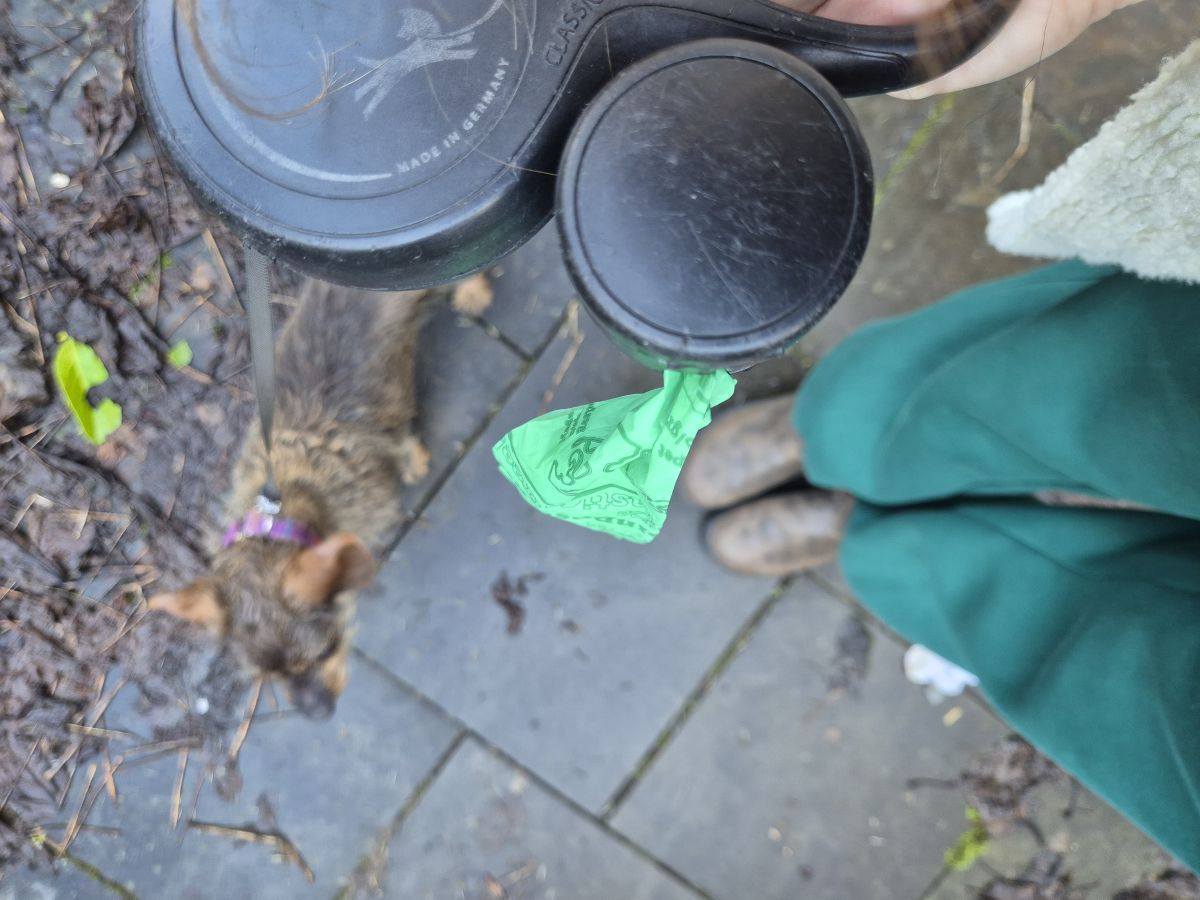

Leaving dog poo lying around is forbidden, as most dog owners know by now. But there is another reason why picking it up is not an unnecessary rule. And no, we are not talking about dirty shoes or irritation to other walkers when you leave such a ‘bonus’. Dog poo also affects the nature around us. And that influence is bigger than you might think! So pick up that turd!
What dog poo does to soil
Dog faeces contain a lot of nitrogen and phosphate. These are substances you might associate with manure, but which actually cause problems in parks, roadsides and nature reserves. In those places, the soil is naturally quite poor. That is exactly why so many different flowers and herbs can grow there. Dog faeces slowly overfertilise the soil. Indigenous plants that like sparse soil fail. On the contrary, fast-growers like grass and nettles get the upper hand. The green may stay green, but it becomes increasingly one-sided. And when the plants disappear, insects and other animals often naturally follow. And so the ecosystem slowly changes, leaving fewer animal and plant species.
You see the effect of dog poo especially in places where many dogs visit. Think city parks, off-leash areas and popular hiking trails. One pile may seem harmless, but with dozens or hundreds of dogs a day, the problem - funny pun - piles up. Extra nitrogen ends up on the same patches of soil over and over again. That soil is not given time to recover and slowly gets out of balance. It is precisely places that are meant to be green resting areas that become ecologically poorer as a result. In the long run, what starts off as ‘leaving it as it is’ has a visible effect on the greenery around us.
What about the nitrogen problem?
Nitrogen in itself is not bad. It is naturally in the air and in the soil. But things go wrong when too much of it ends up locally. This happens through emissions from traffic, agriculture and industry, as well as from sources such as manure and thus dog faeces. In natural areas, this extra nitrogen leads to over-fertilisation. Plants that thrive on poor soil disappear, while species that like lots of food take over. As a result, biodiversity declines. So the nitrogen problem is not only about how much nitrogen there is, but mainly about where it ends up. And in places frequented by dogs, every little bit counts.
Dog poo also disperser of toxins from anti-flea drugs
One more reason to clean up your pooch neatly: anti-flea remedies such as drops on the coat, a flea collar or a chewable tablet also get into nature via dogs. These agents are meant to kill insects, including fleas and ticks. Substances like imidacloprid and fipronil used to be used in agriculture, but there they are now banned or strictly regulated because of the risks to insects and aquatic life. Yet concentrations in surface water did not fall. For researchers from Wageningen University & Research, reason to look further. They took samples of dog hair, urine and swimming water and found clear traces. Via hairs they lose (when combing, for instance), via bath washing or a jump in the ditch, but also via their poo and pee, these agents still end up in the sewer and nature, researcher Ivo Roessink said in Radar.
Avoid a fine and the nature problem: clean up dog faeces!
The good news: this is one of those problems you can do something about immediately. And good example follows. Your mother was right. So clean up dog waste neatly, is the message - katjing - and prevent not only a fine, but also additional nitrogen ending up in the same places. This makes a big difference especially in parks and nature reserves.
And another thing: always throw dog poo in the rubbish, even if you use a compostable bag. Dog faeces contain bacteria and parasites that do not belong in compost, and composting plants are not designed for this. Moreover, these ‘green’ bags often do not decompose well enough, not even the ones with the seedling logo. Read more about GFT recycling here! We followed this flow!
You might also find this interesting
- Also see: Dog sustainability tips: this is how to reduce your four-legged friend's paw print.
- Also see: sustainable tips for fuss-free cats.
- Also see: A visit to the fish shelter.
Sources: nu.nl, waste separation guide.nl, environmental centre.nl, Radar (episode 15/9/2025), waste processor Valor.