
Energy prices are skyrocketing. Especially in winter, you feel it in your wallet. Many households are then looking extra hard for ways to save on their energy consumption. So the timing couldn't be better: during a LIVE session on Instagram, we were able to put energy expert Marc de Beijer of EnergyFlip through his paces and answer all your questions on energy consumption. How can you save on your energy consumption? How can EnergyFlip help you with that? To really save on your energy consumption, you need insight. Measuring is knowing!
EnergyFlip: how does the app help you save on your energy consumption?
In partnership with EnergyFlip
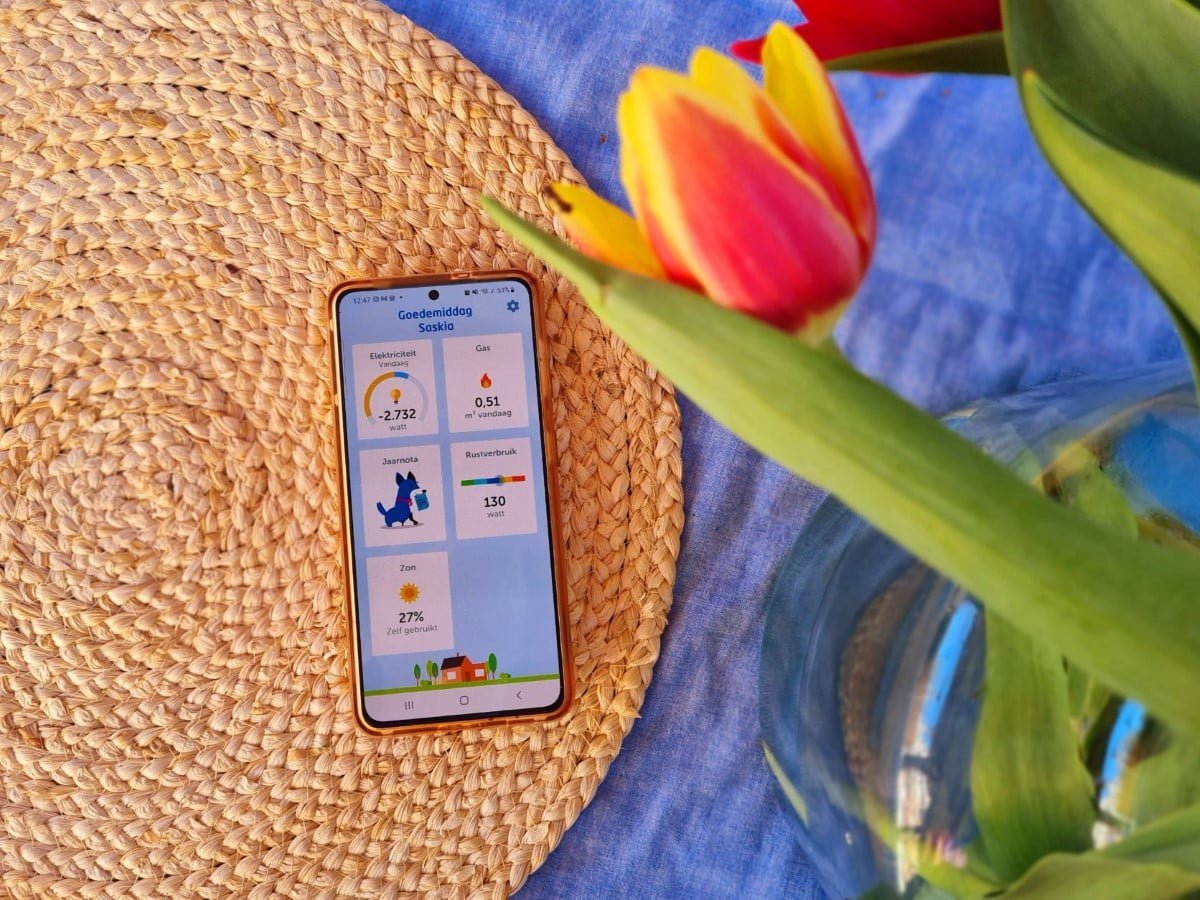
Energy consumption manager EnergyFlip gives you live insight into how much gas and electricity your home consumes. On the simple app, all your consumption data are clearly presented and changes in consumption are immediately visible. You can best compare the EnergyFlip app to the dashboard of your car. There you can see if you are speeding or if your brake pads need replacing. With EnergyFlip as your home's dashboard, understanding your energy consumption allows you to better determine how to save on your energy consumption.
What is the smartest way to save on your energy consumption?
‘All the energy you don't use, you don't have to generate or buy. That's actually where the solution lies. But sitting in the cold or turning off all the lights is not always the solution either. Although, of course, it does happen. Especially when you consider that 50 per cent of the gas consumption on your financial statements is in the four coldest months. So things like turning down your thermostat and using less hot water are quick steps to save on your energy consumption.
The fact that we have already consumed 30% less in recent months than in other years does indicate something. This is because we have become more conscious. Of course, the savings potential differs per household or type of house. Indeed, avoiding energy waste in a poorly insulated house remains difficult at all times. But everything starts with paying attention to energy consumption: a bit of awareness and behavioural change. Understanding energy consumption helps with this awareness, you can make better and targeted choices based on information.’
What misconceptions are there around saving energy?
‘Just buying new equipment like solar panels, a heat pump, electric heating we don't believe in. Unfortunately, if you buy a state-of-the-art heat pump in a poorly insulated house, it's really not going to save energy. Many companies want to sell new appliances, while a large part of the solution lies in changing people's own behaviour. In addition, based on energy information, you can better determine which appliances are best to buy for your home.’
Saving energy: heater on 17 all day or on 15 and when at home on 17.5?
‘That depends on how well insulated your house is. With poor insulation, it is best to have the heating on only when you need it, and with good insulation it is better to keep one temperature on as much as possible to save energy. But try two days one way and then the other, then look at the app and see which way has been best. Also remember that gas consumption depends heavily on the outside temperature. Keeping a house at 17°C at -2°C outside costs a lot more energy than at 10°C.’
Electric heating or gas heating: when do I save energy?
‘Basically, electric heating is expensive. So if you use things like a radiant heater or infrared panels, it is better to use it only when really necessary. In addition, only turn these devices on when you are in the room. If you have a (hybrid) heat pump, this is different. With those appliances, much more heat energy comes out than you put in in electricity. This is because they draw energy from air or water, for instance. A heat pump can thus release up to four times more energy than goes in. This is why a (hybrid) heat pump is a good replacement for your central heating boiler and a radiant heater or infrared panels are not.’
Underfloor heating: on 24/7 or better off when you're away?
‘This depends on the type of underfloor heating. Electric underfloor heating is best left on only when necessary. With water-based underfloor heating, it takes a lot of energy to get the water up to temperature again. So it is not practical to often switch the heating on and off. It's better to turn the temperature down a bit if you want to save energy.’
What are the biggest energy guzzlers in a home?
‘The things that consume the most energy per time you use them are the washing machine, dryer and dishwasher. This is because heating the water requires a lot of energy. Keep in mind that anything you want to heat with electricity costs relatively a lot. Therefore, a kettle also demands a lot the moment you turn it on, but its overall share in your energy consumption is small because you only use it briefly. Of the appliances you have on continuously, your fridge/freezer consumes the most.’
How do I find out where my creeping consumption is?
‘Look in your home for appliances that are on standby when you are not using it and make sure these appliances can actually be switched off. If you have EnergyFlip, you can also check what the effect on your consumption is when you turn off the fridge. That way, you can find out whether you have an economical fridge or whether it is an energy guzzler. You can also use EnergyFlip to see the effect of your measures on your stealth consumption.’
Tips to bring down your rest consumption?
‘Make sure appliances you are not using are switched off. Appliances that are on standby, such as TV and sound equipment, are best put on a power strip with a switch. That way you can really turn everything off when you are not using it. Also make sure you don't leave unused phone chargers plugged in.’
Which standby devices off to save energy?
‘Anything on standby is best turned off when you are not using it. So your television, your sound equipment, monitors, etc. Anything that gets ‘hot’, like a battery or a television box, also uses a lot of power.’
Curious about sneaky energy guzzlers? We wrote an article about them: stealth consumption: sneaky energy guzzlers in the home.
When my phone is full on the charger, does it consume power?
‘Yes, your phone adapter is working as soon as it is plugged into the wall socket. It will naturally consume more when the phone is charged. But even when the phone is full or no phone is plugged in, power is consumed (about one to one and a half cents per day per charger). Therefore, unplug the charger when your phone has finished charging if you want to save energy.’
How likely is it that the power you use comes from your solar panels?
‘That depends on what time of day you are consuming. It is advisable to use things that require a lot of power at the time when the sun is shining. Then you know for sure that you are making optimal use of your solar power. Financially, this makes little difference at the moment, because you can still net the electricity you supply (each kWh you send to the grid can be offset against a kWh you have taken from the grid). But by 2025, this will change. So it is good to teach yourself this in advance. Keep in mind that generated electricity that you do not use goes directly into the grid and is therefore gone. Only if you have a battery can you avoid this.’
How does the energy ceiling work?
‘In 2023, an energy cap will be set at €0.40 per kWh and €1.45 per m3 of gas. So you will never pay more than those rates, even if your supplier's rates are higher. But a limit has been set. The ceiling applies up to an annual consumption of 2,900 kWh and 1,200 m3 of gas. Above that, you do pay your supplier's rates. For electricity, however, your feed-in is first offset against your take-up. Because you could switch to a new contract during the year, the consumption limit is divided over the months. You are not allowed to take an unused limit to a subsequent contract.’
The breakdown looks like this:
| Month | Electricity (kWh) | Gas (m3) |
| January | 339 | 221 |
| February | 280 | 188 |
| March | 267 | 159 |
| April | 207 | 86 |
| May | 181 | 35 |
| June | 159 | 19 |
| July | 161 | 17 |
| August | 176 | 17 |
| September | 199 | 24 |
| October | 266 | 81 |
| November | 306 | 147 |
| December | 356 | 207 |
Does EnergyFlip also work with energy savings if you have a rented house with block heating?
‘Certainly, you can concentrate on electricity consumption. Block heating we can make visible but the relevant meter has to be suitable for that.’
Does EnergyFlip work with any energy supplier?
‘Yes, EnergyFlip is independent of your energy supplier. So when you switch, your metering data remains available in EnergyFlip, where you lost it with your previous supplier.’
What is the advantage of EnergyFlip? I can have my meter read quarterly?
‘That's true, but you only get that data after one or two days. So you can't see what happens when you switch things off or on now. If you want to save energy, it is important to see what happens immediately. In addition, you can extend EnergyFlip with the measurement of your solar panels, for instance. That way, you have everything in one app. Furthermore, you can connect another charging station and in the course of 2023 we will add even more devices. Don't need live insight or expansion? Then EnergyFlip Lite might be for you. You will receive your measurements after one or two days, but otherwise you have all the benefits of EnergyFlip. So you keep all your data if you move to a new supplier. It also calculates your idle consumption and expected annual accounts and compares your consumption with that of similar households.’
What is the advantage of smart plugs if you want to save energy?
‘With smart plugs, you can measure things, turn off devices or dim them. So you can measure exactly the consumption of a specific appliance. Just keep in mind that the costs you incur for buying such a plug are hard to recover. In the second and third case, the advantage is that you don't have to do this switching off manually.’
Timers on lights on or off?
‘Timers don't add much on their own and again cost energy (creep). Make sure lamps you don't need are switched off. There are systems available where you can use an intermediate plug to turn off the power to appliances with a remote control or app.’
Is hot water through your kettle cheaper?
‘In principle, a whistling kettle is cheaper to use than a kettle, but with current gas prices, the difference will have reduced. In any case, make sure you don't boil more water than you need.’
We have listed a few simple tips to reduce your gas consumption today. Check it out here!
Saving energy with EnergyFlip
Insightful right, these tips? Have you now become enthusiastic about EnergyFlip or EnergyFlip Lite? Then we have a nice discount code for you so you can start saving energy with EnergyFlip yourself. With the code GREENLIST10, you now get 10% discount. And yes, the code also works for EnergyFlip light!
- Want to read along experiences about EnergyFlip? Then check out our review: With EnergyFlip, saving energy becomes a game.

About Marc de Beijer
Marc is founder of Aurum Europe, a company specialising in developing smart technology to manage and reduce energy consumption such as EnergyFlip. He believes the energy transition starts with people's behaviour.
Photo credits: thegreenlist.nl (main image), Marc de Beijer.