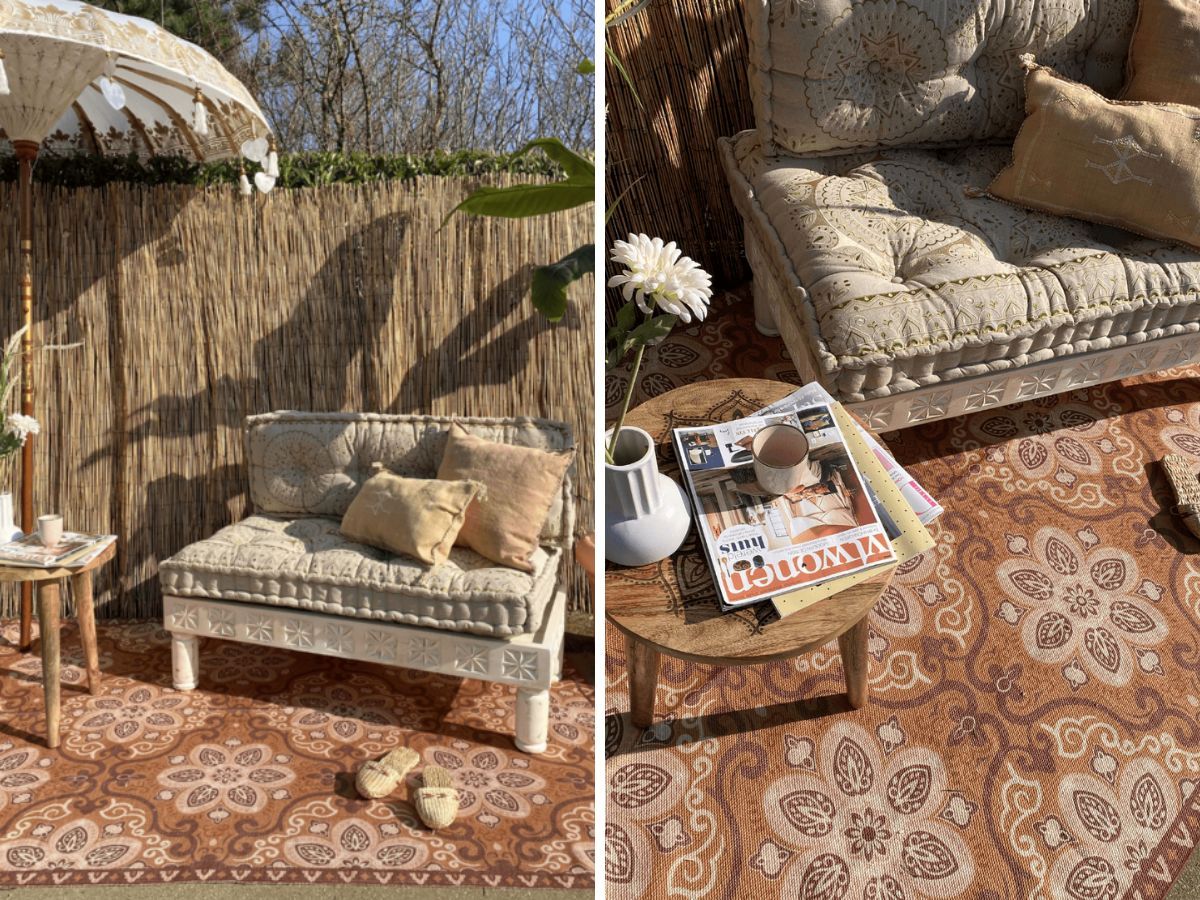

The gardening season is coming and so we once again start decorating our garden or balcony en masse. For many people, an outdoor rug is part of this. It immediately makes your terrace a lot cosier and connects loose garden furniture into a whole. But if you do buy one, the question soon arises: how do you make a more sustainable choice? Do you go for an outdoor rug made of natural materials, or rather one made of recycled raw materials? In this article, we take you through both options.
Choosing more sustainable garden supplies
You can often pick up a lot of garden equipment second-hand on Marktplaats [a Dutch online marketplace], and you'll frequently find surprisingly nice pots and accessories for next to nothing at charity shops. But there are also things that you usually end up buying new, such as a durable outdoor carpet. You don't come across these second-hand very often. If you want to make a more sustainable choice in this regard, you'll soon come to two options: an outdoor rug made of natural materials or a rug made from recycled raw materials. Both are often seen as sustainable, but they each have their own advantages and disadvantages.
Outdoor rugs made from natural materials
Outdoor rugs made from natural materials, such as jute or cotton, have a warm and natural look. They are made from renewable resources and are, in many cases, biodegradable. This naturally sounds appealing if you want to live more sustainably. At the same time, these materials also have a disadvantage: they are often less resistant to rain, moisture, and strong sunlight. As a result, they can wear out or discolour more quickly when left outside for extended periods. Such a rug is therefore best placed on a covered terrace or veranda.
Outdoor rugs made from recycled materials
Another option is outdoor rugs made from recycled materials, such as old PET bottles. These bottles are melted down into strong plastic fibres from which a rug is then woven. The big advantage is that waste is thus given a second life. In addition, these rugs are often resistant to sun, rain and dirt, meaning they usually last longer outdoors. A small point to consider is that these rugs are made of polyester. Some people try to use less plastic in their garden or home. In that case, recycled polyester can be a sort of middle ground for them: the material does not come from new oil from the ground, but is made from existing plastic bottles that have been recycled for this purpose.
What is the best choice then?
Which option is ultimately the most sustainable depends mainly on how you use the outdoor rug. If it is sheltered under a canopy, a rug made of natural materials can be a good choice. If it is completely exposed to the weather, a rug made of recycled polyester materials may actually last longer. In any case, what helps to extend its lifespan is good maintenance. Take your outdoor rug inside at the end of the garden season, let it dry well, clean it and roll it up until next spring. This way, you can avoid mould and wear and tear and enjoy it for much longer. More and more shops are also responding to the demand for more sustainable home accessories. For instance Merel in Wonderland sustainable home and garden decoration from recycled products, including outdoor rugs made from recycled materials.
Photo credits: Merel in Wonderland.