
At thegreenlist.nl We're fans of lists. They provide direction when you want to make a better choice. A list that makes us happy is the Dutch flower calendar from Milieu Centraal. It shows at a glance which flowers are a better choice at the florist at that moment, and which you might do well to leave for now.
Behind a beautiful bouquet of flowers lies a less pleasant story
Flowers might seem like an innocent purchase, but behind a bouquet of roses or tulips often lies a less cheerful story. The floriculture industry uses a lot of pesticides, sometimes so many that some cut flowers are not even allowed in the organic waste. The sector has long been under pressure due to the intensive use of pesticides. For example, in France in 2021, Parkinson's disease was officially recognised as an occupational disease for people who work with pesticides long-term in agriculture, including in ornamental horticulture. Additionally, flowers are regularly flown in from countries like Kenya or Ethiopia, or grown in heated greenhouses that consume a lot of energy. Add all that together and you’ll understand that flowers are less green than they appear. You can read more about the environmental impact of flowers in this article.
Learning to use the Dutch Flower Calendar
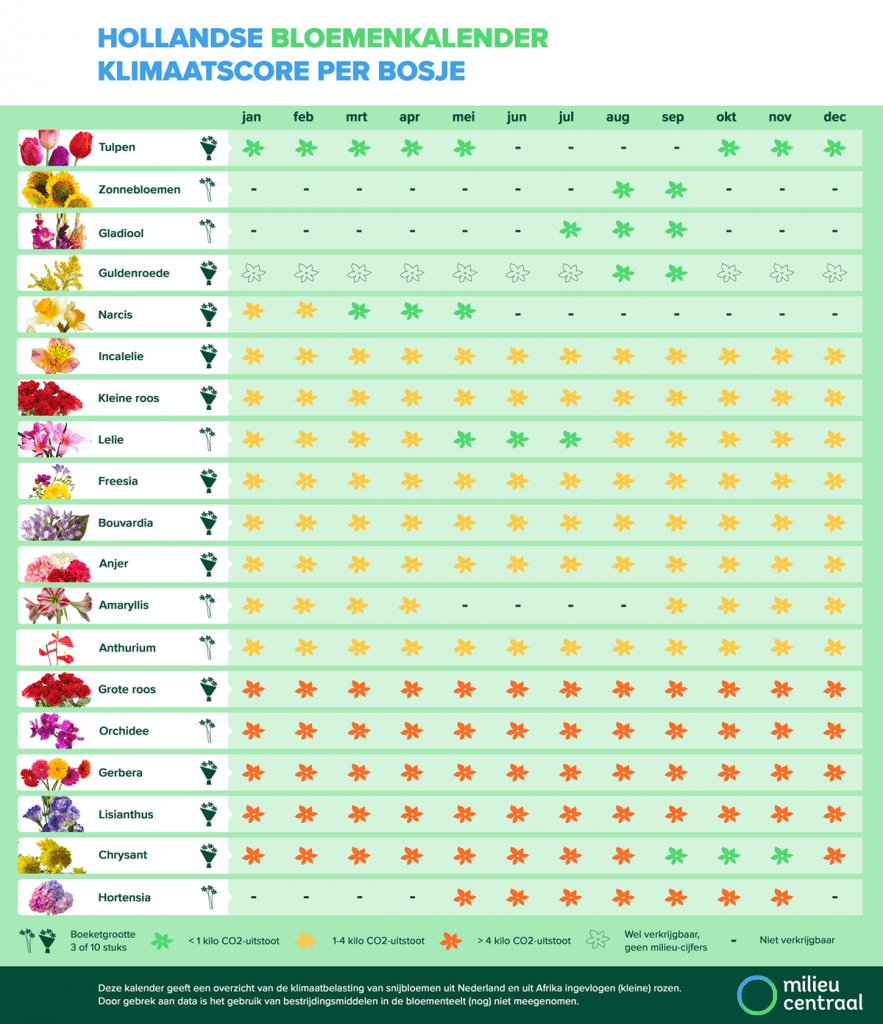
This is why Milieu Centraal's Dutch flower calendar is such a useful guide. It shows which flowers are a better choice at the florist at that particular time and which you might want to avoid for now. In one overview, you'll see common flowers from the florist, with a simple colour system of green, orange, and red. One point remains important: always check where the flowers come from. Tulips in March, for example, can be a great choice, but only if they are Dutch and haven't been flown in from the other side of the world.
What do we see when we summarise? Dutch tulips are available almost all year round and are often a better choice. In the months when they are less available (June-September), you could, for example, switch to sunflowers (August-September), gladioli (July-September), goldenrod (August-September), lilies (May-July) or chrysanthemums (September).
But an important disclaimer: the use of pesticides has not been included in the data for this calendar. And this is precisely a point where flower cultivation often comes under fire. Therefore, our advice remains: choose organic flowers where possible!
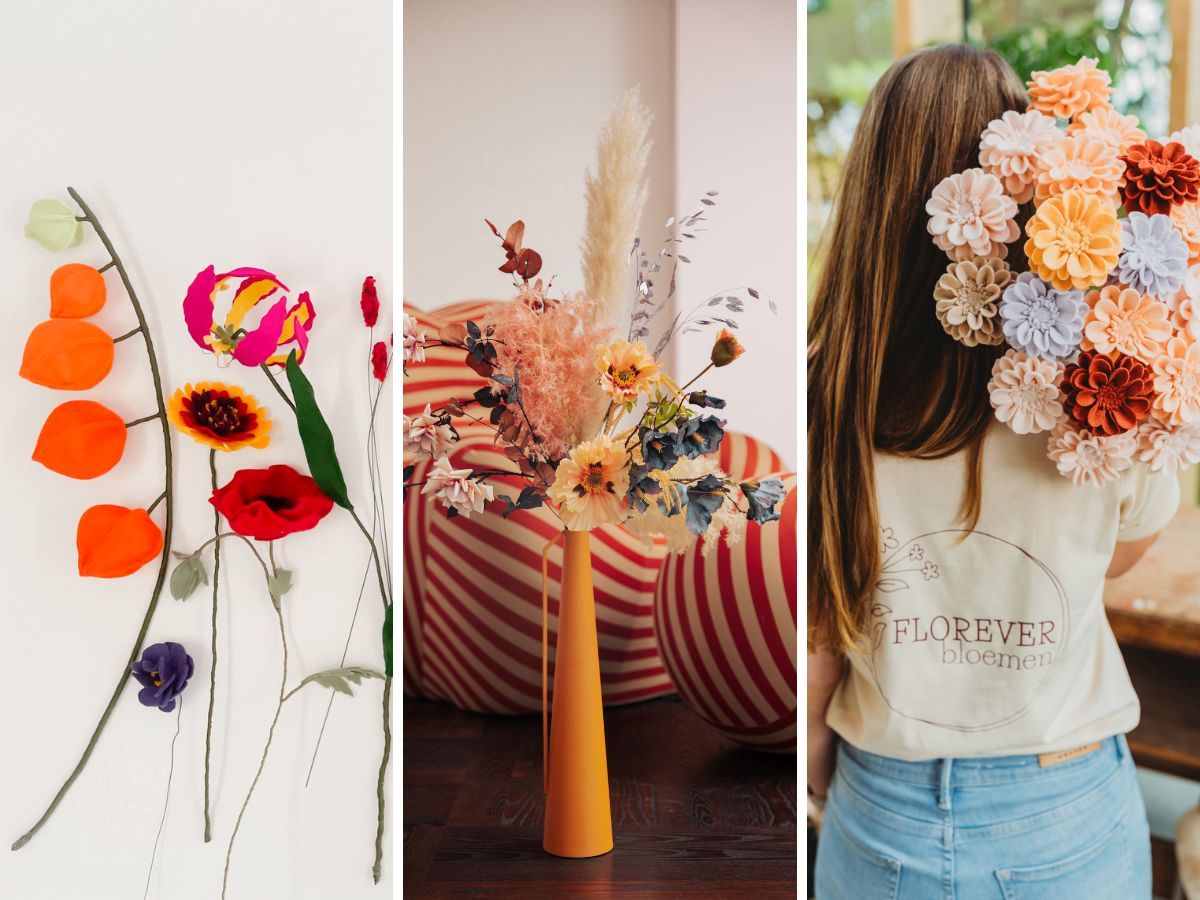
Do you want to give flowers, but the idea of flowers as a disposable product plus all those pesticides puts you off? We get that too! In that case, artificial flowers can also be a nice alternative. Check out our list of artificial flower ideas!
Holland's flower calendar: not perfect, but useful!
The Dutch flower calendar might not be perfect, but it's a useful tool if you want to make more conscious choices at the florist. At the very least, it shows that one bouquet can be a lot more sustainable than another. And perhaps it will also make you think about alternatives. For example, consider gifting a beautiful perennial plant for the garden, a bouquet of dried flowers, or some good quality artificial flowers that will bring you years of enjoyment. In short, there's plenty of choice, even for flower lovers.
Sources: Milieu Centraal. Photo credits main image: Waldemar Brandt, Pexels.