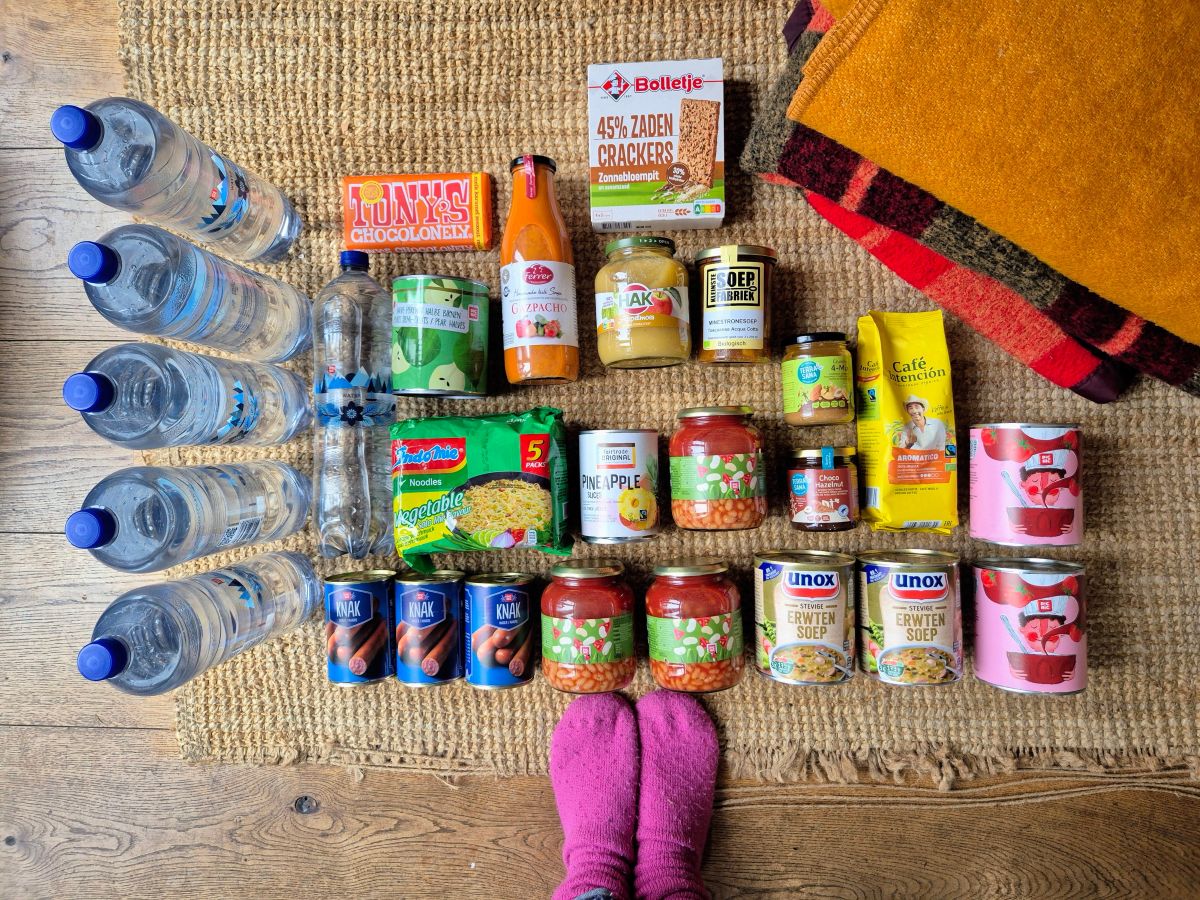

Since the government has been calling for an emergency kit in the home, more and more people are thinking about what to include. Water is at the top of the list: three litres per person for at least 72 hours. Many followers say: ‘I'll just fill some bottles myself.’ Sounds logical and sustainable. But is that really such a good idea for longer periods of time? And which is better: glass bottles, PET deposit bottles or drinking cartons filled with water? All options have pros and cons. We dove in!
Water bottles in your emergency kit
If you are serious about an emergency kit, there is no way around it: you also need to give some thought to your water bottles. Because three litres per person for three days, that's quite a lot. Heavy, pooh! And in an emergency situation, you can't last minute just a little bit more to arrange. This just has to be ready. But what do you put down? Self-filling with tap water? Glass bottles of spring water from the supermarket? Or still those plastic deposit bottles with water? And what about those drinking cartons? You have those filled with water too. All seem like a great idea, but each also has its own pros and cons. Not only in terms of sustainability, but also in safety.
Self-filling: cheap, but also sensible?
A common suggestion from followers: just fill some bottles with tap water yourself. Sounds logical. It's easy, cheap and you don't have to leave your house to do it. But is it also safe? For short-term use: fine. But if you want to store water for a long time, things are a bit more complicated. Tap water does not last as long, especially if your bottles are not spotless. Bacteria then get free rein, which is exactly what you want to avoid in an emergency. If you really want to try this: use glass bottles (although they are heavy, we will come to that in a minute), used returnable bottles (PET) or jerry cans. Wash your hands and clean the bottles well, fill them to the brim with water and seal them tightly with a clean screw cap. Keep the bottles cool and dark, put a date on them and change the water every six months. That way you keep it reasonably safe.
Glass bottles of spring water
Of all the options, the glass bottle seems perhaps the most sustainable. And fair? We thought so too. After all, glass is an inert material: it gives off nothing to the water, no nasties, no taste, no risks. And glass can be recycled endlessly without loss of quality. Now you must be thinking: we have an outright winner. Until we faced a French study that showed the opposite. In fact, more microplastic particles were found in drinks from glass bottles than in plastic or cans. The culprit? Not the glass itself, but the metal caps - especially the coloured paint layer on the inside. This wears off through transport and storage, releasing tiny particles into the water. Ai. Still, not a perfect score for glass.
Not to mention the practical part: glass is heavy and breakable. We think a glass bottle of spring water is a good tip for an evening of dining with friends (it instantly creates a picture-perfect restaurant atmosphere), but doesn't seem ideal for an emergency kit. Certainly not if you have to hastily lug it to another location.
VIEW ALSO: the recycling of our glass, we followed all the steps.
Plastic deposit bottles spring water
On the face of it, it may not be the most sustainable kid in the class, but it's certainly not a bad choice. PET plastic deposit bottles are light, sturdy and do not break. Ideal for your emergency kit, especially if you need to carry it on your escape route. Moreover, they are made of one type of plastic and, thanks to the deposit system, they are neatly collected as well as recycled. And that microplastic story? Yes, that unfortunately plays into PET bottles too. Want to reduce the risk for your emergency supply? Then store the bottles in a dark, dry place - heat causes particles to detach from the plastic faster. An additional advantage of returnable bottles: they often have a thick wall and are resistant to damage. This also makes them suitable to keep ready in your emergency kit for a longer period of time. Check them from time to time and you have a safe, recyclable and portable water solution at home.
VIEW ALSO: the recycling of deposit bottles, we followed all the steps.
No bottles, but (Tetra) packs of water
Packs of water are light, stackable and last a long time - useful if you have limited space. But there is also a downside: the inside usually contains a plastic layer, and sometimes aluminium, to keep the water good. This makes recycling a little trickier: they may be allowed in the PMD bin, but are not always fully recycled. These containers can also release microplastics over time, just like bottles. Still, they can be a great addition to your emergency kit, especially if you keep them cool and dark.
Water filter
A tip from a follower: a water filter such as the LifeStraw is handy to have around the house. With this, you can safely drink rain or ditch water, for example. This is especially handy if you need to flee or move quickly, as then you don't have to lug around heavy bottles of water.
What water do you choose in your emergency kit?
All options have their pros and cons. Whatever you choose: make sure you keep your water dark, cool and high, and check it regularly. Government advice: keep your emergency pack high because of flood risk. The expiry date on the label is not a hard limit - water often lasts much longer. You can read more about hodubarity and the THT date here! A handy tip: just use up your stock once in a while and then put out new ones. That way you can be sure it stays fresh and safe. And while glass bottles are certainly a sustainable choice, we wouldn't recommend them for an emergency pack because of their weight and risk of breakage. PET bottles or packs of water are a lot more practical then. You can read all about putting together a more sustainable emergency kit here!
Sources: vitens.nl, sciencefocus.com, medscape.com, drinking water platform.nl, PubMed. Photo credits: thegreenlist.nl.