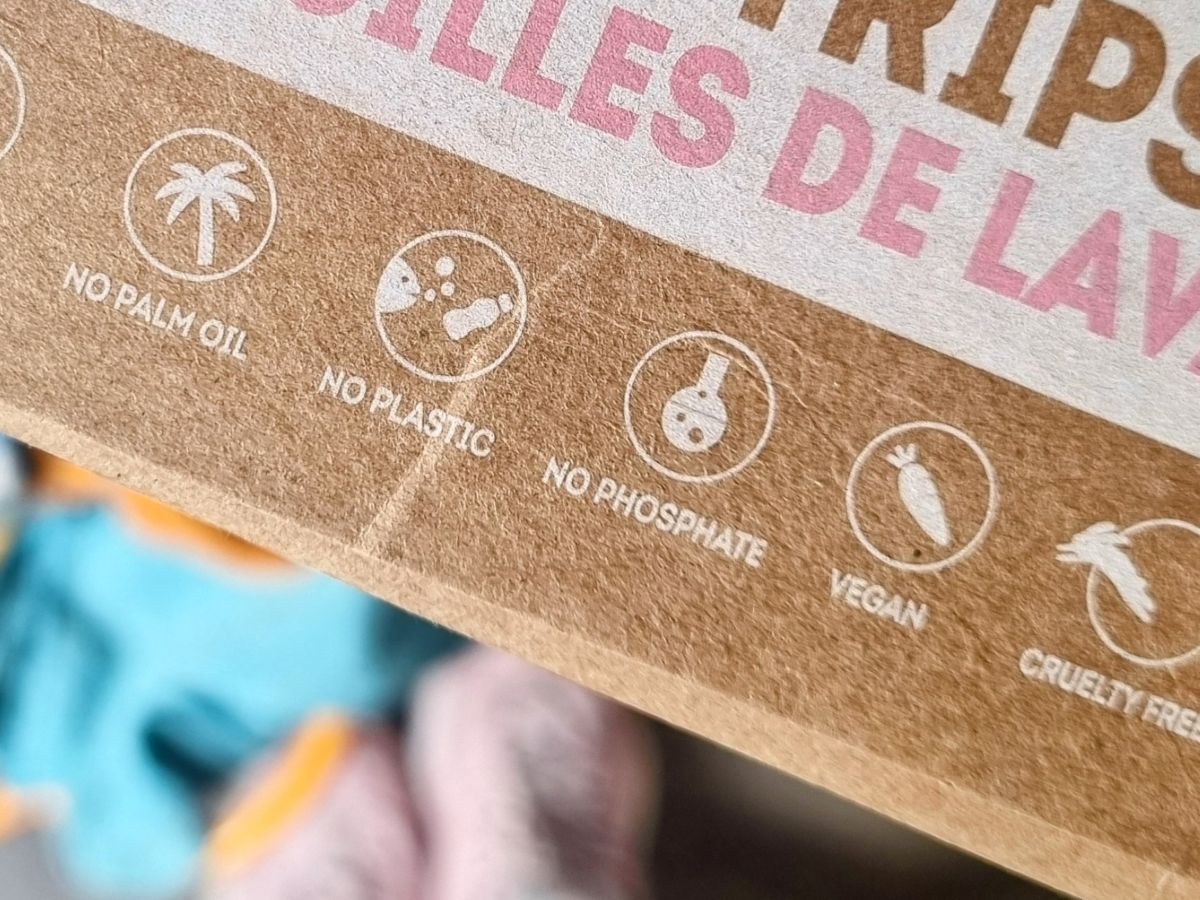

They were embraced as the green alternative to liquid detergent: laundry strips. Light, compact and without plastic bottles. Yet in the green world, grumbling had been sounding for some time. Plastic Soup Foundation warned us earlier and now the TV show Keuringsdienst van Waarde the suspicion: that sustainable promise rattles. Because the wipes turn out to be not so plastic-free at all, whatever the packaging may claim. There are major concerns at water treatment plants.
What are wax strips?
Laundry strips, also known as detergent wipes, are thin, compact sheets of super-concentrated detergent. You put them in the washing machine drum (or even better: in the tub meant for detergent) with your laundry and they replace the familiar ball of liquid detergent or powder in the lid. They dissolve easily in water and promise to get your laundry as clean as your old familiar detergent. They are often sold in pretty little cardboard boxes, which not only makes them handy, but also a lot lighter and more compact than traditional bottles. As a result, they take up less space during transport. You don't have to be a maths prodigy to understand that far more laundry strips fit in a truck than all those litres of detergent, which often consist of more than 90% of water. Unnecessary. So less transport means less air pollution AND less fuel consumption. They also yield profits at home: less space in your house and less waste. In short, if we are to believe the manufacturers: a small laundry revolution and a great green switch.
And so we started washing with them too. For a long time, we thought the concerns about plastic in those laundry strips did not apply to the sustainable brands, as they claimed to be completely plastic-free. It even said so on the packaging. Well, not quite so... We now know better.
Yikes! Wax strips are made of plastics
The editors of Keuringsdienst van Waarde had 13 different washing strips tested, including variants from brands that present themselves as sustainable and plastic-free. And what did they find out? All these strips contained polyvinyl alcohol (PVA). This is a substance that in science simply falls under the heading of plastic. In fact, on average, wipes consist of some 60% of this synthetic plastic. And it is by no means always listed, as manufacturers are not obliged to list all ingredients. So this conclusion was quite a gulp, because even those ‘fine’ green wash strips are not as sustainable as we thought. A case of greenwashing? Nice pun in this case. Judge for yourself.
Why is there PVA in wax strips?
PVA is needed to give the strip its shape. You cannot make a sturdy cloth from detergent alone that can be dispensed neatly. That is why manufacturers add PVA: it is both water-soluble and easy to process into a thin, flexible strip. You might also know it as the soluble layer around dishwasher tablets. Sounds handy, but therein lies the problem. Because although PVA dissolves nicely in water, that does not mean it disappears. Under ideal conditions - think high temperatures, specific enzymes and special bacteria - it can be broken down. But in our Dutch wastewater treatment plants, those conditions simply do not exist. Sewage flows through relatively cold basins with standard micro-organisms in a day's time. That is far too short and not powerful enough to really break down PVA. The result: the substance dissolves but does not break down. It remains in the environment as dissolved plastic or possibly as microplastics.
This is not only worrying according to plastics experts, but the water treatment industry is also concerned about the plastic in those wash strips. Water board members warn that it is simply not feasible to build a separate treatment step for every new substance. They advocate intervening at the source - i.e. at the products themselves. Because if even these kinds of supposedly sustainable innovations contribute to plastic pollution, then we will all get nowhere.
How come it still says ‘plastic-free’ on the packaging?
You would think it would be simple then: if it contains plastic, you cannot call it plastic-free. Yet most wash strip packaging says exactly that. ‘Plastic-free’, ‘biodegradable’, ‘no microplastics’, the claims fly around your ears. Combined with a cardboard box and a fresh, green look, it quickly inspires confidence. Especially when it comes to brands that profile themselves as sustainable and conscious. No reason to doubt, you might say. Many people - ourselves included - just went along with that. But now that it turns out that these wipes consist largely of PVA - a plastic that scientifically just falls under plastic - it still raises questions for us. How can it be that products like this are allowed to call themselves plastic-free, when they clearly are not? And who actually checks this?
The short answer: because it is allowed. As long as an ingredient like PVA dissolves in water and thus becomes invisible, current regulations allow it to be omitted from the label. And because it dissolves, some manufacturers no longer consider it plastic - even though technically it is. That opens the door for terms like ‘plastic-free’, ‘biodegradable’ and ‘free of microplastics’. In short, a clever choice of words within the limits of the law. That this is misleading for many consumers is obvious.
Experts say it is a loophole that cries out for tightening. Because if a product is largely made of plastic, as a consumer you should know that. Meanwhile, manufacturers are cleverly exploiting the ambiguity. The packaging looks green, the text speaks to you reassuringly and nowhere does it say that you are actually just washing plastic with it. Some suppliers now adjust their packaging, sometimes of their own accord, sometimes under pressure. For instance, the Advertising Code Committee recently ruled on the claims of laundry detergent supplier Mother's Earth: the company is no longer allowed to advertise with terms like ‘plastic-free’ or ‘free of plastics’, because PVA is indeed plastic. They have since changed the packaging. Other brands were ahead of this ruling and opted for other terms earlier. You can watch the entire episode of Keuringsdienst van Waarde here.
Laundry strips would not clean laundry properly
The Consumer Association was critical earlier: some laundry strips scored so low in their wash test that they said you could get even better results with just water. Even the lowest-scoring white detergent in the test performed better.
Whether or not wax strips on your greener list
Based on all the information, we are crossing laundry strips off our greener list for now. Instead, we prefer to opt for liquid detergent or powder from reputable eco-friendly brands, on sale at the green supermarket or eco-webshop. In that case, do choose a product with a reliable seal of approval such as Ecogarantie, Nordic Swan Ecolabel, EU Ecolabel or Ecocert. That is currently our laundry tip. And remember: in washing, other choices often make much more difference. In the end, the biggest gain is not in the type of detergent, but in how you wash: at low temperature, with a full drum and on the eco programme. You can read more useful tips in our article on sustainable washing.
You might also find this interesting
- Also see: A peek into our sewers.
- Also see: microplastics spread through clothing.
- Also see: This will get almost all stains out of your clothes.
Sources: Isonomia.co.uk, Keuringsdienst van Waarde, Plastic Soup Foundation.