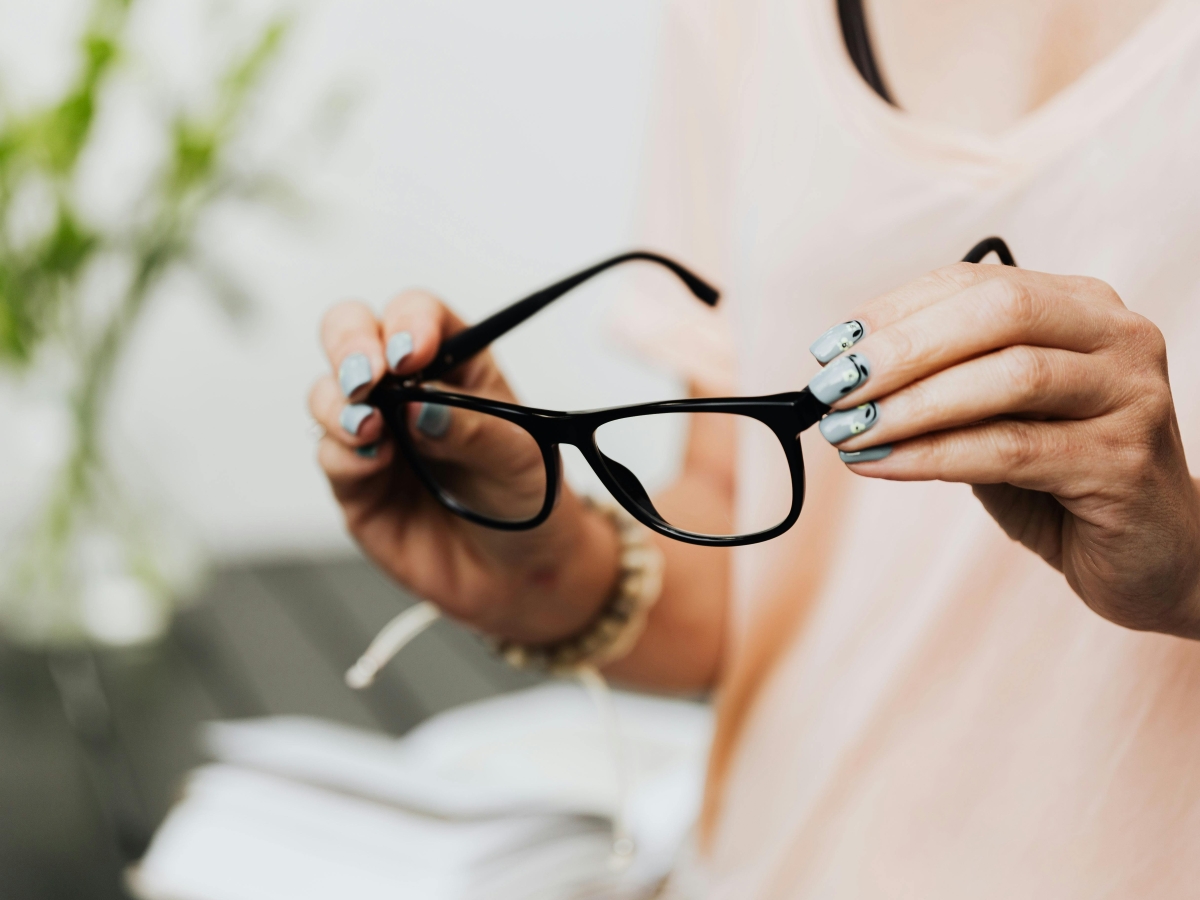

Maybe you've been wearing glasses for years. Or maybe you suddenly noticed the other day that the letters in that book have become really small. Don't worry: you're definitely not the only one. We all eventually get reading glasses. And CBS figures show that some 61% of Dutch people aged four and over wear glasses at some point in their lives. That proportion is only increasing, as myopia is rising considerably, especially among young people - and that is quite worrying. But how durable are all those glasses really? Editor and spectacle wearer Lauri looked into it.
Sustainable eyewear research
Glasses are essential if you have impaired vision. Point. No concessions. But such a handy tool does take a toll on the planet. Glasses take a lot of raw materials and energy to produce. And although you naturally take care of your favourite pair, many glasses end up in a drawer somewhere after a few years. Perhaps they are no longer up to date, your eyes have deteriorated or the glasses have unfortunately fallen apart. And that makes glasses, however you look at it, a disposable product. A simple pair of reading glasses from the chemist's might be bought second-hand or from your mother-in-law's drawer, but for a good pair of prescription glasses you need custom-made ones. So it makes sense to buy them new. Your vision is important, and you want glasses that fit you and fit you well. And for many spectacles wearers, spectacles are also a fashion statement. Not surprisingly, many people build up a whole collection over the years. But how durable are those glasses really?
What are eyewear made of?
Whether you wear sunglasses, reading glasses or prescription glasses, all these glasses require a lot of materials. Not only for the lenses, but also for the frames. And therein lies a challenge. Many frames are made of a mix of plastic, metal and sometimes even fibreglass. Materials that are often difficult to take apart, let alone recycle properly. Add to this: most of these materials are based on fossil raw materials like oil, or on cellulose (like acetate), which requires quite a few chemicals to make it usable. Once in frame form, you will hopefully have a good pair of glasses that will last for years, but one that is hardly recyclable, unfortunately.
And now on to the glasses: they are often made of CR39. Sounds a bit like code language, but stands for a plastic. Many eyewear brands are fans, as it is light, strong ánd relatively cheap. But durable? Mwah. CR39 can only be recycled if it is collected separately, and that is far from happening on a large scale. So there is a lot to be gained here.
Sustainable revolution in the eyewear world
Fortunately, the eyewear world does not stand still either and there are plenty of brands that have been working on sustainability, sometimes for years. And that brings positive results! For example, frames are increasingly produced locally to keep the ecological footprint low. More use is being made of natural materials such as bio-acetate (a mixture of wood and cotton), recycled plastics and more. And it doesn't stop at frames: eyeglass cases and eyeglass wipes are also included. Moreover, 3D printing is being experimented with.
Finally, sustainable brands focus on repairing and reusing their products and supporting sustainable initiatives such as planting trees, collecting eyewear for local communities or investing a percentage of profits in eye care programmes. This way, they not only help you as an eyewear wearer, but do just a little bit more.


More and more sustainable eyewear is on sale.
Want to buy durable glasses?
And have no idea what to look out for? We get it! That's why we've helped you and made a list of sustainable eyewear brands. Besides buying new frames, you can also opt for a second-hand model. Ask your local optician about all the possibilities, they can often help you further. And don't forget to get a good eye measurement to make sure the strength of your glasses is correct.
Choose glasses that suit you
The fashion industry is also in full swing in eyewear land. What was hip last year already feels ‘out’ again. While there is nothing wrong with your current glasses, yet another new model - slightly rounder, more square, larger or smaller - is already beckoning. Our advice? Don't let trends fool you. Choose a timeless frame that suits your face and personality. Of course, you don't have to spend your whole life with one pair of glasses, but it is sustainable if you can enjoy them for several years. Had enough of your glasses? Don't throw them away! Old spectacles are ideal as a spare - even if your prescription has changed a bit, they can be a lifesaver are - and you can also donate it to charity. Coming right up!
Take good care of your glasses
Scored durable glasses? And want to enjoy them for an extra long time? Then take good care of them! Keep your glasses in a safe place - you don't get a case for nothing when you buy them. Didn't your glasses come with a case? Then find a nice one at the thrift store! Don't lay your glasses flat on the table, to prevent them from getting scratched. And clean your glasses regularly. You can do this with special eyewear spray from the optician, but lukewarm water and a cloth often work fine too. These cloths are also increasingly made of recycled material and can be machine-washed! And the same goes for cleaning your glasses; keep it simple! You can only damage the glasses if you use too violent stuff or too hot water.
Old glasses?
Are your glasses due for replacement? And you can no longer use those glasses as spares, for example because the prescription is really wrong? Then don't just throw them away, make sure you recycle them! In this article, we share a list of initiatives that recycle eyewear.
Enjoy your glasses for as long as possible
Finally, of course, glasses are only truly durable if you actually wear them often. So get detailed advice from your local optician, try on as many models as you like, and sleep on them overnight to make sure you choose spectacles that suit you, so that you can soon shine in your durable glasses!
You might also find this interesting
- Eco-friendly oral care: it's different than you think.
- Choosing sustainable health insurance? We found out for you what to look out for.
- We also delved into the world of pensions: A sustainable pension, is it possible?
Sources: Wed, eye hospital.nl, CBS, MaxToday.nl. Photo credits: main image and glasses on book: Karola G (Pexels)., glasses shop: Kseniachernaya (Pexels).