
Who wouldn't want a radiant smile? A healthy and strong set of teeth is worth its weight in gold. It saves you a lot of hassle, from cavities to nasty infections. That's why you want to take good care of them. And if possible, you want to do it in a slightly eco-friendly way too. But how do you go about it? And does sustainable oral care actually exist? We delved into the science behind eco-friendly oral care. Spoiler alertThe most sustainable choice isn't in the products you buy.
A healthy mouth, a healthier body
Oral care is important for a radiant smile. And let's be honest: that's a great first impression. But healthy teeth do more than just look good. They help prevent problems like bad breath, tooth decay, and inflammation. And did you know that healthy teeth and gums are also important for the rest of your body? According to the World Health Organization (WHO), there is a link between oral infections, especially gum disease, and conditions such as diabetes, cardiovascular disease, obesity, and even Alzheimer's. Your mouth and saliva play an important role in your immune system. Plenty of reason to take good care of your teeth!
Sustainable oral care, where do you start?
Nowadays, the average chemist's shop is full of oral hygiene products. From toothpaste and toothbrushes to dental floss, toothpicks, interdental brushes, and mouthwash. The range of more sustainable alternatives is also rapidly growing. You can opt for toothbrushes made from recycled plastic or bamboo, FSC-certified toothpicks, plastic-free interdental brushes, and natural mouthwashes. In short, there's plenty of choice. In fact, you sometimes can't see the wood for the trees. What is actually the best choice? Don't panic, we've dived into the subject, pun intended. And in doing so, we discovered something surprising: which product you choose turns out to be less important than you might think. The biggest difference is made by your oral hygiene habits.
What are the most sustainable products for eco-friendly dental care? We went looking, and the answer might surprise you. The biggest environmental gains are not found on the shelves of the chemist. Huh, not? No. How well you look after your teeth turns out to be much more important than which toothbrush or toothpaste you choose. All those products, even the less sustainable versions, have a relatively small impact on your overall environmental footprint. For your health, your wallet, and the environment, a good dental care routine is most important. So, your mother and your dentist were right all along. Brush twice a day for at least two minutes, and don't skip your dental check-ups. It's precisely dental treatments, crowns, and other dental procedures that consume a lot of energy, raw materials, and resources. By preventing dental problems, you often also prevent that extra burden on the environment. If you do have complaints, don't just ignore them. The sooner you address them, the better. For your teeth and for the planet.


It is not with the choice of your products, but with how well you take care of your teeth and whether you visit the dentist periodically that you make the difference. Because the real hit (in a negative sense then) is when you have to have a major procedure done and you can prevent that with good oral care.
Oral care products you can choose greener
Right, we know the main lesson by now: a healthy set of teeth is the most sustainable choice you can make. Check. But that doesn't mean all oral care products are the same, of course. Can you also achieve some environmental gains with your toothbrush, toothpaste or dental floss? Yes, indeed. The differences might be smaller than you think, but there are definitely some smarter choices to be made. We'll go through it with you.
Plastic toothbrush or not?
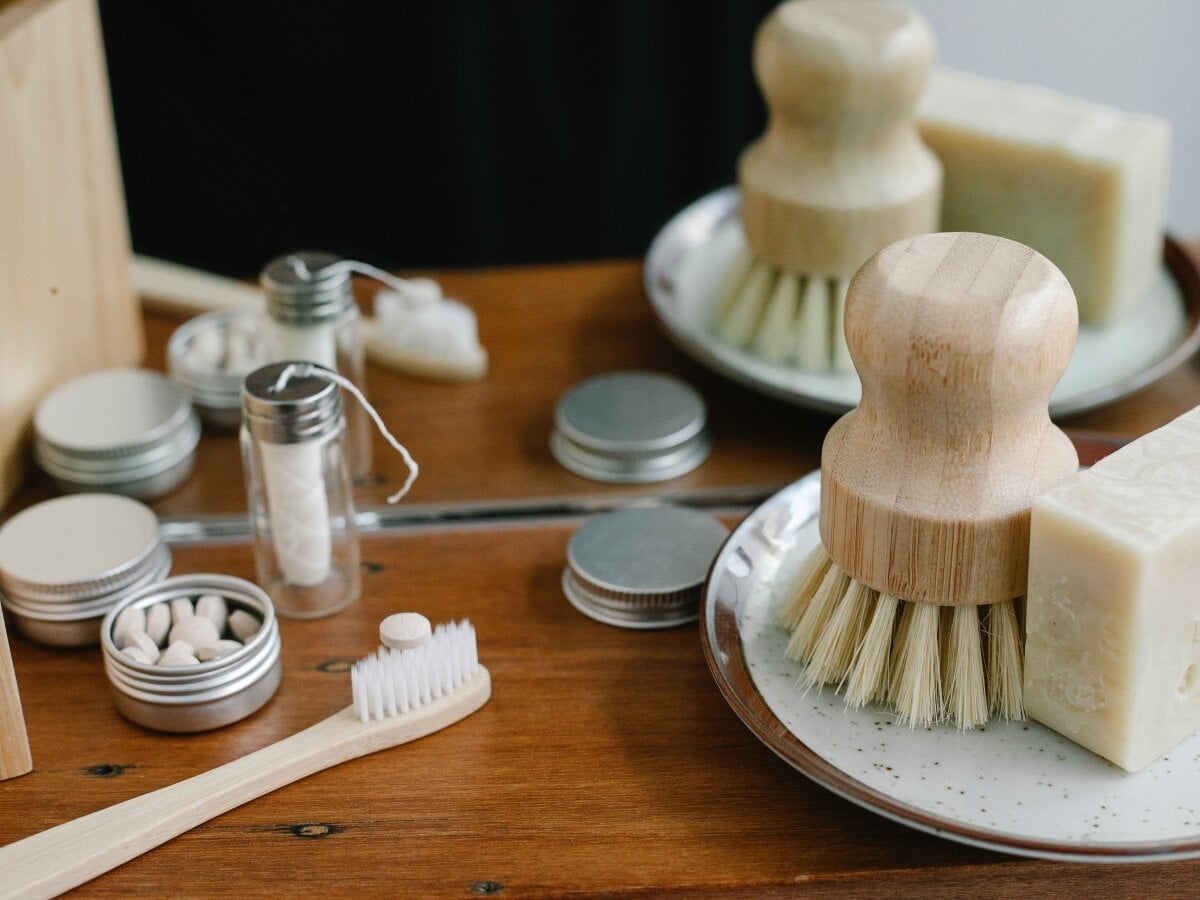
We practically all grew up with it: the plastic toothbrush. Yet, more and more people are looking for an alternative, as plastic simply doesn't have the best image. So it's logical that bamboo toothbrushes have become popular in recent years. However, research has revealed something striking. A plastic toothbrush with a replaceable brush head (like this one from Jordan or this one TePe) turns out to be the most environmentally friendly choice over its entire lifespan. This takes into account not only its use but also its production and disposal. For those who prefer not to use plastic, the bamboo toothbrush comes in as a close second (Plenty of options there too!The electric toothbrush scores least well in terms of sustainability. This is due to the higher use of raw materials, energy consumption, and the electronic waste that is ultimately produced.
Electric toothbrush
Most dentists and dental hygienists recommend an electric toothbrush to keep your teeth and gums healthy. And by now, we know that good care at home yields the greatest long-term benefit. A bit of a dilemma then. Because the electric toothbrush scores less well environmentally, but does help many people to brush better. Our tip? Take a look at Marktplaats first. And no, we don't mean a used brush head, of course, but the device itself. You'd be surprised how many new electric toothbrushes are offered there, especially after the holidays. Apparently, quite a few unwanted gifts end up in attics. Can't find a second-hand one? Then we have another tip: Smyle's e-brush, an electric toothbrush designed with sustainability in mind. A few more simple wins: unplug the toothbrush as soon as it's charged, otherwise it will continue to consume power. If the device breaks? See if it can be repaired first. Here you can see where you can get your electric toothbrush repaired. Is it really beyond repair? Then take it to a Wecycle point. Many supermarkets have special collection bins for small electrical appliances.
Choosing durable toothpaste
Just as with food and other personal care products, the same applies to toothpaste: don’t use more than you need to. A pea-sized amount is enough to clean your teeth properly. Do you use a tube? Then cut it open when it’s almost empty. That way, you can get every last bit out. That might sound fussy, but we estimate that we throw away 5 to 20% per cent of our toothpaste. Quite a waste, really. Do you now think that a plastic tube is automatically the least sustainable choice? It turns out – surprise, surprise – that this isn’t the case. The packaging doesn’t tell the whole story. Research shows that the ingredients in toothpaste often have a greater impact on the environment than the packaging itself. In fact, toothpaste tablets are, in some cases, less environmentally friendly than regular toothpaste from a tube. Both products can also contain exactly the same desirable and less desirable ingredients. So the form doesn’t tell the whole story about a product’s environmental impact. To be honest, we found that a surprising conclusion too! Are you still looking for a more environmentally friendly toothpaste brand? Then check out the Dutch ReBloom Agreed. This toothpaste comes in glass dispensers that you can refill.
Fluoride is safe and essential for healthy teeth.
If the packaging doesn't tell you everything, what should you look out for? Apps like INCI Beauty and Think Dirty can help you take a closer look at ingredients. In our opinion, there's one ingredient you shouldn't skimp on: fluoride. Although its use is regularly debated online, research shows that fluoride is safe and effectively helps prevent tooth decay. It's no wonder dentists and dental hygienists recommend using fluoride toothpaste. And remember? Maintaining a healthy set of teeth is ultimately the most sustainable choice you can make.
Something else to look out for: microplastics. That's precisely an ingredient you'd rather avoid. Microplastics serve no purpose for your teeth, but they can, for example, make a product easier to spread. Via the drain, they can end up in the environment, as sewage treatment plants don't always filter them out of the water completely. Although microplastics in personal care products are increasingly being restricted, you can still encounter them. A handy helper for this is the free PlasticFree Future App from the Plastic Soup Foundation, formerly known as Beat the Microbead. This allows you to easily check if a product contains microplastics. Fortunately, there are plenty of microplastic-free toothpastes available nowadays.
Here's how to choose eco-friendly oral care
Oral hygiene doesn't stop with your toothbrush and toothpaste. You can also achieve some environmental savings by paying attention to the details. For example, don't leave the tap running unnecessarily while brushing. Brushing for two minutes with the tap running can quickly use about ten litres of water. And try not to brush your teeth in the shower, as this will increase water consumption even further. Do you use toothpicks, interdental brushes, or dental floss? Be a bit economical with these. You can easily reuse a toothpick or interdental brush if you clean it properly, and for dental floss, more isn't always better. The most important lesson from our research? The most sustainable choice isn't made on the chemist's shelf, but right there in your bathroom. By taking good care of your teeth, you prevent dental treatments that require a lot of energy, raw materials, and resources. So, brushing your teeth well remains the most sustainable choice of all.
You might also find this interesting
- Looking for children's toothpaste? We did a children's toothpaste test.
- Going sustainable with your personal care products? View the best storage tips here, so you don't have to throw anything away.
- Choosing sustainable health insurance? We found out for you what to look out for.
Sources: World Health Organization, Milieu Centraal, Dental Clinics, dentist.nl, Science Direct, Research Gate, National Library of Medicine. Photo credits: main image: Sarah Chai (Pexels), dentist's chair: Atikah Akhtar (Unsplash), woman brushing teeth: Andrea Piacquadio (Pexels), bamboo toothbrush with toothpaste tablet: Sarah Chai (Pexels).