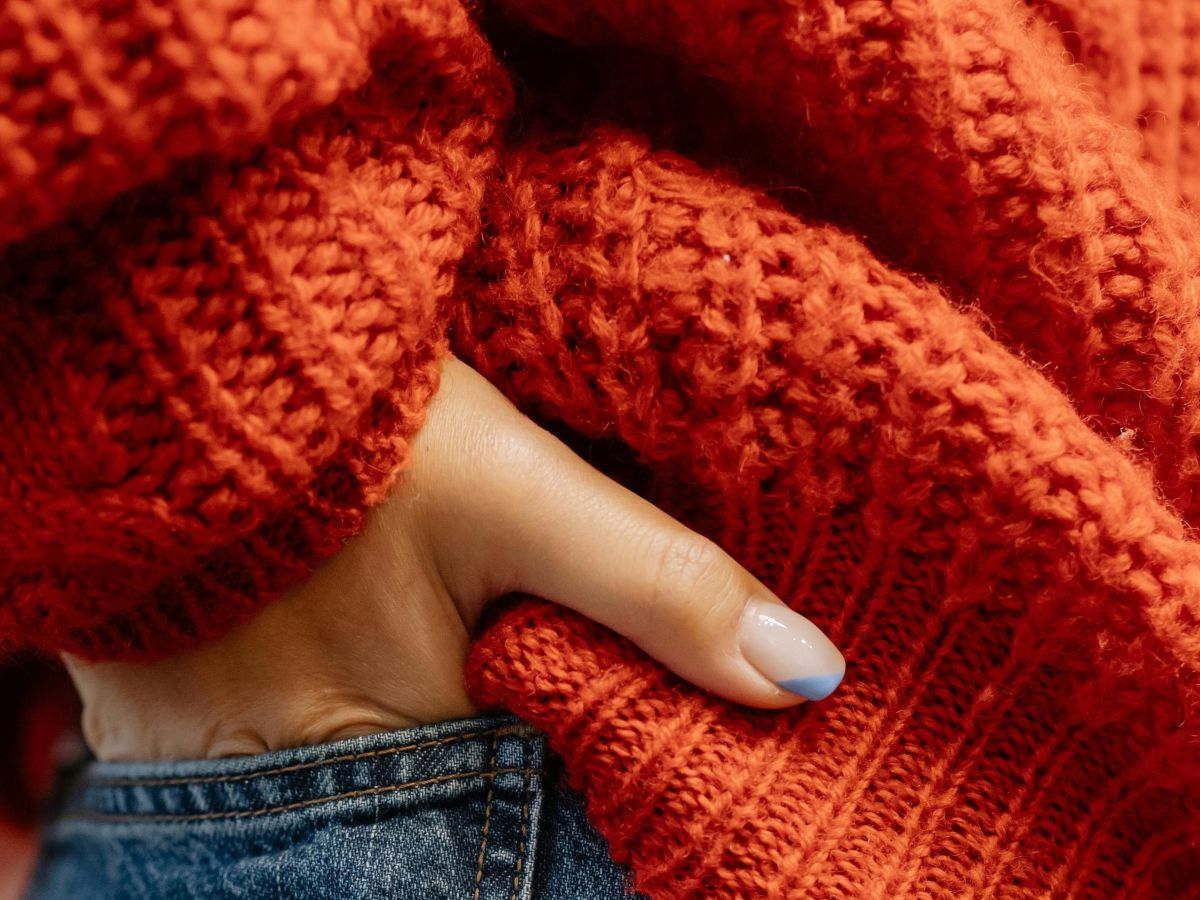

You're in a charity shop and you find a great jumper. It's synthetic, though. Oh dear, such a lovely colour. And second-hand is that much less bad than new, isn't it? For a few quid, you take it with you. Super recognisable. But are you then breathing in microplastics from that lovely fluffy a jumper that looks like wool but is actually made of plastic? A follower of thegreenlist.nl wondered about it. And Sas did too. This season she found a baby blue and red specimen in the charity shop, which she wears regularly.
Do you inhale microplastics from a synthetic jumper?
Microplastics are now everywhere. In water, in soil, in our food and even in human blood and lung tissue. Less well known is that they are also simply floating around in the air in our homes. Part of the household dust consists of small plastic fibres. And a large source of these is hanging in your wardrobe. Much clothing is made of synthetic materials like polyester, acrylic and nylon, materials that are often found in soft, fluffy Jumpers and fleeces are made from synthetic fibres, which release microfibres when washed. For a long time, researchers thought that washing these clothes was the main cause of fibre loss (And we thought so too). But research discussed on the TV programme Box office, it turns out that wearing synthetic clothing is an even larger source. In fact, it is the biggest source of microplastics in your home. Tiny fibres are released through movement and friction, for example when you walk, sit on the sofa, or take off your jumper. According to Barbro Melgert, professor of lung defence at the University of Groningen, wearing synthetic clothing can even be up to three times a larger source of microplastic fibres than washing. The number of fibres released is also related to the quality of the fabric. A lot of fast fashion clothing is made from shorter, cheaper synthetic fibres. These are less firmly attached to the fabric and therefore detach more easily. With higher quality clothing, the fibres are often longer and stronger, meaning they are released less quickly as microplastic fibres.
It's important to note here: your jumper isn't the only culprit. Banks, carpets, curtains and other synthetic fabrics in the home also contribute to the amount of microplastic fibres in the air. These fibres swirl around and end up in the dust that you inhale. So yes, you can inhale microplastics originating from synthetic clothing. This is also confirmed by the RIVM in a 2021 report, which states that microplastic fibres are present in indoor air and that textiles are a major source.
Is inhaling microplastics harmful?
What is not yet definitively established is exactly what inhaling microplastics does to our health. According to the RIVM, the concentrations measured in indoor air so far are relatively low compared to known hazardous substances such as asbestos. At the same time, researchers add an important caveat. Most measurements focus mainly on larger particles. We know much less about the very smallest micro- and nanoplastics, which can penetrate deeper into the lungs. And it is precisely there that much uncertainty remains.
Fortunately, our bodies can get rid of some inhaled particles. We cough them up, sneeze them away, or swallow them, after which they leave the body via faeces. But whether that removal system can keep pace with the amount of microplastics we are exposed to daily, we simply do not know yet. According to Melgert, it is quite possible that some of the fibres remain in the lungs. Immune cells try to remove them, but this is difficult because plastic cannot be broken down. Researchers suspect that an accumulation of such fibres can cause inflammatory reactions, although we do not yet know at what quantities this precisely occurs. So, the science on this is still very much in development.
Do you have to get rid of that fluffy jumper then?
Do you then have to throw away all your synthetic clothing straight away? No, as far as we're concerned, that would be going too far. It's true that synthetic clothing can release microplastic fibres, and that you can inhale them. But the amounts measured in indoor air so far are relatively low. Besides, your jumper is just one of many sources in the house. Also care products, cleaning products, cuddles and even shoe soles can release small plastic particles. What *can* you do? Be more mindful of plastic and synthetic products in your home. Avoiding them entirely isn't possible, but you can pay more attention to what you buy, opt for alternatives more often, and be more conscious of the synthetic items you already own.
And when it comes to clothing specifically: wash synthetic clothing a bit less often and only when absolutely necessary. If needed, use a wash bag or a filter that captures microfibres. Ventilate your home well, so dust and fibres accumulate less. If you do buy a new (or second-hand) jumper, see if you can find a wool, cotton, or other natural fibre version that feels just as good. If you do opt for synthetic, it's better to choose a higher quality jumper. Higher quality jumpers are made from longer fibres and release microplastic fibres less quickly than cheaper versions.

So the chance of you inhaling microplastics from wearing a synthetic jumper is quite high.
Do you also have that nagging doubt every morning when you’re standing in front of your wardrobe? Let us know. There's a good chance we've doubted it too.
Sources: Plastic Soup Foundation, RIVM, Cash register (4 April 2026).