

With our garments made of synthetic materials - and there are quite a few of them - we spread microplastics. Here's the thing: wearing, but especially washing, clothes made of synthetic materials releases tiny lint, which are tiny plastics that end up in nature via waste water and can enter our food chain via animals. And so into us too. Because research shows that not only do we carry microplastics on our skin, they are also ín our bodies. An unpleasant idea, we agree. What should we do with all these clothes made of synthetic materials?
Spreading microplastics with your clothing style
Your laundry basket may look innocent – and even ‘cheerful’ with a colourful load. Therefore, it's almost unbelievable that clothing wear and tear is such a major culprit in the creation and spread of microplastics. Figures from the Plastic Soup Foundation show that clothing wear, after the wear of car tyres, is the biggest cause of microplastic dispersal. To give you an idea of the scale of microplastics from clothing: every five kilos of synthetic clothing washed releases an average of nine million microfibres which are washed away with the rinse water, according to Plastic Soup Foundation. Sodeju!
Microplastics are actually two problems
Microplastics are tiny pieces of plastic, often smaller than five millimetres, that appear everywhere and are a growing problem. They are thus created by wearing down or breaking down larger plastic objects, such as car tyres that lose tiny particles while driving, by wearing shoes, among other things with plastic soles, or by washing synthetic clothes, where millions of fibres end up in the water. Litter that slowly crumbles also contributes to this problem. Microplastics originally come from plastic, which is made from petroleum, a fossil fuel that causes significant damage to the environment and contributes to climate change. You might not immediately make the link with clothing, but synthetic clothing, no matter how soft and colourful it is, is thus also made from petroleum.
Microplastics are not without risk
Moreover, all those tiny particles of plastic around us are not without risk. You find them in nature, in animals, they are in our food, in our bodies and they have even been found in the placenta of pregnant women. Quite a scary idea when you think about it. Especially since microplastics are not biodegradable and there are indications that microplastics are bad for our health. On the TV programme Radar (2019), the director of Plastic Soup Foundation explains that there is evidence that microplastics can affect immune cells and lung cells which could cause inflammatory reactions and hormone disruptions. Additional research is needed to establish this definitively.
What should we do with all this synthetic clothing?
Okay, clothes made of synthetic materials pose a serious environmental problem. What now, because we have so many garments made of them. Just think about it... A mackintosh, sports leggings, stretchy underwear, a chic blouse with a sparkle, your favourite jeans with a bit of stretch, a nice warm winter coat: we all have a lot of fine clothes made of synthetic materials such as polyester, polyamide or elastane. And we also increasingly have clothes made of recycled synthetic materials which is certainly a nice sustainable step, as this does not require drilling petroleum out of the ground, but unfortunately it does not solve the microplastics problem. You can read more about recycled (synthetic) materials here. We wrote extensively about this with two fashion experts.
We should not (!) get rid of synthetic clothing
You often hear people in the green corner say, ‘we need to get rid of synthetic clothing’. An understandable reaction when you consider the devastating effect of drilling for oil. But it is a little short of the mark to put it that way, we think. First of all, synthetic clothing fabrics have some unique properties that almost no other clothing material can match. You go swimming in a cotton swimming costume. I wish you good luck. Secondly, natural fabrics are not free from environmental damage either, take cotton or bamboo example. Sounds durable, disappointing in practice. In short, every material has its pros and cons.
Look at the quality of synthetic clothing
Now we are not saying that we are going to sit on the lap of the fast fashion brands that are flinging cheap clothes made of poor-quality synthetic materials into the shops on an assembly line. Please, don't buy this. What we are saying is that there are still very good reasons to buy a good piece of clothing made of a synthetic material such as a mackintosh, a backpack, a swimming costume, Whether it's your sportswear or perhaps that great pair of jeans with a bit of stretch. What's important is to check if the garment is well-made and preferably from recycled synthetic material to at least address one environmental problem. tack. By the way, you can find a long list of better, more sustainable fashion brands here.
Various synthetic materials
If you decide to opt for a synthetic garment, it's important to choose a fabric with a structure that won't pill easily. So, no polyester fleece jumpers or fluffy scarves that quickly shed microplastics, even if they're made from recycled materials. However, a good winter coat made from a smooth, water-repellent fabric that will last you for years is perfectly fine. And you don't need to worry too much about your swimsuit and that festive blouse made of ‘smooth’ synthetic material that you already have hanging in your wardrobe. Just keep wearing them and wash them sparingly and carefully. We'll go into that further shortly! The quality of the garment also matters. Barbro Melgert, professor of lung defence at the University of Groningen, explains on the TV programme Kassa that a lot of fast fashion clothing is made from shorter, cheaper synthetic fibres. These aren't as firmly embedded in the fabric and therefore come loose more easily. In higher quality clothing, the fibres are often longer and stronger, meaning they are less likely to be released as microplastic fibres.
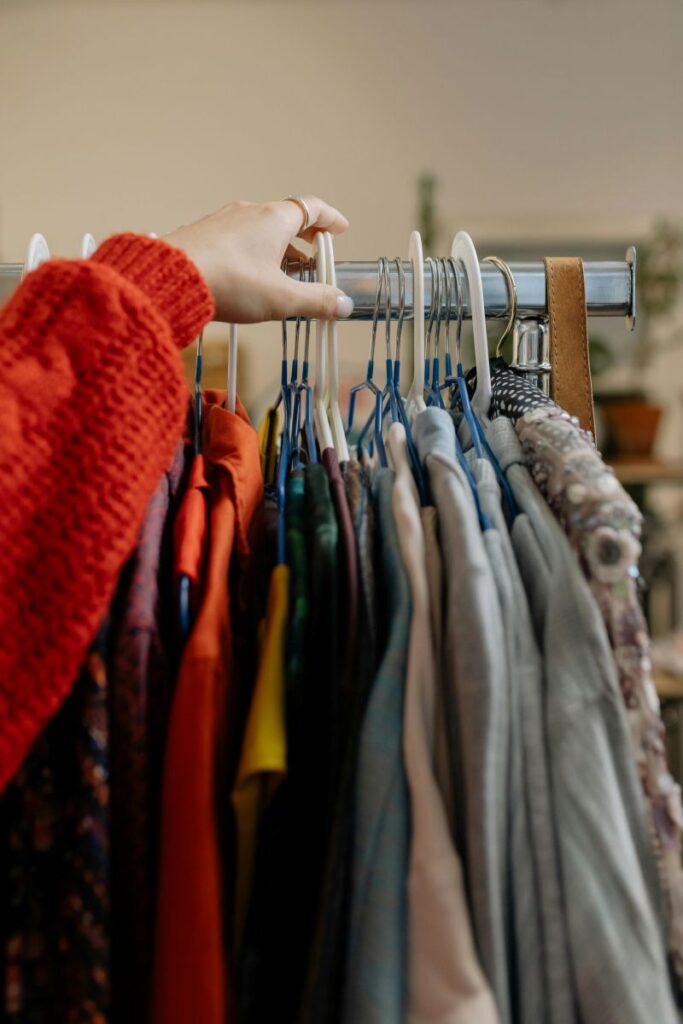
Less synthetic clothing is always a good aim, but for some garments it is still the best material.
Washing synthetic clothes
Because the microplastic problem from synthetic clothing mainly occurs during washing, we will naturally also consider this. Even when washing small items like an undergarment or a smooth blouse, which are very likely to release few microplastics, it is wise to take some extra measures to minimise the spread of microplastics. It remains a synthetic fibre that can still release some threads or fluff. And all those threads and fluff together can quickly form a considerable ball.
- Wash your clothes sparingly. OK, this does not apply to pants, but many clothes are also fine to hang out instead of washing. We also have more tips for getting clothes clean and fresh without washing.
- The hotter you wash clothes, the more microfibres are released. Try to wash these synthetic clothes as cold as possible.
- Preferably use liquid detergent. According to Milieu Centraal then fewer fibres come loose and also avoid scented fabric softener. I would add: choose eco-brand detergent and use natural vinegar as a substitute for fabric softener.
- On average, 3.5 times more microfibres are released in the dryer than in the washing machine. Therefore, it is better to hang out wet clothes.
- There are several gadgets on the market to catch microplastics in your washing machine. Plastic Soup Foundation recommends subscribing to a washing machine filter from PlanetCare, this device attaches to your machine's hose. We are fans of a laundry bag from GuppyFriend, but also a Cora Ball is an option. More and more new washing machines are also coming on the market with a built-in microplastic filter.


While washing clothes releases microplastics that can end up in nature via the sewage, but there are easy and affordable ways to collect those microplastics such as a CoraBall.
Summing up what to do with synthetic clothing?
We therefore believe that banning the purchase or wear of synthetic materials altogether is too simplistic. Moreover, these materials have some fantastic properties – hello water repellency and great stretch – which mean you probably can't do without them. What you *can* do is: don't buy cheap synthetic clothing, preferably buy synthetic clothing made from recycled materials, don't buy synthetic clothing that pills – opt for a natural material instead, as you can also get warm fleece jumpers made from good wool or cotton. And only wash these garments (even if they are from a sustainable brand or made from recycled material) when absolutely necessary and preferably in a special laundry bag or in a washing machine with a microplastic filter – great. scrabble word.
Sources: Plastic Soup Foundation, RIVM, Voedingscentrum, KAssa (4 April 2026). Milieu Centraal. Photo credits: main image: left: Enrique Hoyos (Pexels), middle: Kaboompics.com, right: Nastya Sensei (Pexels), Jan van Gent: Pixabay.com, landfill: Leonid Danilov (Pexels), washing machine: Ketut Subiyanto (Pexels), Ball and fluff: CoraBall.