
A wooden chopping board is one of those kitchen items you use every day, but don't often give a second thought to. Until it warps or starts to smell musty. What a shame, because with a little attention, such a board can last for years. We delved into the maintenance of wooden chopping boards and also into that one practical question: can you use a wooden chopping board for chicken? The short answer is ‘yes’.
Choosing a sustainable cutting board, you'll also end up with a wooden cutting board
In the kitchen, you'll broadly find three types of cutting boards: plastic, bamboo, and wood. Plastic cutting boards were particularly ubiquitous in the 1990s. There's a good chance you'll still spot one at your (grand)parents' place. Nowadays, they're a lot less popular. Not only because they quickly get deep knife grooves, but also because it's now known that they can release microplastics. That doesn't make us very happy. Bamboo is often mentioned as a more sustainable alternative. It grows quickly, is strong, and looks sleek. However, bamboo is also rock-hard and usually consists of glued-together strips. This means your knives will get blunt on it faster than on wood. Ouch, that's not the intention either, of course.
Wooden cutting boards therefore remain a favourite. Most are made from beech, maple or oak. Beech and maple are often found in the more affordable boards: sturdy, fine-grained and perfectly suitable for daily use. Oak and walnut are more common in the higher-priced segment. They are harder, heavier and often look a little more luxurious. In terms of sustainability, the difference is mainly in origin. Wood from Europe, such as beech or oak, travels fewer miles than exotic wood types and is therefore usually a better choice. Especially if the wood is FSC-certified, you know it comes from responsibly managed forests.
Maintaining your wooden chopping board
A wooden chopping board can withstand a lot, but not everything. If you use it daily and do nothing else, you'll notice it. The board can warp, especially if it gets wet on only one side. So, the number one tip: if you rinse it, don't do it too often, but always wet the entire board. It can also start to smell musty because moisture, grease, and juices soak into the wood. And over time, cracks will appear. This is not bad luck or poor quality, but simply how wood behaves. Without protection, it absorbs everything. Therefore, maintenance isn't a luxury, but simply necessary if you want your chopping board to remain intact and smell fresh.
For oiling a wooden chopping board, you can buy special maintenance products, such as Wood oil or Woodwax or this Organic face oil from Dill & Camomile. These are made for wood that comes into contact with food and are therefore food-safe. But you can also manage perfectly well without such a special product. The best and most commonly used option is mineral oil, also called paraffin oil. It is odourless, tasteless, does not become rancid, and is safe to use. Moreover, this oil is inexpensive and easy to find at the chemist or pharmacy. This makes it ideal for chopping boards.
You should avoid using oils from your kitchen cupboard, such as olive oil, sunflower oil or coconut oil. These oxidise over time, which can make your board sticky and smell musty. A shame, and not fresh. How often you need to oil depends on how intensively you use your board. With daily use, once every two to four weeks is a good guideline. If you use it weekly, once every six to eight weeks is usually enough. Tip: Does the wood look dull, or does a drop of water soak in straight away instead of beading up nicely on the surface? Then you already know enough. Time for oil!
Cleaning a wooden chopping board
And also regarding the daily cleaning of your boards. Cleaning a wooden cutting board doesn't have to be complicated. In most cases, wiping it with a damp cloth is enough. If it has an odour or the board feels a bit sticky, sea salt with half a lemon works surprisingly well. Rub it in, leave it for a short while, and rinse with lukewarm water. Done. It's best to avoid hot water, harsh cleaning agents, or scrubbing with a hard brush. They dry out the wood and actually remove the protective layer you've so carefully built up. Trust the wood and the oil a little. They do most of the work for you.
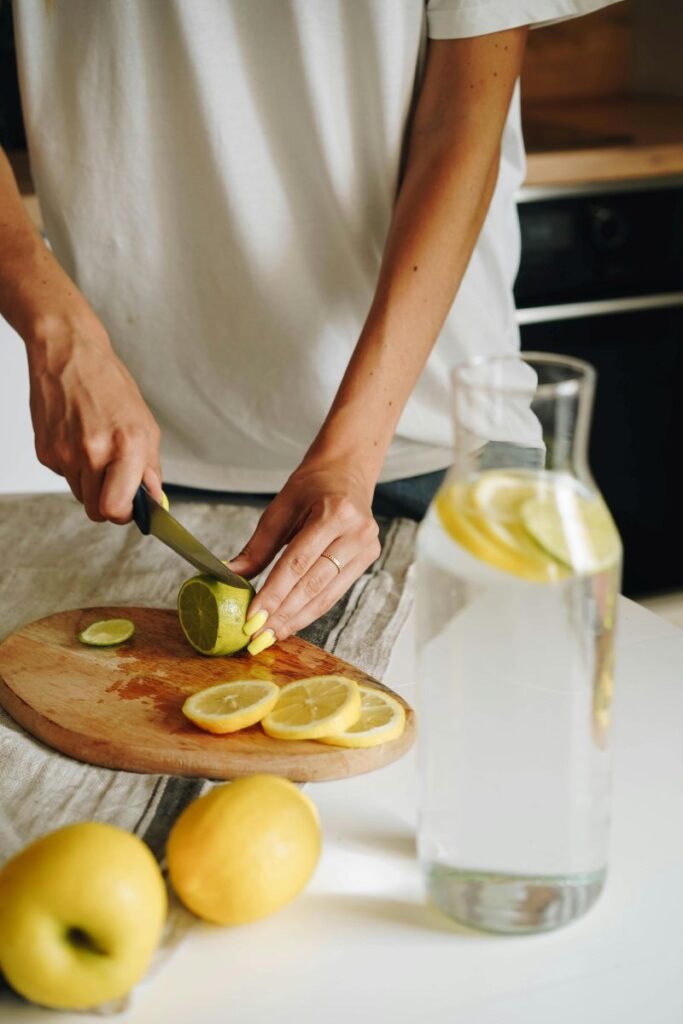
So you don't have to clean a wooden cutting board as rigorously as you might think. The secret: oil it well!
A wooden chopping board, suitable for chicken too
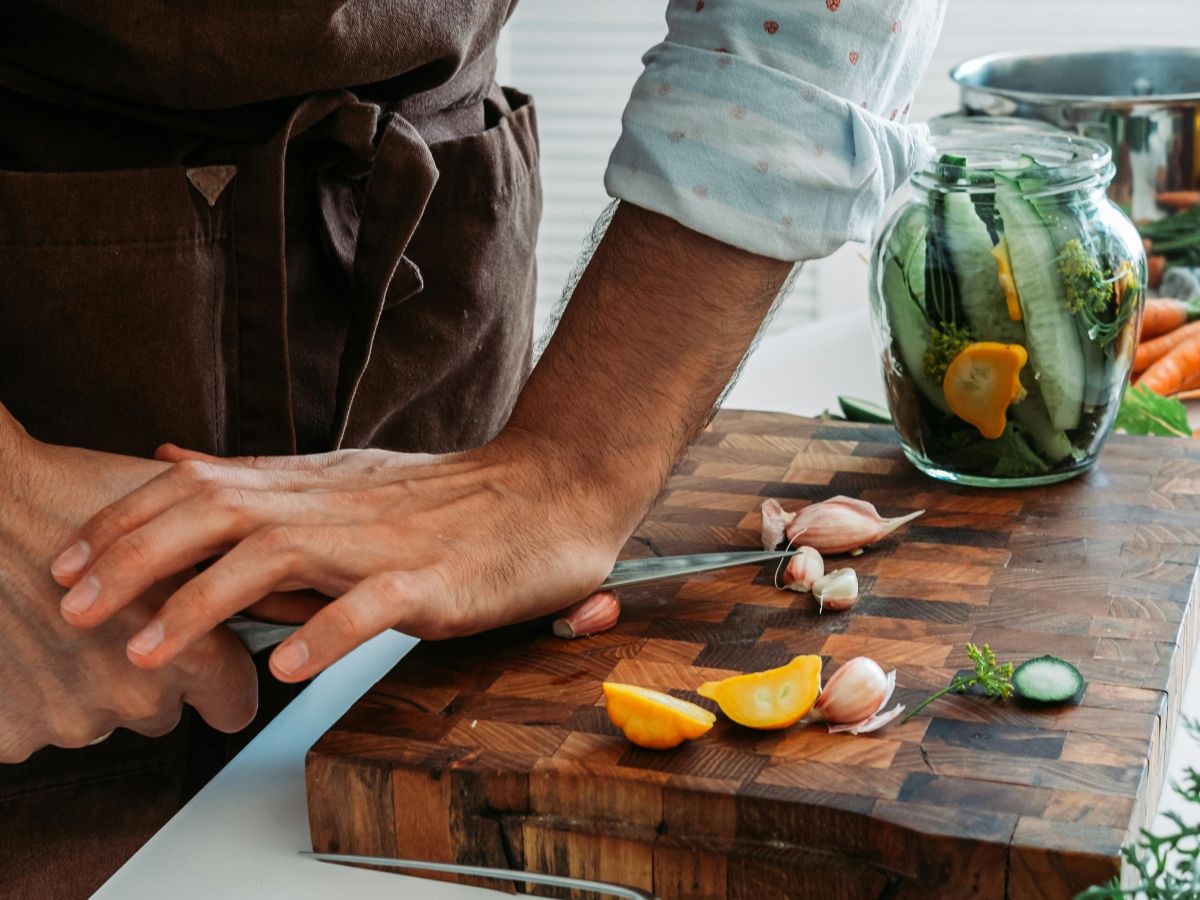
A well-oiled wooden chopping board can be perfectly used for chicken, provided you maintain it properly. The oil gives the wood a protective layer, which significantly reduces the chances of moisture and raw juices penetrating deep into the board. That is precisely why a well-maintained wooden chopping board remains hygienic and does not automatically become ’dirty‘. The wood essentially seals itself rather than absorbing everything. If you want to tackle this pragmatically, one simple commitment to yourself is enough: reserve one wooden chopping board for raw products such as chicken. Use that board only for that purpose, clean it immediately after use, and give it a new layer of oil in good time. This way, you keep things under control and food-safe, without having to resort to plastic alternatives. Good luck!
You might also find this interesting
- Also see: Cleaning the fridge environmentally friendly.
- Also see: Handy DIY for storing your pans.
- Also see: Why washstrips aren't that eco-friendly after all.
Sources: vdnkitchen.nl, boiling point .nl. Photo credits: Technobulka, Pexels (main image).