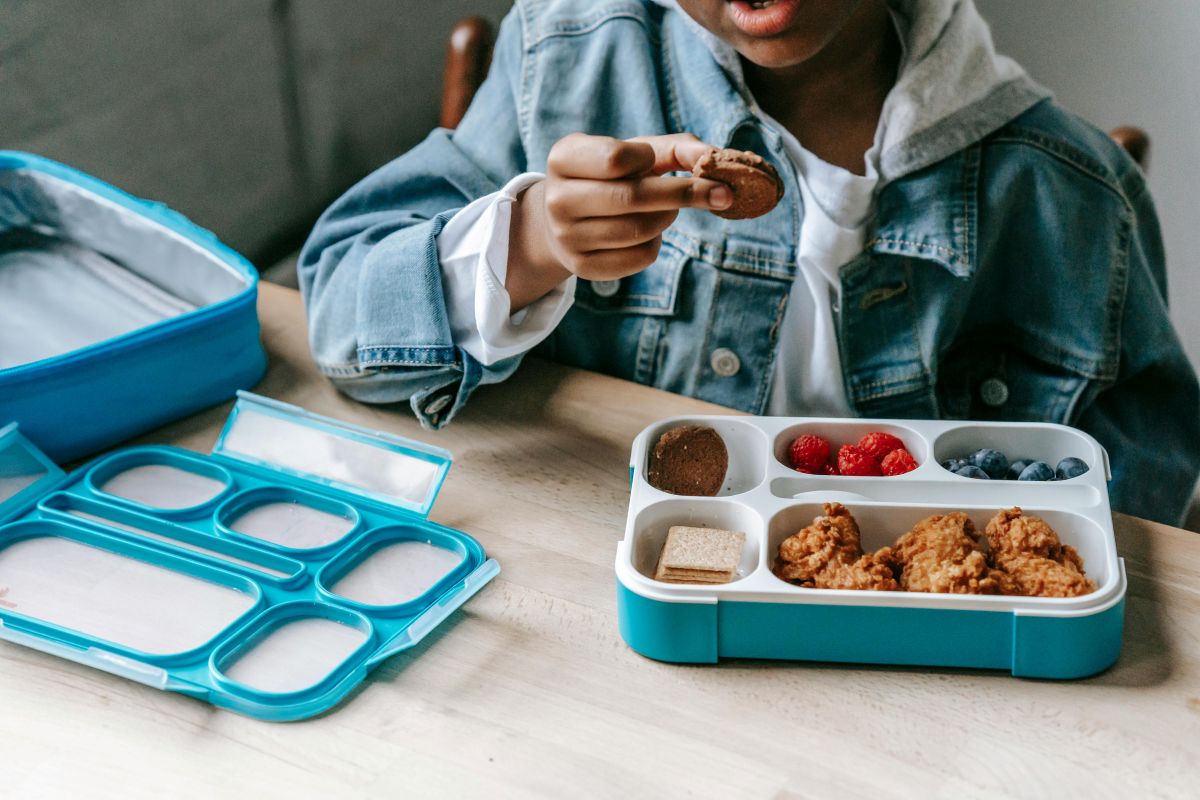

It could just be that your plastic lunchbox and sippy cup contain substances that can get into your food and drink and are not so good for your health - let alone that of your kids. Aii. But bisphenol A (BPA) was banned not so long ago, wasn't it? We hear you thinking. No, this is about a different substance - plasticisers - called DIBP.
Plasticisers in drinking bottles and lunch boxes
It is true that most of the plastic drinking cups, bottles, lunch boxes and lunch trays you buy these days are BPA-free (it is even now prohibited by law). But that doesn’t mean they are completely free of harmful substances. At least, there’s a good chance they aren’t. We’re happy to explain: a lesser-known substance is diisobutyl phthalate (DIBP), a plasticiser that makes plastic flexible and pliable. DIBP is not allowed to be added as a plasticiser to plastic that comes into contact with food, but it can end up in it in small quantities. You can find DIBP in glue, printing ink and some other plastic products, among other things.
What happens in the dishwasher?
Research by the Tegengif Foundation shows that DIBP can be released into beakers and lunch boxes under certain conditions. This is concerning, because DIBP, like the banned substance BPA, is an endocrine-disrupting substance and is linked to fertility problems and developmental issues in unborn children, among other things. The researchers discovered that DIBP is released from plastic drinking bottles when they are washed in the dishwasher frequently. And let's be honest: that is precisely how most people clean their lunch boxes and beakers. But what now? Should we throw these cheerful boxes and beakers away immediately? Or is there a smarter solution?
Researchers tested 39 plastic drinking bottles and discovered that more than half began to release DIBP after multiple dishwasher cycles. Before washing, this substance had been found in only one bottle. As a control, there was also a test group that washed the bottles by hand. And what did it turn out? No increase in DIBP was measured in these bottles. This indicates that it is primarily the dishwasher that damages the plastic and releases the harmful substances. Conclusion: the combination of high temperatures and dishwasher detergents can damage the plastic, allowing plasticisers and other chemicals to end up in your food and drink after all. Not a pleasant thought.
What is the best thing to do with your (old) plastic lunch box and drinking cup?
We were also mulling it over. Is it smart now to buy a pointy cup and drum rücksichtslos to be thrown away or is that a bit over the top? For your health, and especially that of your children, you'll do anything, won't you? That is why we have created a decision tree to help you on your way. Not all lunch boxes need to go straight into the general waste, but think carefully about what you do with them.
- Do you have a relatively new plastic lunch box and drinking cup (or bottle) and haven't put them in the dishwasher (often) yet? Keep using them, but from now on always rinse by hand with mild soap and lukewarm water.
- Is your plastic bread bin already old or already been in the dishwasher more than 20 times anyway? That chance is definitely there with our dishwashing culture. Then consider buying a new one and wash those cups and tumblers by hand from now on.
- Going for a new one? Opt for a stainless steel (SS) bread bin or drinking cup, which is a safe choice of material. Still prefer plastic? Go for a new one from a reliable European brand and never wash it in the dishwasher. Rinsing with lukewarm water and an ecological detergent is enough and will keep the dust off.


Fortunately, there are also good plastic-free alternatives without plasticisers, such as lunch boxes and stainless steel (SS) drinking cups.
Plasticisers everywhere
There is a high chance that after reading this article you will open your kitchen cupboards and think: oh dear, I have so many plastic containers and cups that have been through the dishwasher more than twenty times! Don't panic, you don't need to throw everything out radically straight away. But it is a good idea to switch step by step to new, safer alternatives, such as stainless steel or glass. Apply the first in, first out rule: replace the oldest and most used plastic storage containers first. And comfort yourself with the thought that almost everyone has used these products for years without a second thought. Unfortunately, the issue of hormone-disrupting substances in food packaging is much bigger than just drinking cups and lunch boxes. The good news? Due to increasing pressure, more and more harmful substances are being banned.
Still looking for something new? We have compiled a list of the nicest sustainable stainless steel drinking cups. And while we were at it, we also immediately the stainless steel lunchbox list made for you. Good luck browsing! Do you have a great tip for a great mug, lunchbox or other safe storage solution? Let us know about it! We love good tips from our readers.
More sustainable tips from thegreenlist.nl
- Also see: the truth about plastic packaging.
- Also see: 10 tips for going on a plastic diet.
- Also see: Less microplastics: on microplastics diet.
Sources radar.avrotros.nl, antidote.nl, WHERE IS IT.nl. Photo credits: main image: Katerina Holmes (Pexels),other: drum: Tima Miroshnichenko (Pexels), bottle: Taryn Elliott (Pexels).