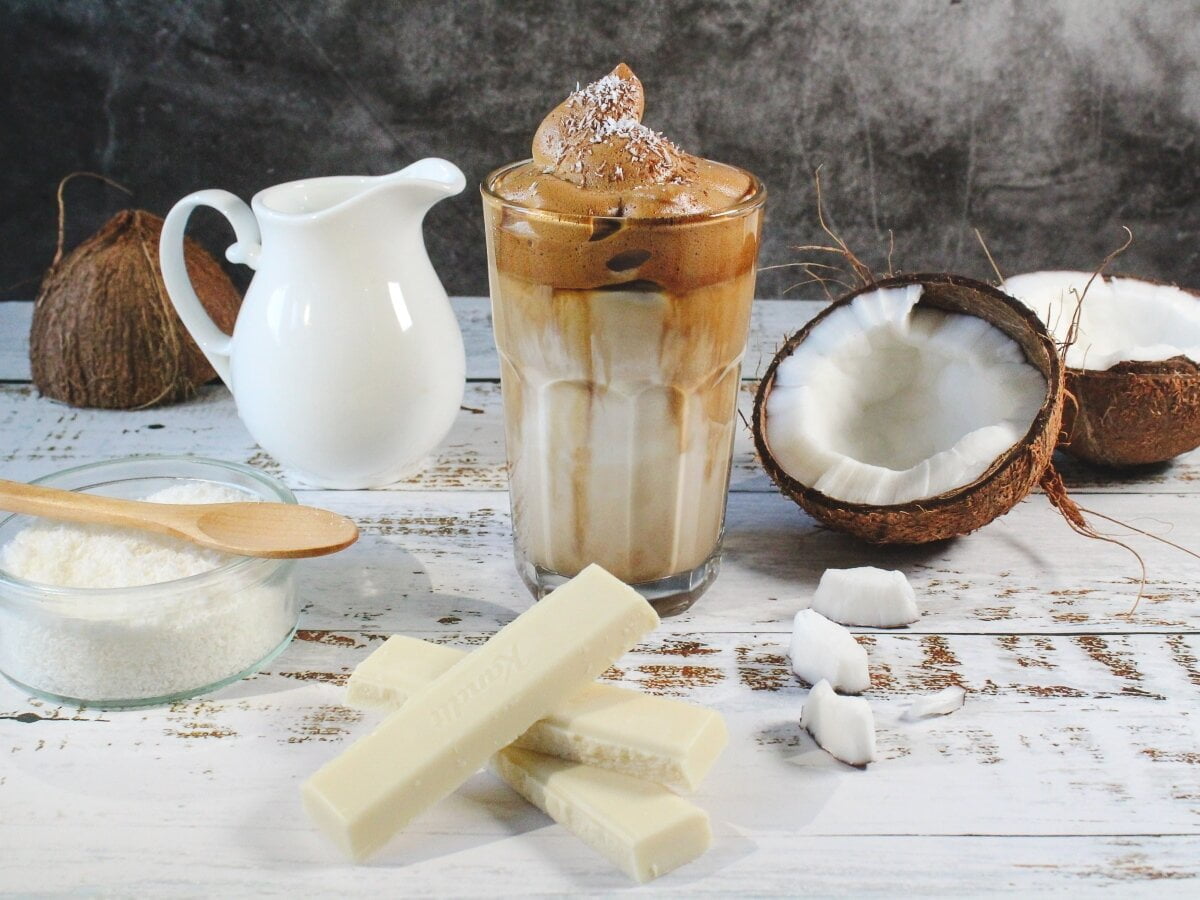

In recent years, there has been increasing demand for coconut; especially coconut oil, as a substitute for palm oil. Many assume that all products made from coconut - such as coconut milk, coconut flour, but also coconut mats - are sustainable and vegan because coconuts are plant-based. However, this is not so easy to say. We found out for you exactly what is the sustainability of coconut.
The impact of coconut on the environment
Coconuts grow on coconut palms in (sub)tropical regions. The biggest producing countries of coconuts and coconut oil are Indonesia, the Philippines and India. Coconut is a sustainable, natural product you would think, which you would love to use with your green heart to cook or take care of your body. However, according to the Nutrition Centre, coconut production is not good for the environment: it has a medium to high climate impact. This is mainly due to the use of artificial fertilisers and pesticides against insect pests and the clearing of forests for coconut palm plantations. Among other things, this reduces biodiversity and the habitat of several endangered species. Research published in science journal Current Biology shows that extracting a million litres of coconut oil causes problems for more than 18 endangered species on average; for palm oil, this is ‘only’ four. This is mainly because coconut cultivation often takes place on tropical islands, where animals that are only found on that island live. However, according to the 2022 Coconut IMVO Covenant, coconut acreage is hardly growing anymore and little ‘new’ deforestation is taking place. However, soil and groundwater pollution due to the use of fertilisers and pesticides is still current.
Low yield coconut palms
In terms of space requirements, coconut is also not a sustainable alternative. Coconut production requires much more land than palm oil production. This is because the yield per hectare of coconut palms is lower than that of oil palms. In addition, palm oil requires fewer pesticides and fertilisers than coconut oil, according to Milieu Centraal. Another problem with coconut cultivation is that the palms produce fewer and fewer coconuts after a certain period of time, requiring new coconut palms to meet demand. Also, a lot of water is used in coconut production. So replacing palm oil with coconut oil is not better for the environment, contrary to this.


The conditions under which coir is produced are not always pretty.
Working conditions in coconut production
Deployment of monkeys
You must have heard it before: monkeys are used to harvest coconuts, because of the metre-high trees in which the coconuts grow. Despite industry denials, the TV show Keuringsdienst van Waarde concluded after thorough research that monkey labour in the coconut industry does still exist. The Dutch Society for Veganism investigated that monkeys are used in 3 of the 86 countries that produce coconut: in Thailand, Malaysia and small parts of Indonesia. This accounts for 4% of global coconut production. The monkeys work long hours and - when not working - are confined in small metal cages. It is impossible for a manufacturer - and thus also for us as consumers - to tell whether a coconut has been picked by a monkey or a human. However, you can be careful not to buy coconut products from Thailand or Malaysia, to reduce the chances that it is coconut produced using monkeys. Other than that, your sustainable, cruelty-free ambitions can't do much more when buying coconut.
Exploitation of workers
The IMVO covenant reveals that unhealthy and unsafe working conditions occur in the cultivation, harvesting and initial processing of coconuts. Child labour also takes place and most small producers, tenants and the workers hired by them have very low incomes. Partly to address this, a number of companies set up the Sustainable Coconut and Coconut Oil Roundtable in 2019. This initiative has since continued as The Sustainable Coconut Partnership. The organisation's mission is to work towards a responsible and resilient coconut sector that has a positive impact on producers' living conditions, the climate and the environment. It is working towards a sustainability standard for coconut: the Sustainable Coconut Charter.
Coconut oil healthy or unhealthy?
Not just about sustainability, the health aspects of coconut oil or coconut fat are also hotly debated. Some people swear by it and consider coconut oil a healthy choice, while others believe it is actually unhealthy. What exactly is the situation? Which is true? We looked it up and the answer is not so black and white (as always). It is true that coconut fat is high in saturated fat, which is not very healthy. Saturated fat makes cholesterol rise and cholesterol is a risk factor for cardiovascular disease. Only whether coconut fat leads to cardiovascular disease, you can't just say. This says Ingeborg Brouwer, Professor of Nutrition for Healthy Living at VU University Amsterdam in the Algemeen Dagblad. She specialises in fatty acids. ‘If you compare coconut fat to butter, coconut fat is better. But if you compare it with sunflower oil or rice oil, those are healthier,’ the scientist said. Coconut fat is only worrisome when large quantities are involved, is her conclusion. Do you regularly make a (vegan) Thai curry with coconut milk (which therefore includes coconut fat), then you should especially not worry and enjoy it. But for cooking oil, there are better options. Want to know the ins and outs? See the whole article here.


Coconut milk in a (vegan) curry dish is an excellent choice.
Making a sustainable choice in coir
So unfortunately, there are still many snags in the production of coconut. Sustainable coconut is still in its infancy compared to raw materials like palm oil and soy. Very little certified coconut is currently for sale. Still, you can do something to buy the most sustainable coconut possible. For instance, you can look out for the Fairtrade, Organic and Rainforest Alliance labels. In addition - to exclude monkey labour as much as possible - it is best to avoid coconut from Thailand and Malaysia. And hopefully, in a few years, The Sustainable Coconut Partnership will bear fruit, so that you will know exactly which coconut is the most sustainable!
More sustainable tips from thegreenlist.nl
- Want to know more about palm oil? You can read about it in this article.
- What is the most sustainable oil for cooking and baking? We looked into it for you.
- How sustainable is an avocado on your plate? We have also checked this out for you.
Sources: The Nutrition Centre on the sustainability aspects of coconut and coconut fat, One Green Planet on coconut sourcing and environmental impact, Article in Current Biology on coconut oil and the conscious consumer, Swapping palm oil for coconut oil: is it such a good idea?, Fact sheet on high-risk cocoil by IMVO, Dutch Association for Veganism on coconut. Photo credtis: main image: Jametlene Reskp (Unsplash), coconut products: Tijana Drndarski (Unsplash), coconut plantation: Madhushree Narayan (Unsplash), curry and coconut milk: thegreenlist.nl.