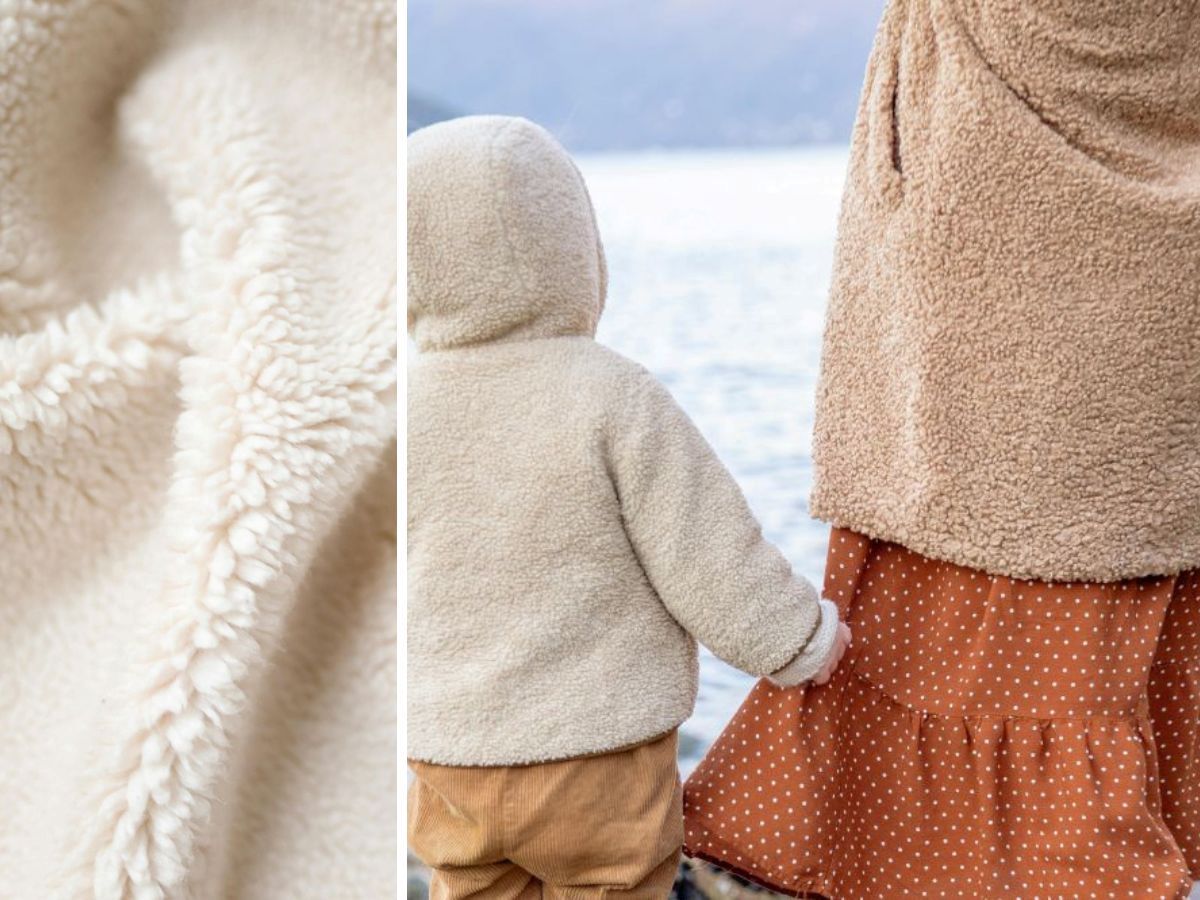

How bad is a vintage fleece jumper for the environment, and what about eco fleece made from recycled materials such as PET bottles? Behind such a nice warm jumper, there is a huge environmental impact. Because fleece is a synthetic fabric. When washed and worn, microplastics can be released. And that is not unthinkable with such a nice soft fluffy jumper. We dive into the world of fleece.
How bad are microplastics for the environment and health?
Microplastics are everywhere. And by everywhere, I really mean everywhere. The small pieces of plastic that you can hardly see with the naked eye spread through water and air. You find them in nature, in animals, they are even in our food, in our bodies and in the bodies of our (unborn) children. Quite a scary idea when you think about it. Especially since microplastics are not biodegradable and there are indications that microplastics are bad for our health. At The TV programme Radar (2019) tells the director of Plastic Soup Foundation that there is evidence that microplastics can affect immune cells and lung cells which could cause inflammatory reactions and hormone disruptions. Additional research is needed to establish this definitively.
Not plastics, but microplastics are the real problem
Babette Porcelijn, author of the book The hidden impact, is also deeply concerned about the microplastics problem and the natural damage it causes. In her book, she indicates that we massively focus on the wrong thing: being not the visible plastic packaging we should be worried about, but rather the invisible microplastics that cause environmental disaster.
Where do these microplastics come from?
It is clear to me that microplastics are a huge environmental problem. But where do these microplastics originate? This is what I want to know to also get an idea of the role of my fine fleece jumper. Microplastics are formed, among other things, when plastic litter lying around in nature is broken down. Animals ingest it through their food or those tiny particles get into the water and thus into the food chain - including us. Then you also have microplastics that are deliberately added in products. That scares me. Deliberately? Yes, really. In make-up, personal care products and detergents, manufacturers sometimes deliberately add microplastics as an ingredient. One of the reasons is to make it nice and spreadable. We live in a crazy world, but we already knew that.
So that's how bad my fleece jumper is
But that doesn't get us there. We haven't even mentioned the biggest culprits yet. Clothing? Yes, you come close. But the single biggest culprit in the creation of microplastics are car tyres. This accounts for an average of one kilo of microplastics per Dutch person per year. And to complicate the sustainability dilemma: electric cars spread more microplastics than petrol cars because they are heavier on average. Pooh, what a file.
So now those clothes? Absolutely! Wearing clothes, but especially washing them, is a major culprit of microplastics. It ranks second, according to figures from Plastic Soup Foundation. To give you an idea: every five kilos of wash from synthetic clothes releases an average of nine million microfibres. So this ends up in nature via the pipes. So to come back to that fluffy fleece jumper for a moment: so it definitely contributes to the microplastics problem.


A fleece jumper is unfortunately a dispersant of microplastics.
The environmental impact of my fleece jumper
My vintage fleece jumper, like any fleece jumper from that era, is made of 100% polyester. This is a synthetic fabric made from petroleum. A form of plastic, in other words. Fleece may be nice and warm and soft, but when you walk down the street (or, like me, play sports in it) the friction releases tiny plastic particles. And if you put a fleece jumper in the washing machine, we now know that even more fibres come loose. It is estimated that one fleece jumper in the wash some 250,000 fibres releases, which accounts for 1.7 grams of microplastics. And if you now think that you have washed all the microplastics out of your old fleece jumper, you are dead wrong: older jumpers release almost twice as much fibre as new ones. Why I don't know, probably something to do with wear and tear. These particles enter the environment through your washing machine's drains and, via various routes, eventually spread to surface water, soil and air. That fleece jumper needs to go out the door?
One polyester fabric is not the other
Now, a fleece jumper is of the worst kind, it turns out. ‘Several factors, including fibre length and yarn density, determine how badly a garment will release microplastics. Research shows that a fleece jumper will release more microplastics than a finely woven blouse, mackintosh or swimming costume, simply because the fabric is fluffier.’
Sustainable Fashion Gift Card
Buy fleece more durable
Now you can buy fleece more sustainably. For instance, you see more and more fleece clothing that is made from recycled PET (often made from PET bottles). The good news about this is that no oil has been drilled out of the ground to make your jumper, but existing plastics have been reused to make your garment. The bad news is that clothes made from recycled PET still give off microplastics. The most sustainable alternative is to buy clothes made from natural materials. For example, there is fleece made of cotton and also wood (cellulose, which is also what tencel is made of). However, if you decide to go for cotton, it is important to check whether it is certified organic cotton, because meanwhile, we know that canteen production is also incredibly damaging to our planet.
Fleece jumper more durable wear
Now that I know that certain polyester fabrics release more microplastics, I think we should buy (or even better: produce) these materials less. Think of that fleece jumper or a warm scarf or: after all, these are fabrics that are more likely to fluff up AND there are better, sustainable alternatives. But for other garments like a mackintosh, swimming costume or nice (smooth!) winter coat, I don't think recycled polyester is a bad idea at all. These are garments that you don't wash often and which, because of their smooth texture, won't fluff easily and thus release microplastics. For those garments, I wouldn't know of a better alternative. I don't think this exists yet either, but honestly: I need to get rid of that old fleece jumper.
Do you have polyester garments that can fluff and don't want to part with them just yet? Then I have a few tips for you:
- Wash these clothes sparingly.
- The hotter you wash clothes, the more microfibres are released. Try to wash these synthetic clothes as cold as possible.
- Preferably use liquid detergent. According to Milieu Centraal then fewer fibres come loose and also avoid scented fabric softener. I would add: choose eco-brand detergent and use natural vinegar as a substitute for fabric softener.
- On average, dryers come with 3.5 times more microfibres released than in the washing machine. Therefore, it is better to just hang those clothes out.
- There are several gadgets on the market to catch microplastics in your washing machine. Plastic Soup Foundation recommends subscribing to a washing machine filter from PlanetCare, this device attaches to your machine's hose. Other solutions include a laundry bag from GuppyFriend or a Cora Ball. There are also more and more new washing machines on the market with a built-in microplastic filter.
- Have you run out of these clothes? Think carefully whether it makes sense to give it away to charity or a thrift shop or whether it would be better to throw it in the clothes bin for recycling.


Pictured: a PlanetCare washing machine filter, a microplastic fibre next to a grain of rice and a Cora Ball.
More green fashion tips from thegreenlist.nl
- Also see: Less washing and still clean clothes.
- Also see: what about microplastics in swimwear?
- Also see: all about clothing materials.
Photo credits: main image: Polina Tankilevitch (Pexels) & Tatiana Syrikova (Pexels), purple fleece jumper: Armagan Basaran (Pexels), thegreenlist.nl (shop), PlanetCare, Cora Ball.