

This year we are spending at thegreenlist.nl extra attention to the Dutch World Heritage Sites. There are so many beautiful, and often still unknown, places close to home. Perfect for a nice day out or a weekend trip. A sustainable outing in other words! Have you ever heard of the Dutch Water Defence Line? These are the historic lines Stelling van Amsterdam and the Nieuwe Hollandse Waterlinie together. And since 2021, as Hollandse Waterlinies, this has been on the UNESCO World Heritage List. How that works exactly and what you can do here, we'll tell you in this article. Will you join us on a tour of the Hollandse Waterlinies?
The difference between the Old and New Waterline
In collaboration with the Netherlands Board of Tourism & Conventions and Unesco
The Dutch Waterlines tell the story of defending the west of the country by means of water against hostile troops from the east. If they threatened to attack the area, the land was quickly flooded. This way, the military could not occupy the area and the danger was (temporarily) gone. If you hear anything about the Waterlinies, people often talk about the ‘old’ and ‘new’ waterline. As the name suggests, new Dutch Waterline served as a replacement for the old one from 1871. A key difference between the old and new line is that the city of Utrecht now falls within the line. But the history story continues.
The Dutch Waterways: a beautiful piece of World Heritage for good reason
The New Dutch Waterline is the successor to the Old Dutch Waterline, which was devised in Disaster Year 1672 to stop advancing French troops. After the French army left in late 1673, the line was only partially used for a long time. Napoleon already had a plan drawn up to place Utrecht, an important city for the army, within the line. When Napoleon was driven out, the new Dutch government ordered the construction of this new line of defence with Utrecht within it. This was named the New Dutch Waterline.
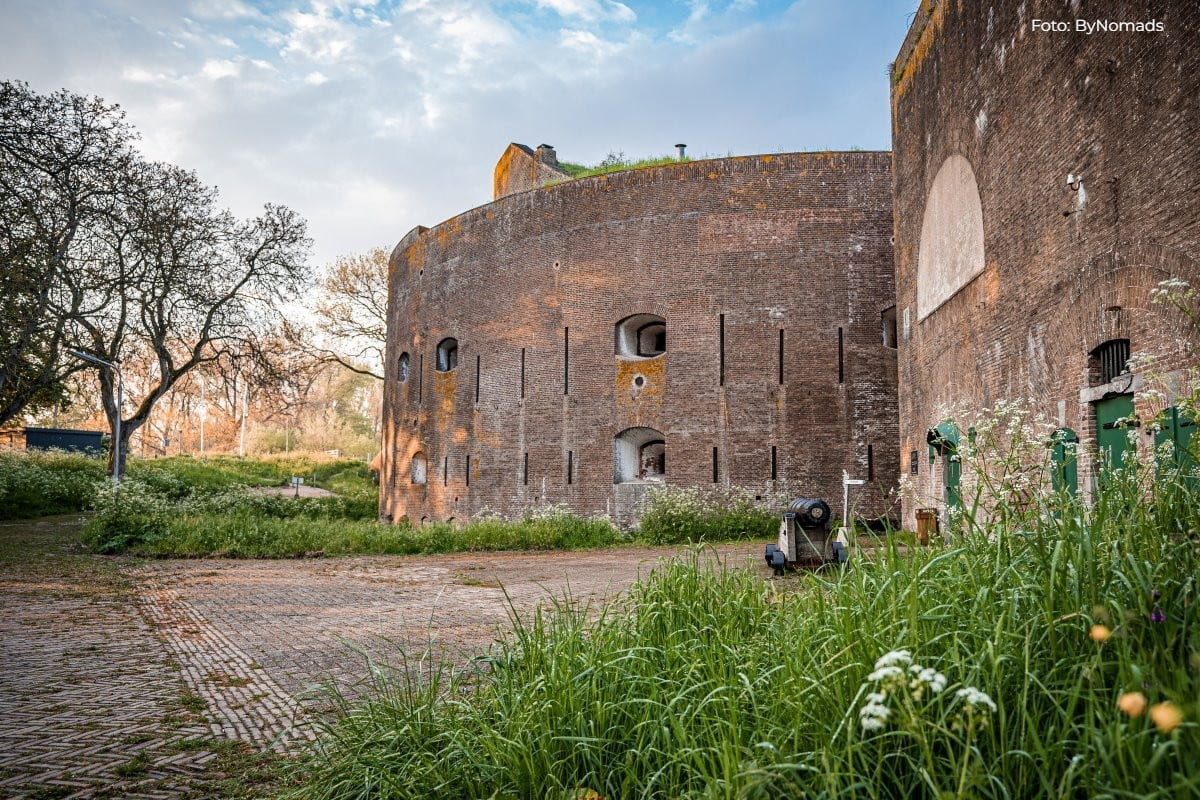
As additional protection, a ring of forts was built around Amsterdam from 1880 onwards. Behind these, the government, king and military staff could retreat if the enemy broke through the New Dutch Waterline. This is also called the National Reduit. The Hollandse Waterlinies consist of a whole system of bunkers, dykes, forts, canals and sluices, some of which are hidden in the green landscape so you can't easily see them with the naked eye. The line runs from Edam around Amsterdam via Muiden to the Biesbosch and is 200 kilometres long and three to five kilometres wide. As many as 62 of the 96 forts along the line can still be visited by the public, a unique experience.


The Dutch Water Lines tell you about the history of the Netherlands. Photo credits: ByNomads.
Days out especially for hiking and cycling enthusiasts
Do you love cycling? Or are you more into long walks? Whichever you prefer, the Dutch Waterways will satisfy everyone. So you can hop on your bike for a beautiful 29-kilometre cycle route along forts around Abcoude. During this cycle route, you will not only visit Fort Nieuwersluis, but also, for example, Fort Uithoorn and Fort in the Botshol. These forts are part of the Defence Line of Amsterdam. Feel like a bit more of a challenge? Then the 56-kilometre cycle route in Utrecht (named World Heritage Cycle Route Hollandse Waterlinies) or the 75-kilometre Jan Blanken route more something for you. Jan Blanken worked as an engineer on the waterworks around the Dutch Waterlines. By following the various junctions, you will not only cycle past beautiful forts, such as Fort Everdingen, but you can also enjoy beautiful nature and historic towns like Vianen and Leerdam.
Also fun: World Heritage walks
Are you more of a hiker? Then the 16-kilometre World Heritage Walk at Fort Asperen might be your thing. If you think 16 kilometres is a bit long, try the waterline promenade Oudewater in the Old Dutch Waterline. During the route, you will pass the old Heksenwaag and discover the history of the oldest town in the Green Heart.
Discover the Dutch Waterways by train
Going for a nice day out by train? Then choose the NS walk from Houten Castellum station to Culemburg station. This 17-kilometre route (or shorter) takes you past numerous forts and bunkers of the New Dutch Waterline. Afterwards, you can sit down at Brownies&downieS in Culemborg. Are you staying the night in Culemborg? Then have a sumptuous dinner at the Gelderlandfabriek at the Italian restaurant Una Volta. Another recommended one is this beautiful walking tour through the centre of Utrecht, including along the historic Oudegracht canal and Wilhelminapark. You start and end at Utrecht Central Station. Afterwards, you can have a bite to eat at Gys on the Voorstraat or Copper Branch On the Steenweg.
Fun outings with children along the Dutch Waterways
There is also more than enough to do for children along the line. Would you like to learn more about the history and workings of the Dutch Waterline? Then I definitely recommend the Waterline museum in Bunnik to visit. With a public transport bike from Bunnik station, you can get there in ten minutes. The Waterline Museum is located at Fort near Vechten, one of the most beautiful forts of the New Dutch Waterline. And it's not just any museum: you can fly over the Dutch Waterline with virtual reality goggles on!
Do you prefer outdoor adventures? Then the Underwater trail KIDS really something for you and your (grand)children. From Fort Honswijk, you set off into the field with an assignment booklet in your hand. Along the way, you will encounter a self-service raft and plenty of other challenging tasks. In between, you can enjoy something to eat or drink at Fort WKU's Tea House.
Another unforgettable outing, is a visit to the uninhabited island Pampus. Here, children can scavenge on a real military fort and learn all about the story of Pampus, where two hundred soldiers used to live. Can you crack the secret code during the treasure hunt? Pampus can be reached by boat from Muiden or Amsterdam Ijburg.


In several places in (central) Holland, you can visit the Dutch Waterlinies and often there are restaurants nearby. An ideal weekend lunch tip. Photo credits: ByNomads.
Viewing tip
The TV programme Klokhuis has made a series about the World Heritage Sites, including the Dutch Waterline. You can watch this series online.
A day on excursion with Natuurmonumenten
Would you like to combine a visit to a fort with a nice walk through nature? On a number of days throughout the year you can, under the guidance of a guide from Natuurmonumenten, visit Fort Nieuwersluis or Fort Kijkuit in North Holland. During these excursions, you will learn more about the special history of these locations, the unique flowers, herbs and plants around the forts and you can even visit a real ammunition cellar! Are you going out with (grand)children? Then there are also all kinds of fun assignments to do on the grounds. Did you know that bats use the forts to hibernate? In places where soldiers used to sleep, bats now enjoy their peace and quiet.
Much more to discover and undertake
There is so much to do along the Hollandse Waterlinies route that I have only given a small hint in this article. For instance, you can take a guided tour at numerous forts, explore the many historic towns and undertake all kinds of walking and cycling tours. Are you looking for many more suggestions for a fun day out close to home? Then take a look at this website. Here you will also find plenty of suggestions for places to stay. Ideal to make a weekend of it straight away. Have fun exploring the Dutch Waterline!
More sustainable tips from thegreenlist.nl
- Wondering what exactly World Heritage Sites are and how they are chosen? Read more about the Dutch World Heritage Sites in this article.
- Do you know the Lower Germanic Limes and these two unknown World Heritage Sites already?
- A city trip to Dordrecht with a visit to Kinderdijk is also a perfect getaway.
Sources: Dutch water lines, Unesco World Heritage Site, Old Dutch Waterline, Waterline Museum, Natuurmonumenten. Photo credits: ByNomads.