
Camping is a beautiful, sustainable way to holiday. But wow how expensive it is to buy a tent, caravan or motorhome! As an experienced camper, Amy therefore shares tips for finding a second-hand motorhome, caravan or tent. What should you pay attention to? And do you really have to buy camping equipment or can you borrow one?
Sustainable camping: go for second-hand or rental
Camping can be a great way to holiday in an environmentally conscious and cost-conscious way. Back to basics, thrown back into nature, experiencing beautiful adventures: many people love it. But camping is not at all cheap these days. Buying a tent, caravan or motorhome can be an expensive affair. Especially if you buy it new yourself. By buying your camping gear second-hand or by borrowing or renting one, you save money and are environmentally aware at the same time. I take you through the options and share tips on what to look out for when buying a second-hand campervan, caravan or tent.


Go for a second-hand campervan, caravan or tent. You can rent or borrow one or buy one on the second-hand circuit. This is better for the environment and your wallet.
Choosing camping equipment: caravan, motorhome or tent?
When you go camping for the first time, you will have to choose a camping equipment without any experience. And that can be quite a tricky choice. The most common means of camping are the tent, caravan or motorhome. But which do you choose? Do you prefer a bit more space, a fixed kitchen and a fixed bed? Then a caravan or motorhome, might be the best choice. If you prefer to go back to basics, enjoy cooking on a small cooker and sleep wonderfully on a mat or air mattress, then go on holiday in a tent.
Besides comfort, there is also a big difference in pollution, i.e. in CO2 emissions, between the caravan and campervan versus the tent. The difference is mainly in production; making a means of transport with all those parts from rare resources is incredibly impactful. A more sustainable choice is to buy or rent a campervan or caravan second-hand, but more on that in a moment. What you also need to know is that there is a big difference in consumption. When camping, though, emissions are fairly similar. If you go on holiday with a tent, then everything fits in your car and you don't need to bring an extra means of transport for this. If you go with a caravan, you will have another few hundred kilos hanging behind your car. If you go on holiday in a campervan, then your house is also your means of transport.
Using the tool Climate wise on a journey from Milieu Centraal, I made some comparisons. I assumed a two-week holiday with four people to Lisbon. If you fly to Lisbon and then sleep in a mobile home there, you will use 2,270 kilos of CO2. If you make the same trip but with the caravan, you emit 1,680 kilos of CO2. If you then go to Lisbon by car and tent, you will only emit 900 kilos of CO2. Apart from camping, your consumption increases by 20 to 30% if you also choose to take a roof box or bicycles.
Motor home or caravan
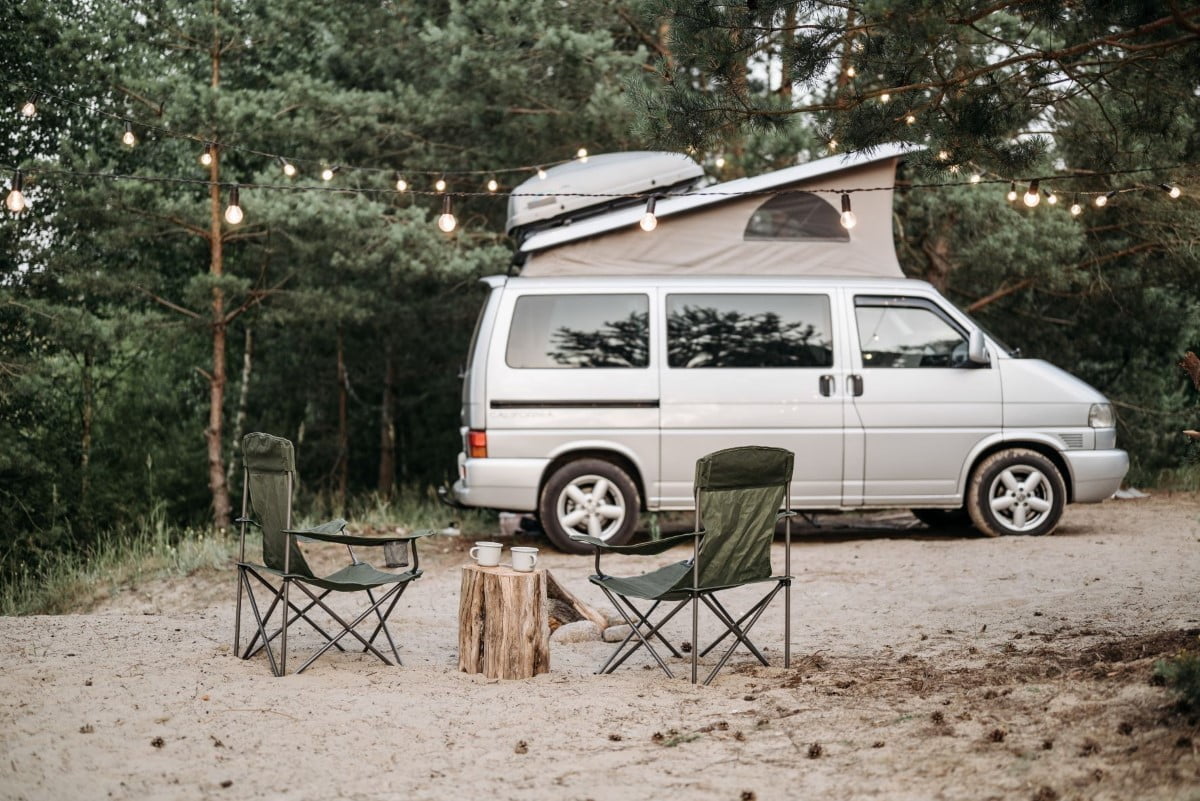
Does a motorhome or, on the contrary, a caravan suit you better? This largely depends on the type of holidaymaker you are. If you like to be found camping and making trips from time to time, a caravan is probably the best option. You can leave all your stuff comfortably while you get into the car on your way to your day out. If you really go roadtripping and drive from campsite to campsite, then a motorhome again is ideal. Put your table and chairs inside and you're good to go.
Borrowing or renting camping equipment
If you have never camped before, you might want to borrow camping equipment from friends or family the first time. If this is not an option, look into renting camping equipment. This way, you can discover what suits you without much risk before buying a second-hand camping device yourself. Sharing camping equipment with each other is a nice sustainable option. Why should we all own a tent, caravan or motorhome and then leave it idle for a large part of the year? Better to enjoy it together!
- Motorhome or caravan rental: Here you rent a motorhome directly from a private owner. This way, the motorhome is not sitting idle for most of the year, they earn a penny and you can try out a motorhome holiday. A few platforms where this is possible: Goboony, Paul Camper, Peerby or caravandelen.nl.
- Rental tent: At many different campsites, you can rent (furnished) tents. All you have to do is pack your suitcase and go. You can rent a tent from a rental company and set off with it yourself at Hikers House.
Have you already made up your mind and really want to own a tent, caravan or motorhome? Then go for second-hand! There is so much on offer! But where do you start? The tips below will help you find the best second-hand stuff and reduce your chances of making a bad buy.
Buying a second-hand tent
Buying a second-hand tent can often be exciting. Has the tent always been treated well and how can you be sure it won't leak? Unfortunately, you cannot be sure that a tent will not leak. You will have to take the seller's word for it. However, there are a few things you can look out for to make sure you feel confident about both the seller and the second-hand tent.
- Ask questions: Feel free to ask the seller a lot of questions about the tent. How old is the tent? When was the tent last used? How often have you been away with it? How has the tent been maintained?
- View photos: Sometimes I come across second-hand tents on Marktplaats that clearly show that the holiday photos are from a photo album at grandma's attic or just a photo of the tent in the cover. For me, these are the moments I don't trust. A seller who takes the trouble to set up the tent and take photos of it, I trust much more.
- Reviews: Look at the seller's reviews. If these are positive, you are usually dealing with an honest person.
- Watching: Ask if you can come and look at the tent. Ask if you can set up the tent together. This way, you can learn the ins and outs of the tent from an expert and see whether you can spot any cracks, holes or weird spots in the tent fabric.
- Brands: these brands focus on producing durable camping gear or quality gear that has a super-long lifespan: Vaude, Blue Loop, Karsten tents, De Waard Tents and Bardani tents. Set searches to find a used one of these brands.
Buying a second-hand tent: choice of tent material
There are many different tents for sale, so too on the second-hand circuit. To find the right second-hand tent for you, it is important to be aware of the different materials. Not every material is suitable for every type of camper. Besides, the more you know about the material of your tent, the better you can take care of it and the longer it will last. I go through the three most obvious materials that are mostly encountered on the second-hand circuit.
- Cotton tent: these are the sturdiest tents, but also the heaviest of all. The advantage of cotton tents is that they last very long. They withstand UV radiation well and suffer the least condensation during cold mornings or on wet days. I myself bought a cotton tent via Marktplaats, which is now 12 years old (and will last for many more years if it is up to me).
- Nylon: these tents are super light and very strong. Tents made of nylon have the advantage that they dry super fast, so little chance of mould and never packing a wet tent again. The disadvantage is that they are less resistant to UV rays and that these tents wear out faster under the influence of sunlight. The lightweight properties of a nylon tent make it ideal as a trekking tent. You put it up in the evening and after breakfast you continue your hiking or cycling trip. So use a nylon tent only if you go camping with your backpack and a heavy tent is not an option. If you will be camping for a longer period of time, you will want to avoid a nylon tent as it will wear out far too quickly. Nylon tents tend to be more expensive, so for a nice second-hand one, you might also spend a bit more.
- Polyester: tents made of this material are heavier than nylon tents, but still light compared to a cotton tent. They dry relatively quickly and are more UV-resistant than nylon tents, for example. This type of tent comes in all shapes and sizes: from small trekking tents to family tents and are very affordable. So second-hand, you can often find a good buy.
Buying a second-hand motor home or caravan
Are you more of a camper or caravan owner? The same things apply to buying a second-hand caravan or motorhome as to buying a second-hand tent. Besides these tips, there are a few other things you can pay extra attention to.
- Watching: When viewing, it is important to look out for rust on the chassis and check that the floors are not old and worn.
- Motor: When buying a second-hand motorhome, make sure it has a good engine. Ask if you can test drive it before buying it. And of course check its fuel consumption. A newer and smaller motorhome will use less fuel than an old one.
- Set up: Is there an awning with the caravan? Ask if it can be put up. Again, look out for cracks and strange spots.
- Maintain and repair your camping equipment: with proper maintenance and a repair from time to time, your camping equipment can last for years. Increasingly, you also see old-timer caravans passing by on camping sites in nice condition.
- Brands: Fixxter (formerly Camperfixx) and Kip Caravans are pioneers when it comes to sustainability. In addition, Kip caravans are of solid quality; I regularly see an old beast of at least 25 years old on the campsite. So it's a good idea to set up a search for these brands so that you are the first to be informed of great second-hand models.
Tips for buying a second-hand motorhome and caravan
There are different types of caravans and motorhomes for sale. Moreover, for a caravan, there are a number of rules you have to follow regarding the car towing the caravan. These rules apply not only if you buy a second-hand caravan, but also if you are going to rent one.
- Weight: Not every car may, and can, tow just any caravan. As a rule of thumb, your caravan should not weigh more than 75% of your car's weight. The loading weight of your car can be found on your registration certificate. If you want to know everything about the weight of your car and caravan read this article from the ANWB. Furthermore, it is of course crucial that the intended car has a tow bar.
- Classification: When buying a caravan or motorhome, the layout is also very important. Do you want to use the wet room (bathroom). Do you want a fixed bed or don't you mind having to convert the seating area into a bed every morning and evening? How much storage space do you want, how extensively will you cook at the campsite?
- Stalling: Are you back from your holidays then you will need to store your caravan or motorhome somewhere. This also brings additional costs, besides purchase, taxes and insurance. Most caravans are too high to park in the garage. And you cannot leave them on the street. You can choose to rent a caravan storage or if you have the space, build a carport and put the caravan in the garden. If you have a garage and still prefer to put the caravan in there, look at a Kip or Rapido caravan. These both have a lifting roof which does make them easier to fit in the garage.


Tip: go test sleeping in your second-hand tent before you go on a really long holiday with it.
Test sleeping in your second-hand motorhome, caravan or tent
Before your holiday starts, it is always useful to set up your tent, caravan or motorhome on a nearby lawn. That way, you will immediately know whether everything is complete, how best to set up the tent and whether anything is missing. If you have a free weekend, do some test camping at a nearby campsite. If you hire or borrow a tent, make sure you get a good explanation from the owner or lessor and ask for a phone number in case you have any trouble getting it set up - even after watching YouTube videos countless times.
- Set up: Make sure you set up your tent or caravan correctly, level your caravan, tension your tent correctly. This will prevent bent tent poles or tearing canvas.
- Maintenance: If you have decided to buy the tent, clean it thoroughly during the trial set-up and spray it with a waterproofing agent.
- Keeping clean: keep your tent and caravan clean. If you see an odd spot, bird droppings or resin from a tree, make sure you remove it as soon as possible. This way, it will not have a chance to damage the tent fabric. Cleaning is best done with lukewarm water. Never use too strong cleaning agents. Not necessary and they damage the canvas.
- Dry: Make sure you let all your camping gear and especially (pre)tents dry thoroughly before putting them away. This will prevent a tent full of mould during your next camping adventure.
More sustainable tips from thegreenlist.nl
- Also still looking for a sustainable campsite? Use these tips to find the nicest sustainable campsite.
- Not just a flying holiday, you can also compensate for a car holiday or a camping holiday. This is what you need to know about offsetting CO2.
- Taking the train on holiday is also a way of sustainable travel. Check out this handy list of train tips and train hotspots. That's another way to be prepared for your train journey!
- Minimalism on holiday: tips for travelling with less mess.
Photo credits: Pavel Danilyuk (Pexels), Cottonbro (Pexels), Quang Nguyen Vinh (Pexels), Kampbros (Pexels).