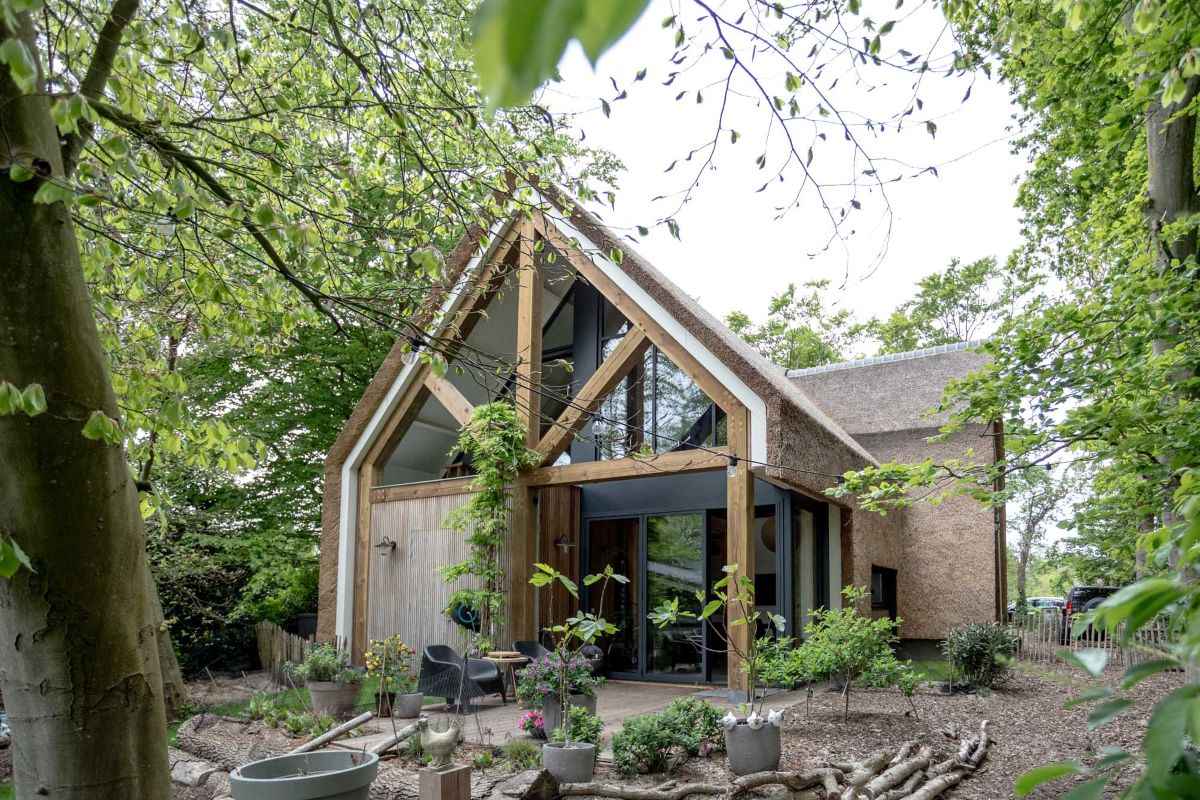

Wooden homes are on the rise. You suddenly see them everywhere! On Pinterest, in interior design shows, and increasingly in Dutch new-build estates. Where wood construction used to seem primarily for people with a Scandinavian forest cabin dream, now more and more ‘ordinary’ home seekers are seriously considering wood as a building material. And that's not just because it looks warm and beautiful. Wooden homes are often built faster, are smarter insulated, and are considerably more environmentally friendly than traditional houses made of concrete and steel. No wonder, then, that wood construction is on the rise.
Wood stores CO2, concrete emits it
The sudden popularity of timber construction isn't solely down to housing trends. The conventional method of building generates significant emissions. The production of cement, a key component of concrete, is particularly energy-intensive and contributes substantially to global CO2 emissions. With hundreds of thousands of homes needing to be built in the Netherlands in the coming years, the demand for more sustainable building methods is growing. Wood works in the opposite way. Trees absorb CO2 from the air as they grow, and this CO2 remains stored in the wood for as long as your home stands. This is also the principle behind biobased construction: building with natural materials that can regrow and are less taxing on the planet. And this isn't going unnoticed. The government is now heavily investing in Bio-based building materials as part of the sustainability of the construction sector.
Timber construction also helps with nitrogen problems
Something else is at play. The usual way of building is increasingly coming to a standstill. Construction projects are regularly stranded by nitrogen regulations, materials are becoming more expensive, and a huge number of homes need to be added at the same time. Building houses in the Netherlands has become quite a puzzle. Timber construction fits surprisingly well with these challenges. Less emissions are released during the construction process compared to traditional building, which means projects can sometimes get off the ground more easily. And because wood is lighter than concrete, you can also build in places where traditional construction becomes more complicated. This makes timber construction not only interesting for people who dream of a Scandinavian house, but also for the current housing market.
What biobased building actually means
Bio-based construction may sound like complicated jargon, but the idea behind it is actually very logical. You build with materials from nature, such as wood, hemp, flax or straw, instead of with raw materials that cost a lot of energy to produce.
Wood is the best-known choice for this for the time being. Of course, it's about responsibly produced wood, for example from forests with an FSC or PEFC quality mark. Then you know that replanting takes place and that forests remain well-managed. Another advantage that many people are happy about: wood is naturally a good insulator. A wooden house often feels warmer more quickly and retains heat better. If you combine this with conscious choices such as good insulation, solar panels, and energy-efficient lighting, you can save significantly on your energy bill.
Prefabricated wooden houses are built faster than you think
You might associate a wooden house with a long and complicated building process, but that image is no longer accurate. Many wooden houses are now built using prefabricated methods. This means that large sections of the house are made in a factory and only need to be assembled on-site. Sometimes, a house can be wind- and watertight within a few weeks. Less construction traffic, less building waste, and a lot less hassle for the neighbourhood. So, no months-long building site on your street. And also not unimportant: a prefabricated wooden house is not always more expensive than a comparable brick house!
What you do need to know before you dream further
Will everyone live in a wooden house soon? No, it's not quite that simple. There are a few practical things to consider. For example, permits play a role. Depending on the municipality, the zoning plan, and the location where you want to build, different rules apply. This sometimes requires a bit of extra research, although there are now enough specialised builders who know exactly how that process works. Maintenance is also part of it. The exterior of a wooden house needs attention now and then, depending on the type of wood used and its finish. Think about Painting or a protective treatment. Indoors, however, it usually isn't too bad.
Would you consider timber construction?
Given all the current developments, timber construction is no longer just for those dreaming of a woodland cabin. It's increasingly becoming a serious and smart alternative for more and more people. The material is renewable, prefab construction is often faster, and a growing number of people are seeking ways of living that are better suited to the future. And let's be honest: a timber house also has something very appealing, doesn't it? Warm materials, plenty of light, and perhaps even a veranda where you linger just a little too long on summer evenings. How romantic! It's no wonder, then, that more and more people are starting to seriously consider timber construction.
And you? Are you considering timber construction? Then get in touch with the Geldersche Woningbouw team. Find out more about this company!
Photo credits: gelderschewoningbouw.nl.