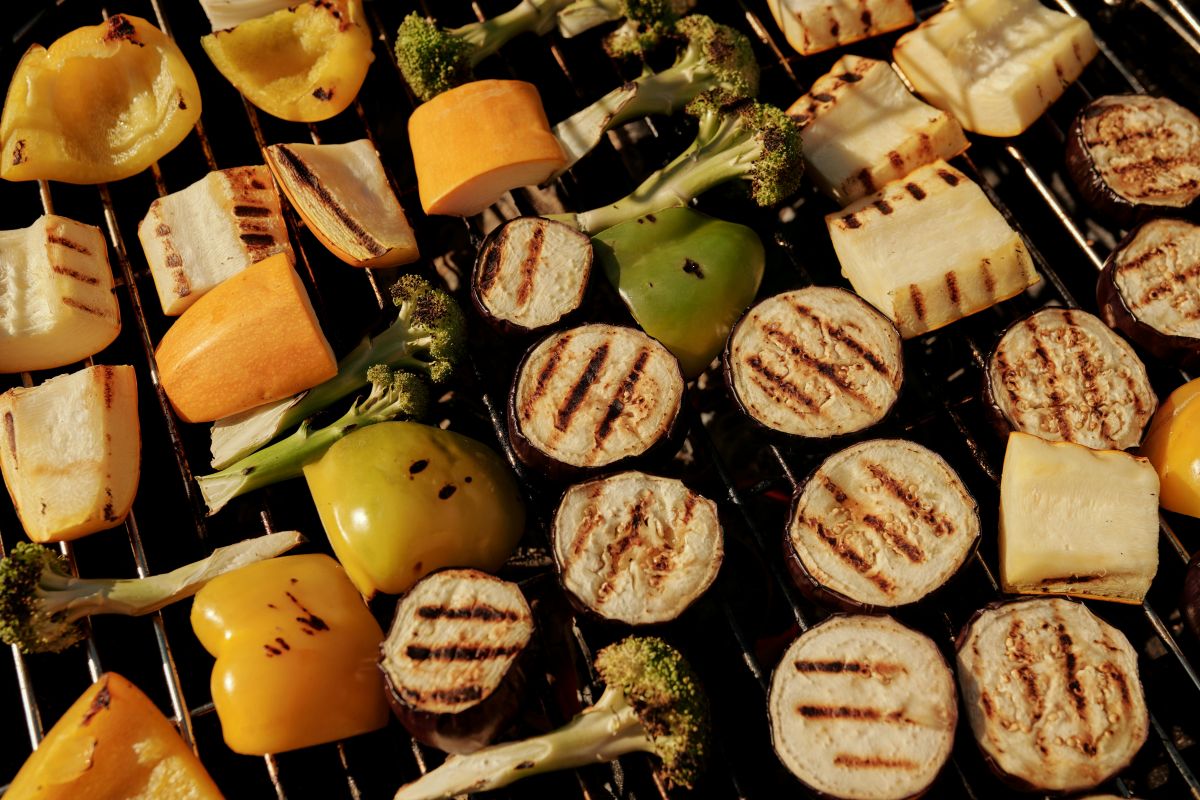

It's barbecue season again, so we were wondering: how bad is burnt food, really? We learned from our mother that you cut off the black edges or throw the whole piece in the bin. Yes, waste, we know. But burnt food is really unhealthy, right? But how bad is it, really? And is there a difference between a charred sausage and a burnt veggie skewer? Spoiler: it's not just for the planet that it's smart to opt for a veggie barbecue more often. One black edge is not the same as another. But it's never healthy.
Burnt food: how bad are those burnt edges really?
For a clear answer to this question, we turned to the University of the Netherlands. Toxicologist Nynke Kramer from Wageningen University & Research explains in great detail exactly what happens when food burns. She compares three types of products that can sometimes turn black: meat, potato products such as fries, crisps, bread or oven-baked biscuits, and vegetables like cauliflower from the barbecue. And what turns out? It's all unhealthy and, to varying degrees, carcinogenic. But there are indeed differences between that black edge on your sausage and that overly roasted crust on your aubergine.
Why one black border is worse than another
The difference lies in what's in your food. Take meat. It contains a lot of fat. As soon as that fat burns at high temperatures, around 180 degrees Celsius or more, polycyclic aromatic hydrocarbons (PAHs for short) are formed. These are carcinogenic substances that you also find in cigarette smoke and exhaust fumes. The risk is even greater on the barbecue because fat drips onto the coals, forms PAHs there again, and these then re-enter your meat via the smoke. So you ingest them via the burnt crust and via the smoke. Doubly so.
With potatoes, bread and biscuits, it works differently. These contain a lot of carbohydrates. At high temperatures, sugars react with certain amino acids from proteins. This reaction gives us that brown colour and crispy taste, precisely the reason we bake and roast. But acrylamide is also formed, a substance that has been linked to cancer in animal studies. The darker your chips or slice of bread, the more acrylamide can be formed.
Vegetables contain hardly any fat and therefore form fewer PAHs. Less acrylamide is also formed compared to potato products because the composition is different. Furthermore, fruits and vegetables are full of antioxidants. These can partially ‘trap’ or bind to harmful substances, potentially causing less damage. Scientists do not yet know exactly how much they can neutralise, but they are certainly working in your favour. This makes a black edge on cauliflower or your veggie sausage less risky than on a ‘regular’ sausage, but it is still not healthy.
Cancer from burnt crusts?
In animal studies, frequent consumption of burnt food is often associated with tumours. The comparison suggesting that one burnt sausage is equivalent to a packet of cigarettes is primarily intended to illustrate the potency of these substances. Conclusion: black is not a good idea. The odd slightly burnt edge is no cause for alarm, but routinely placing charred food on your plate is not a good habit.
Burnt food: prevention is better than cure!
If you want to limit the risk – duh, we get that – then the preparation method already helps a lot. Less barbecuing? Yes, for example. With boiling and steaming, you run no risk of burning, as you stay below the temperature at which these substances form. There is no burning, and therefore no black crust. Grilling, frying, and barbecuing give more flavour, but also more risk. So, it's better to go for golden brown on the barbecue. An occasional burnt edge can happen, but don't make it a regular occurrence (nice pun). Barbecuing vegetarian more often? A good idea anyway! And no, not just because of those black edges, but mainly because it puts much less strain on the planet!
You might also find this interesting
- Also see: We are consuming too much salt, and that's also not good.
- Also see: how you spread microplastics when cleaning And how you prevent that.
- Also see: The tastiest alcohol-free drinks.
Sources: University of the Netherlands. Photo credits: Askar Abayev, Pexels (main image).