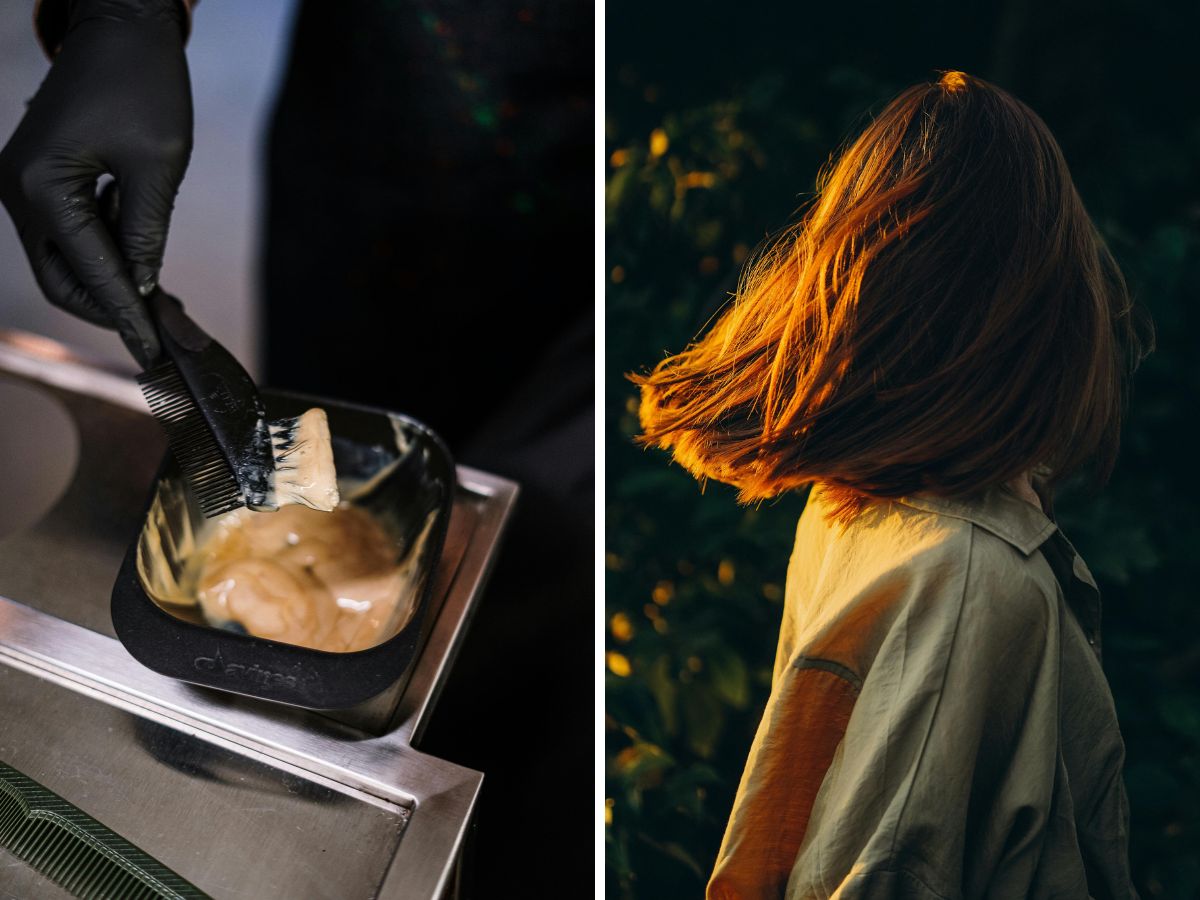

Do you ever dye your hair a different colour? Then you're certainly not the only one! Many people use a hair rinse at home or have their (grey) hair dyed at the hairdresser's. With thegreenlist.nl We get asked about this regularly. So we thought it would be a great opportunity to look into it in detail. What's actually in hair dye? And how can you make a more sustainable choice? We've done the research and will tell you all about hair dye!
Hair dye in so many colours
Do you fancy something different with your look, Want to temporarily cover your grey hairs or simply add a summery streak of blonde? Then hair dye is an easy way to experiment. You can opt for a semi-permanent colour, permanent dye, or a more natural alternative like henna. Ready-made bottles are available to buy, but you can also get to work with a DIY mixture. And yes, there are products specifically aimed at men or women, short or long hair, but often that's just clever marketing. It ultimately all comes down to one thing: the ingredients. And those vary considerably from brand to brand. Precisely *there* lies the sustainability issue. Because how do you know what exactly is in it? Whether it's bad for your health or harmful to the environment? And can you also dye your hair more naturally at the hairdresser's? We've found out for you.
Toner or hair dye: which is more durable?
Would you like to try a new colour? Then a colour rinse is an easy and accessible way to experiment. Handy if you're unsure whether a colour suits you and if you want to make a more sustainable choice. Because spoiler alert: a colour rinse is one of the least damaging options. Such a rinse applies a temporary colour over your hair, without penetrating deeply. After about four to ten washes, it's usually gone again. Good to know, though: colour rinses are mainly intended to refresh or slightly deepen your natural colour. It - unfortunately - usually doesn't cover grey hairs well. For that, you need hair dye. That penetrates deeper and lasts longer, but that also means regrowth and harsher ingredients.
So yes, if you look at what is least taxing on your hair and the environment, a colour rinse scores better. The ingredients are often milder and because the effect is temporary, you don't need to repeat it as often. Permanent hair dye generally contains harsher substances that open your hair cuticles. And that's not only tougher on your hair, but often on the environment too.


It will come as no surprise that hair dye is a chemical concoction. Yet, there are differences and hair dye brands exist with more environmentally friendly ingredients.
What's actually in hair dye?
When you dye your hair, you naturally want the colour to take well and last a while. But many regular hair dyes contain substances that aren't exactly good for your hair – or the environment. Take ammonia. You might recognise it from that sharp cleaning smell. In hair dye, it causes your hair cuticles to open up, allowing the colour to penetrate well. However, this also makes your hair more vulnerable and prone to breakage. Then there's PPD, or paraphenylenediamine. This gives a deep, long-lasting colour, but can also cause a severe reaction on your skin. It's no wonder manufacturers often warn you to do an allergy test first. And then there's hydrogen peroxide, a substance that breaks down your natural pigment. Handy if you want a lighter colour, but what's gone is gone: your original hair colour often never fully returns.
And last but not leastYou – or your hairdresser – rinse all these substances down the drain after use. They end up in wastewater treatment plants via the sewage system, but these plants can't break down everything completely. Small amounts, such as leftover hair dye and shampoo, regularly slip through. In this way, chemical substances ultimately end up in rivers and ditches. Some are toxic to fish and other aquatic creatures and can significantly disrupt the ecosystem. In short: your colouring treatment unintentionally also has an impact on nature.
Natural hair dye: a more sustainable choice
Fancy a splash of colour, but prefer to avoid the chemical fuss? Then natural hair dye might be the thing for you. Nowadays, there are surprisingly many options made from plants and herbs, such as henna, walnut, cocoa, or even berries. You can beautifully colour your hair with these too. And that colour often lasts quite a while. How long exactly? That varies from person to person and per pigment, so a bit of trial and error is part of the process. We've put together a few great brands for you.
A tip though: even natural hair dyes can cause an allergic reaction. Are you dyeing it yourself? Then test it on a small patch of skin first, for example, behind your ear. No reaction after 48 hours? Then you're good to go. Are you having it done at the hairdresser? Then ask if they can do a test beforehand or discuss the ingredients. And whether you dye it at home or have it done: using gloves is always a good idea.
To the hairdresser for a natural colour.
Don't fancy messing about with hair dye yourself? We completely understand. Many people prefer to have their hair dyed professionally. Fortunately, there are more and more hairdressers in the Netherlands working with natural products. On the website Natural Hairdressers This gives you a handy overview. You can also simply ask your regular hairdresser what the options are. Are you having your hair coloured naturally for the first time, but have you previously had it coloured with regular hair dye? Or do you use hair products containing silicones or parabens, such as some shampoos, conditioners, or hair serums? If so, please let your hairdresser know. These substances can form a layer on your hair, which can prevent plant-based colour from taking as well. Sometimes, an extra cleanse is needed to make your hair ‘clean’ for the new colour. A green hairdresser will know exactly what you need.
Fancy doing your hair a different colour yourself? You can do that too!
Feeling creative and want to experiment with DIY hair dye? You can find all sorts of recipes using ingredients like chamomile, walnut leaves, and black tea. For blonde, brown, or black hair, you can do surprisingly much with natural remedies from your kitchen cupboard or garden. It might take some practice, as results vary from person to person. You'll find plenty of blogs online with step-by-step explanations.
Enjoy your new natural hair colour!
Hopefully, after reading this article, you'll be inspired to approach things in a more natural way. Whether you get started yourself or visit a sustainable hairdresser: it can really be done differently, without compromising on beautiful colour. Do you know of any good tips or brands that really belong here? Please let us know, so we can share them with our readers too!
You might also find this interesting
- Also useful for your hair: what's wrong with shampoo and how do you find sustainable shampoo?
- Looking for long-lasting mascara? We've already figured it out for you.
- And what about perfume, anyway? We went in search of sustainable fragrances.
Sources: allergiecentra.nl, WHERE IS IT.nl, Wikipedia. Photo credits: main image left: Cottonbro (Pexels), right: Jani H. (Pexels), hair in braid: Koolshooters (Pexels), hair dyeing: Maksim Chernishev (Unsplash).