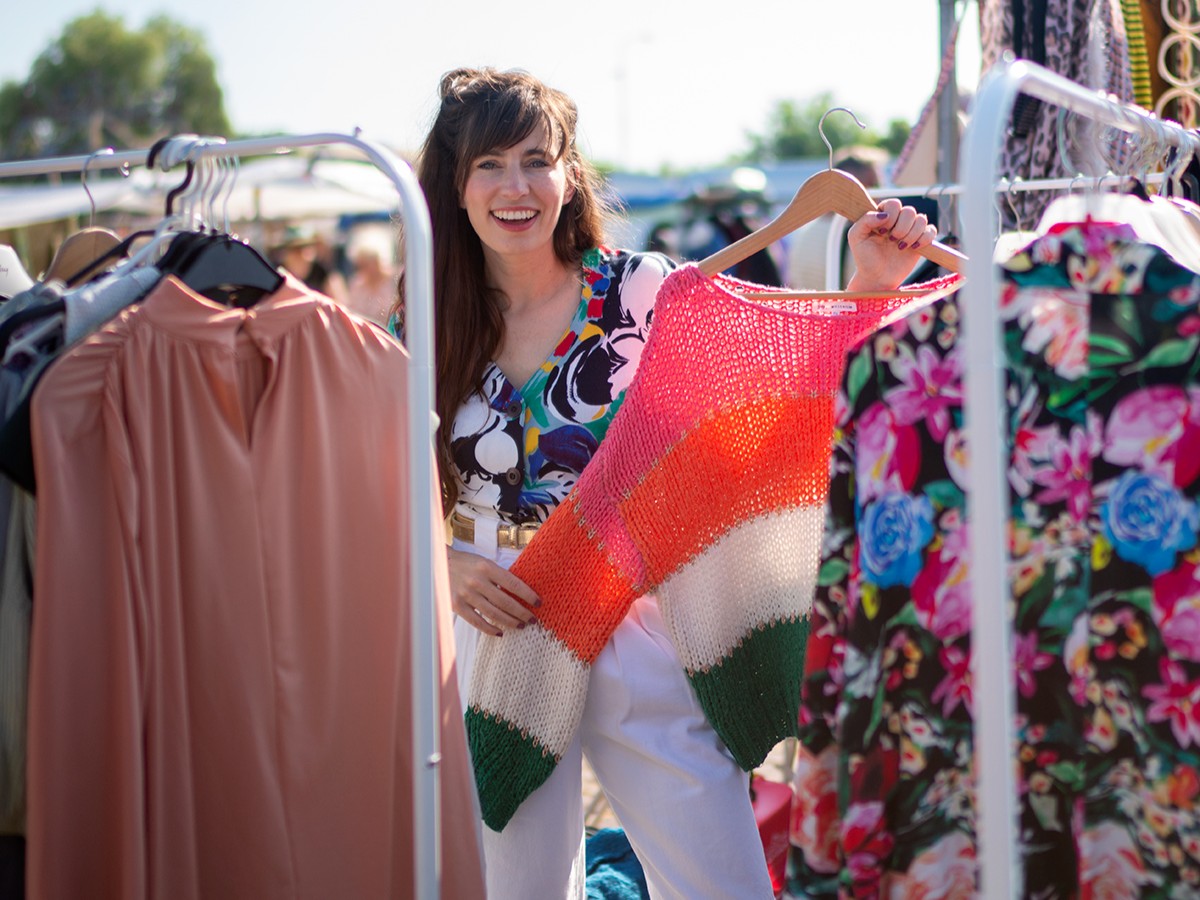


At thegreenlist.nl We are big fans of second-hand clothing. It's sustainable, saves money, and there's so much choice these days. We're not the only vintage enthusiasts, as the demand for second-hand clothing has increased significantly in recent years. However, there are also people who find second-hand clothing unpleasant. You could get scabies from it and it would be full of bacteria. We wanted to know if this is true and have investigated what can be found in second-hand clothing and how to clean it properly.
What can be found in vintage clothing?
Some people find second-hand clothes dirty because they don't know who wore the garment before them. Of course, you also don't know who has touched or tried on a new garment, but a second-hand garment has usually been worn for longer. And yes, it's possible that bacteria, viruses, fungi or parasites have ended up on or in the clothing. It might sound gross, but luckily, washing machines exist. We've looked into what sort of grime you might find in second-hand clothes and, more importantly, how to get them properly clean. This way, you can happily search for vintage treasures.
Can you get scabies from second-hand clothing?
We'll get straight to the tasty part: there are rumours that you can catch scabies from second-hand clothing. Scabies is caused by the scabies mite: a tiny creature that you can't see with the naked eye. If you become infected with scabies, these little creatures burrow tunnels into your skin and lay eggs there. Oh dear, We're already getting itchy! If you really have scabies, you'll notice it because it's incredibly itchy and you get a rash. Although scabies is not dangerous and is easily treated, we would naturally prefer to prevent it, especially since the number of scabies cases in the Netherlands has risen sharply in recent years.
Scabies is mainly transmitted through skin contact lasting longer than fifteen minutes. If you're unlucky, it can also be transmitted via textiles, such as bedding or clothing. The chance of getting scabies from second-hand clothing is small, as the scabies mite prefers to be on the skin and only survives for three days without a host. If you want to be safe rather than sorry: wash second-hand clothing at 60 degrees. If this is not possible, put it in a sealed plastic bag for three days.
Can you get headlice from vintage clothing?
We'll stick with the creepy crawlies for a while longer: lice. The same applies to head lice as to scabies: lice prefer to be on your scalp rather than on your clothes. It was previously thought that head lice could also spread via clothing, but nowadays experts agree that head lice are only transmitted when your hair comes into contact with the hair of someone who has head lice. Lice feed on blood and survive on textiles for at most a day. So you don't need to worry about head lice on second-hand clothing. As you can read in this article, we even use second-hand rubber bands that we found on the street.


The chance of pathogens being present in second-hand clothing is small. However, to be safe, it's advisable to wash it thoroughly.
Can you get bedbugs from second-hand clothing?
Let's then immediately take a look at a few more nasty little creatures: bedbugs. These dreaded holiday guests don't just make themselves at home in beds, but can also be found in other furniture, bags, and even clothing. To put your mind at ease straight away: bedbugs dislike light and prefer to hide in a dark, warm spot. So, the chance of them being in a second-hand item of clothing is small, but because it's not impossible and these little critters can cause quite a lot of itching, you'll probably want to know how to avoid them. Wash the clothing at 60 degrees. If that's not possible? Then put the item of clothing in the freezer for at least 72 hours. Tip: put the clothing in a plastic bag to protect it.
What if there are moths in your vintage pearls?
Fortunately, moths don't cause itching, rashes or other nasty symptoms, but they can damage your beautiful vintage find. Moths are mainly found on natural, animal materials such as wool, leather and silk. It's not the moths themselves, but the larvae that make holes in your clothes, because they like to eat them. Moths don't survive a wash at 60 degrees, but woolens usually don't either. Want to be sure there are no moths (or eggs) on your second-hand clothes? Then put the garment in the freezer for at least four days. Hanging clothes in the sun also helps, as moths dislike light.
Is second-hand clothing dirty due to bacteria, viruses and fungi?
Everyone has a unique skin microbiome. This complex word is the collective term for all the micro-organisms that live on your skin, such as bacteria, viruses, and fungi. You won't get sick from it yourself, but someone else could theoretically develop complaints from it, although the chance is small. If clothes are not washed properly, any pathogens can remain. This could be a harmless cold, but also nasty disease-causing agents like the norovirus, which causes severe stomach flu, or fungi such as Candida, which can cause skin infections. The chance that these are still active when you put on the garment is small, but you can easily prevent this by washing the clothes at 60 degrees. If that's not possible, opt for a long wash cycle and let the garment dry thoroughly. Optionally, you can disinfectant detergent use. We believe this is not necessary in most cases, but it may be wise for people with a weakened immune system.
Second-hand clothes can be dirty, but you can do something about it
If you see what can be in second-hand clothing, you might be shocked. Fortunately, the chance that your vintage gem will contain pathogens or nasty critters is slim. Moreover, a wash at 60 degrees Celsius can remove almost everything. For items that you can't wash at such a high temperature, you can store them for several days in a sealed plastic bag and even put them in the freezer. It is sometimes even recommended to always store second-hand clothing separately in a sealed bag until you have washed it, so that it does not come into contact with your other laundry. If you still find second-hand clothing dirty, consider that you often come into contact with objects that have been used by many others. Think of the beds on holiday, the toilet seat in a restaurant, or the seat on a train or bus. Then second-hand clothing isn't so bad, because at least you can put it in the washing machine. And what do you think about The chemicals that can be in new clothingThat's what we find truly disgusting.
You might also find this interesting
- Looking for a second-hand smartphone or tablet? Here you'll find tips for finding second-hand gadgets.
- More useful tips: This is how to avoid buying a dud second-hand item online.
- Looking for something special? These are the best webshops for second-hand designer clothing.
Sources: KVK, KRO-NCRV, EenVandaag, RIVM, AD, Milieu Centraal, Elle, Medical Xpress, Milieu Centraal. Photo credits: main image left: Moodsofana (Pexels), woman by clothes rack: Mart Production (Pexels), clothing shop: Kseniachernaya (Pexels).