
Pooh, we are entering a troubled new year. Ukraine is still suffering from a serious war, the drama in the Middle East is far from over and Trump is putting things on edge worldwide. Things are anything but calm in the Netherlands too: a complicated election result is making the formation difficult and the government, meanwhile, is calling on us to emergency kits into the house. ‘It is not war, but there is no peace either,’ it sounds. And then there was the climate summit in Brazil, which ended in fine words but no concrete agreements. In such times, sustainability seems to fade into the background for a while. But it is precisely then that the most beautiful, creative solutions often emerge. As every year thegreenlist.nl ahead: what sustainable trends do we expect in 2026? We remain - no matter what - optimistic. You can read it here!
The sustainable trends for 2026
With hopefully a new cabinet in sight soon, the main question is: to what extent will climate and sustainability policies be prioritised soon? In any case, the 2030 targets seem further away than ever. In politics, other topics - such as security, migration and housing - clearly take precedence. And people are also more cautious financially: although the economy is growing, many households remain cautious about their spending. Meanwhile, cheap Chinese webshops like SHEIN and TEMU are gaining ground. We massively buy things of mediocre quality, use them briefly and then throw them away again. Thrift shops are also sounding the alarm: they are flooded with discarded items that are barely saleable.
And sustainability is not only getting out of the picture among consumers. It is also being cut back in boardrooms and on TV. In public broadcasting, programmes such as Box office and Inside-out. In business, sustainability departments disappeared or were sharply downsized, such as at ABN AMRO, where dozens of ‘green’ jobs were cut, something we also see happening at other banks. SMEs are also taking fewer steps towards sustainability: according to CBS, only 64% of companies will invest in this in 2025, compared to 68% a year earlier. Especially in sectors such as retail, hospitality and services, you see sustainability increasingly fading into the background.
Yet hope is shining. Especially in these uncertain times, a surprising number of creative ways are emerging to still live more sustainably. After all, people continue to need connection and meaning. In short, they want to belong somewhere. And this is reflected in the emergence of all kinds of sustainable communities. From swap clubs to repair cafes and circular neighbourhood networks: greener living together is gaining ground. A nice development, and thus the first trend we have spotted for 2026.
The downside of second-hand: your old clothes are big business
We always thought: second-hand clothes are the go-to. And for a long time it was. But now - thanks in part to journalistic platforms such as EenVandaag, Radar and Follow the Money - by how this route has also become a polluting system. Old clothes are big business. Trade, in other words. If you see a nice, ‘authentic’ blouse or a good pair of jeans in a second-hand boutique, chances are that those clothes have already had a polluting trip around the world on them, rather than having been handed in just around the corner by a neighbour or ex-boyfriend who was cleaning out the closet.
A lot of old clothing, especially that you throw in textile containers, becomes part of an international trade chain. The clothes are sold to sorting companies, stored in free trade zones in the United Arab Emirates, for example, and then shipped to countries like Pakistan, where they are sorted by hand under poor working conditions. What is saleable sometimes travels - thousands of kilometres away - back to Europe as vintage. The rest ends up in markets in Africa or in gigantic garment mountains, such as in Ghana and Chile. According to Follow the Money triples the CO2 emissions of a garment if it travels this route. If it goes by air freight, the emissions are even 12 times higher. You can read more about the downside of clothing containers here.
Slowly but surely, that penny is starting to drop: we are seeing through the system. And that is slowly creating a new mindset, even outside the green bubble: buy less clothes, discard less. At the same time, you see that sharing and swapping are gaining popularity. Initiatives such as The Clothing Loop respond to this perfectly: local, circular and social. So a community, there you have it again.
Organic products boast wellness hype
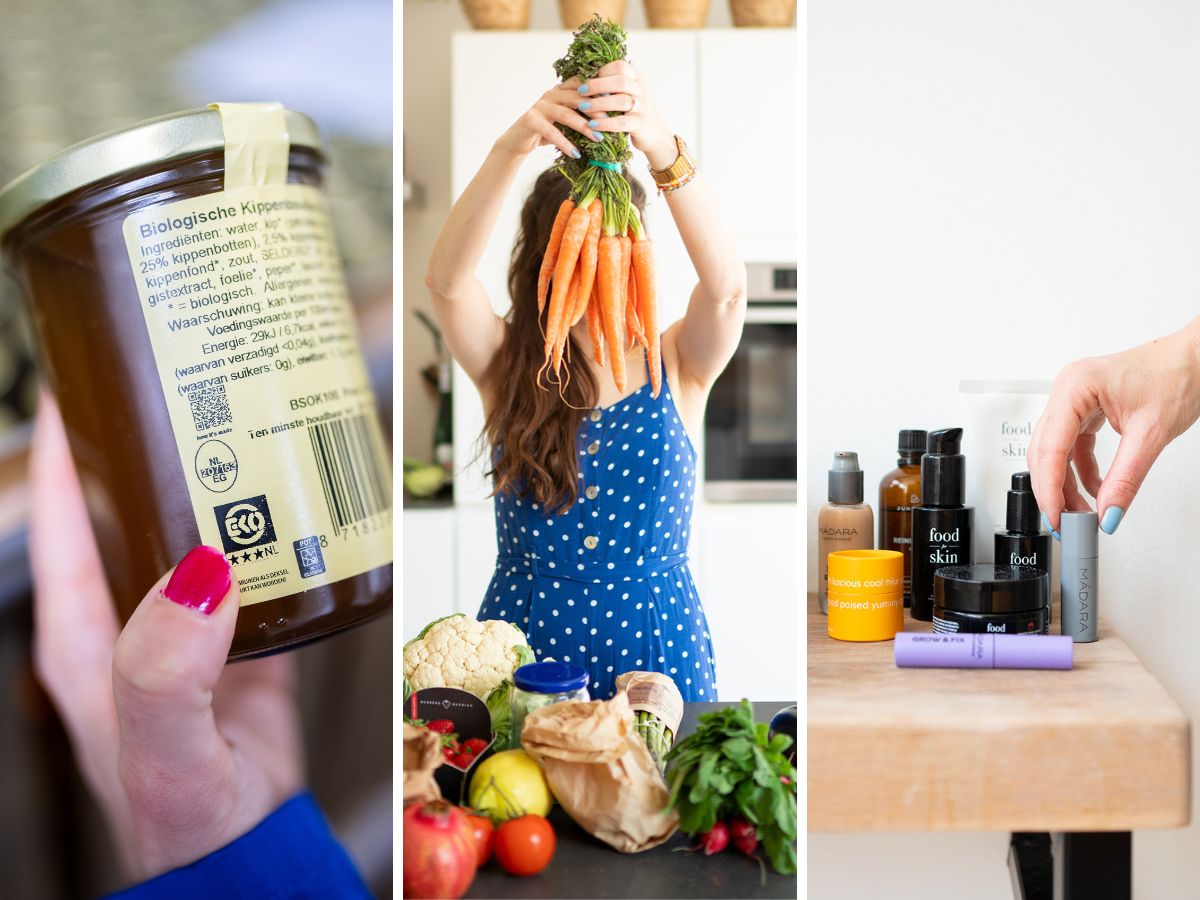
A healthy lifestyle has been a trend for years. But we predict that it will deepen and become greener by 2026. More people are more conscious of their bodies, exercise more, want to stay young, reduce stress and pay more attention to what they eat. This focus on health is increasingly influencing our shopping basket. Besides less processed food, more and more people are choosing organic, often because they prefer not to have pesticide residues on their plates. This is also due to the growing attention to the possible effects of pesticides on our health. Research increasingly links long-term exposure to pesticides to diseases such as Parkinson's. In France, Parkinson's has even been recognised as an occupational disease among farmers. The debate is also growing in the Netherlands. Organic is thus gaining a new image. It has long since ceased to be just something for woolly-headed types or hip foodies, but is increasingly seen as a logical choice for those who want to take good care of themselves as well as the planet.
Low tech living: less screen, more peace
From always online to consciously offline: in 2026, the countermovement is gaining momentum. More and more people are consciously choosing to live with less technology. Low tech living, we call it. Think of people limiting their screen time, pausing social media, having a screenless (solar) day or swapping their smartphone for an old-fashioned dumbphone on weekends. Not because technology is bad, but because the balance is off. Parents are also becoming more critical, thankfully. The Dutch movement Smartphone-free Growing Up advocates a clear starting point: no smartphone under 14, no social media under 16. They see it as a way to give kids back peace, focus and real connection. Even in secondary schools, you see increasingly strict smartphone policies: at home or in the locker! And it works. Teachers more often signal more calm and more social interaction between pupils. Not to mention the warnings from the Eye Fund: too much screen time increases the risk of severe myopia, which can lead to serious eye problems later on.
It seems to be becoming a new status: less screen, more attention. Paper diaries are making a comeback, books win out over e-readers again, and at the table, real conversation takes precedence over the group app. It is no tech-shaming, but a search for peace, focus and real connection.
AI: indispensable, but energy-hungry
We cannot avoid it in this trends report: artificial intelligence (AI). Tools like ChatGPT, Copilot, Gemini and Midjourney make our work more efficient, creative and sometimes even fun. Whether you are writing texts, designing or checking your grammar, AI is now almost indispensable. But oef, all that computing power still consumes bizarre amounts of energy. Fact: a simple Google search uses about 0.3 watt-hours of electricity. But an AI request - such as a text or image via a language or image model - can guzzle up to 10 times as much energy. Add to that our digital behaviour - streaming, sending apps, overflowing inboxes, thousands of photos in the cloud - and the negative impact on the environment becomes painfully clear.
We do not predict an AI diet for now - the tools are too useful and established for that - but we do expect a growing awareness of how wasteful digital behaviour can be. In 2026, we will slowly see this reflected in new habits: clearing your cloud storage more often, emptying mailboxes, skipping unnecessary video calls. Sometimes an old-fashioned phone call will do, too. And that is a lot less taxing on the planet. Big tech companies are also looking for ways to reduce their huge energy needs. Google, Amazon and Microsoft are investing in more efficient data centres and are even exploring controversial solutions, such as their own nuclear power, to support growing demand. Whether this is the way out remains to be seen - but one thing is certain: AI is here to stay, making the sustainability of our digital world more urgent than ever.
Non toxic living: transparency in the bathroom (and beyond)
What do you actually put on your skin? In 2026, the group of people seriously wondering this is growing. Thanks in part to the research of Lauren Verster - who mercilessly dissects the beauty industry on her socials and in her podcast - awareness is growing about the many obscure and potentially harmful ingredients in personal care products. Substances to which your skin may not react directly, but which do raise questions: about hormone-disrupting effects, microplastics and misleading claims on labels. The non-toxic living movement wants short, understandable ingredient lists, real transparency and products that are good for your body and the earth. And that noise is getting louder and louder. More people are switching to natural skincare, homemade products or brands that are really open.
That critical eye, by the way, is not limited to your bathroom. Increasingly, we ask the same question with other everyday products: what is actually in this? Think about plastic drinking bottles, toys from cheap Chinese webshops or clothing that releases microplastics with every wash. The calls for fairness, safety and less junk are ringing louder than ever.
ALSO INTERESTING: the best sustainable resolutions for the new year!
More sustainable trends for 2026
In 2026, we see how people - despite the turmoil in the world - continue to look for ways to live more consciously. From low tech living to organic food and from reducing clothes to less digital waste: the movement is growing. And it often starts small. A conscious choice here, a conversation there and before you know it, there is a community where large groups join. Because just now it turns out: sustainability has not disappeared, it has shifted. To the living room, to the neighbourhood, to everyday life. Small choices with big meaning. Have you spotted a sustainable trend or something that really contributes to a greener 2026? Let us know about it. We are curious to hear your story!
Sources: BNR.nl, NOS.nl, CBS.nl, EenVandaag, Radar, Follow the Money, medicalcontact.nl, Eye Fund.nl, rtlnews.nl. Photo credits: Anne Mart Huizenga (left), Angela de Vlaming (centre and right).