
Huh, is natural care actually always the most sustainable choice? And what should you pay attention to if you want to apply, scrub and shampoo in an environmentally friendly way? We delved into the world of cosmetics and found out what those green claims really mean. This is what you need to know about sustainable care (and natural care).
‘I only use natural personal care products’
‘I only use natural skincare products’, ‘vegan is sustainable!’ or: ‘what a waste of that plastic packaging’. As soon as you share something about sustainable skincare on social media, the comments flood in. Understandable, as cosmetics are a confusing topic. Because does ‘natural’ really say that much? And is a vegan shampoo automatically an environmentally friendly choice? We dived into the world of cosmetics, ingredient lists, and green claims. And what appears: sustainable skincare is a lot less black and white than Instagram sometimes suggests.
Natural care isn't automatically sustainable
A care product labelled ‘100% natural’ really only means that the ingredients are of natural origin, for example from plants, animals or minerals. That might be a comforting thought. However, it doesn’t really tell us anything at all. If there is anything synthetic in it, these are substances made by humans (in a factory), often based on petroleum. Yet ‘natural’ does not always mean ‘sustainable’. This is because natural ingredients often require a lot of agricultural land. And that space is scarce. For certain raw materials, forests are cleared, large quantities of water are required, or pesticides are used during cultivation. That does not automatically make a natural ingredient environmentally friendly. So, choosing natural care products is perfectly fine, but it is no guarantee of a more sustainable choice.
Natural skincare isn't always better for the skin, is it?
Many followers, as we know, choose natural skincare products because they think they are gentler on the skin. But that too is more nuanced. A dermatologist previously told us in Wed that natural ingredients can also cause skin irritation. For example, some people avoid deodorants with aluminium salts, while according to experts, you can just as easily react sensitively to natural ingredients like aloe vera. In short, be a little more critical of natural ingredients and perhaps sometimes a little more lenient about ingredients of synthetic origin. And absolutely, we completely understand that consumers sometimes get completely confused by this. We do too, regularly!
How do you find sustainable cosmetics and personal care products then?
Fortunately, you don't need to be a beauty expert to make more sustainable choices on the shelves. With a few handy tools and some basic knowledge, you can go a long way. Here's a handy checklist for your next purchases:
- From now on, buy microplastic-free personal care products. A handy helper with this is the free PlasticFree Future app from the Plastic Soup Foundation, formerly Beat the Microbead. You simply scan an ingredients list and can immediately see if a product potentially contains microplastics. And although adding microplastics to personal care products is now banned, a transitional arrangement is still in place. This means you can still find them on the shelves for the time being. Not ideal, as microplastics are a significant environmental problem. Researchers have even found them in human blood.
- Perhaps the most useful tip of all: look out for good quality marks. Reliable quality marks such as EU Ecolabel, Cosmos, Demeter, Nordic Swan Ecolabel, Natural Cosmetics Standard and NaTrue help you make a more sustainable choice more quickly. Many of these quality marks also indirectly exclude microplastics, as they impose stricter requirements on ingredients and production. If you come across a quality mark you don't recognise, check its Labels Guide of Milieu Centraal. That saves a lot of research on the shop shelf. Because although European rules greenwashing having to be restricted more and more, you still come across logos and claims that look like official seals of approval but actually signify nothing. Think of terms like ‘eco’, ‘green’ or ‘natural’ that brands put on packaging themselves because it ‘looks nice and sustainable’.
- Also handy: apps that help you decipher ingredients. We ourselves like to use INCI Beauty or Think Dirty To quickly see exactly what's in a product. You take a photo of the ingredients list and the app does the rest. Handy when you don't feel like deciphering all sorts of complicated chemical names yourself.
- Palm oil is an ingredient in many beauty products. Opinions on palm oil are strongly divided. There are many abuses in the palm oil industry, but completely boycotting the ingredient is not automatically a sustainable choice. Palm oil is a highly efficient oil plant, you see.: it requires relatively little farmland and the yield per hectare is high. Alternatives such as soya, sunflower, coconut oil or shea butter often require much more land – sometimes as much as five to ten times as much. And there can be all sorts of problems in other vegetable oil industries too, though you don’t often hear about them. It is therefore best to opt for more sustainable palm oil with an RSPO certification. You can recognise this by a logo on the packaging. However, many brands do not actually display it. Ouch. But don’t worry! We learnt from a palm oil expert at Solidarid that 90% of products in Europe contain more sustainable palm oil, even if a brand hasn’t mentioned it. Great!
- Prefer not to use products with propellants, such as hairspray, dry shampoo, and deodorant sprays. The propellants in these products contribute to smog formation (it's true!). A roller, stick, or pump bottle is therefore often a more sustainable choice. Would you like to know what else to look out for? Also, take a look at our comprehensive article on more sustainable deodorant.
- Do you see a vegan or cruelty-free logo? Great, but that doesn't tell you much about sustainability. Vegan only means that no animal ingredients are included. Cruelty-free means no animal testing (animal ingredients might still be present). A vegan foundation can still contain questionable ingredients. If you want to consider animal welfare, then logos such as The Vegan Society, PETA-Approved, and Leaping Bunny are useful tools, but for a more sustainable choice, you really need to look at more. Read more about the difference between vegan and cruelty-free here!
- Perhaps the most important tip of all: don't use more than you need. An extra thick layer of cream or a handful of shampoo doesn't usually make a product better, but it does mean you'll run out of it faster. Could you use some storage tips? Then check out this list of handy tips.
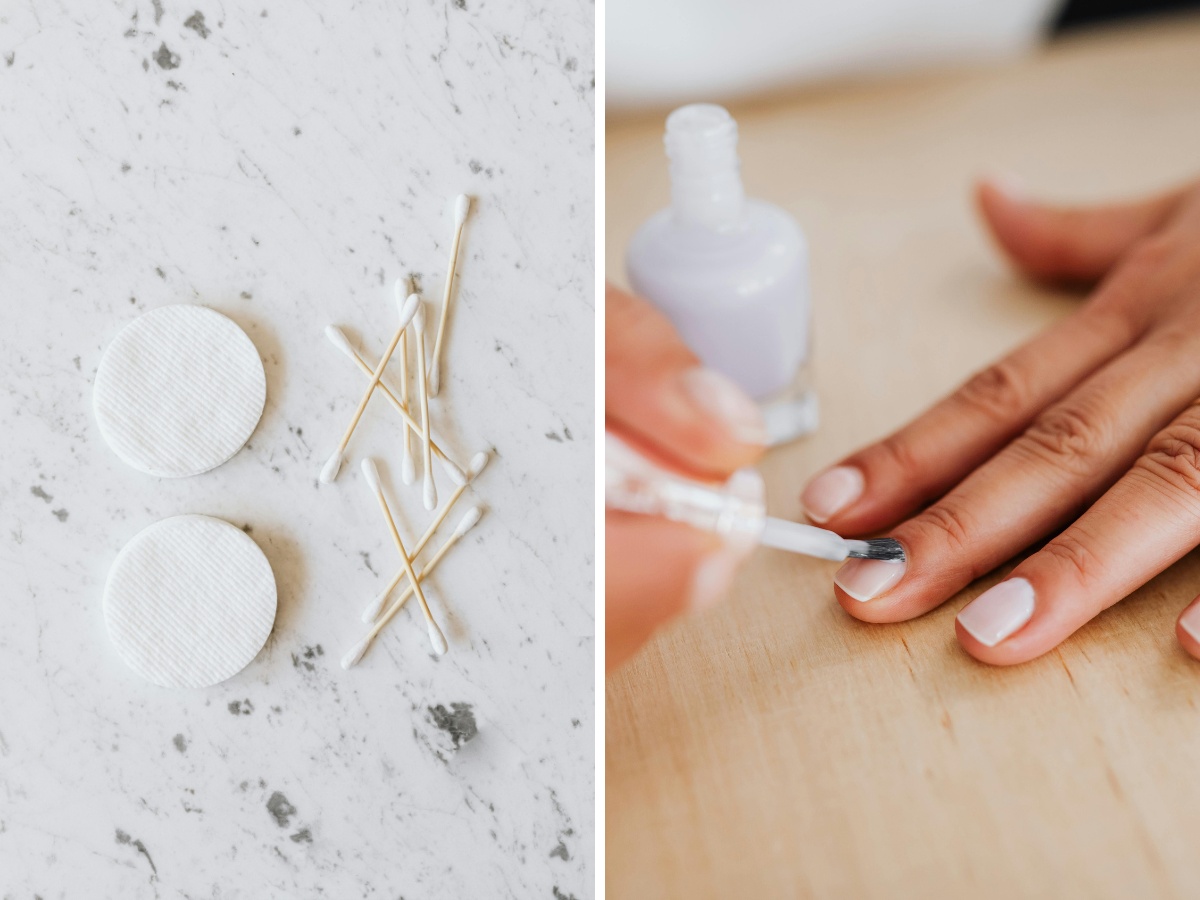
- Be a bit economical with products containing a lot of solvents, such as nail polish, nail polish remover, perfume and aftershave. These products also contribute to smog formation.
- Choose your sunscreen more consciously too. Some sunscreens contain ingredients that can be harmful to aquatic life. Unlike other lotions, the advice here is: apply liberally and often! Read more about choosing your SPF in a more environmentally friendly way here.
- Don't get fixated on the packaging when looking for a more environmentally friendly product. According to Babette Porcelijn, author of The hidden impact (recommended reading!), packaging accounts for only around 10% of a product’s total environmental impact on average. What’s more, packaging serves a purpose: it helps products stay fresh for longer and reduces waste. And no, glass or paper isn’t automatically more sustainable than plastic. Recycled plastic that is easily recyclable can actually be an excellent choice.
Sustainable care goes beyond natural care
In summary: sustainable care is therefore not the same as natural care. It can be a more sustainable choice, but it absolutely doesn’t have to be. Some natural ingredients, for example, require a lot of agricultural land or cause other problems, such as pollution or exploitation. And yes, honestly, it’s quite confusing. In the beauty world, green claims and trendy terms are thrown around a lot, which can sometimes make it hard to see the wood for the trees. Fortunately, you don't need to be an expert to make better choices. Look out for reliable kitemarks, check products for microplastics for the time being, and above all, don't use more than you need. Then you’ll be well on your way to more sustainable care! And handy: Here you will find a long list of better beauty brands! Best of luck on this quest!
Sources: Wed, Plastic Soup Foundation, Milieu Centraal, Solidaridad. Photo credits main image: Monstera (Pexels).