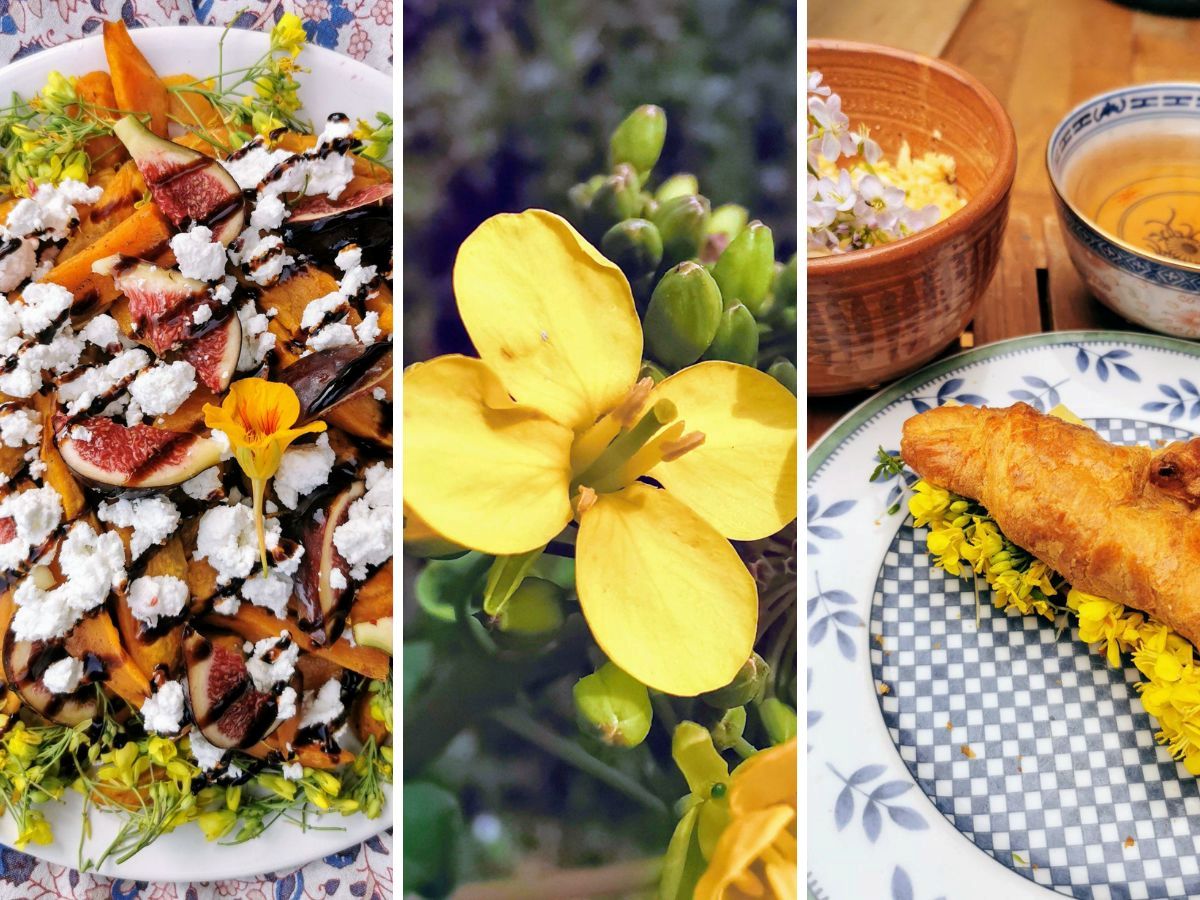
In the summer, you see them everywhere: along verges, in fields, and by motorways, large fields are blooming bright yellow. It's rapeseed! A beautiful, sunny flower that you might mostly know from the landscape, but which you can also eat. You wouldn't say it immediately, but rapeseed is related to broccoli, cauliflower and mustard. Wild foraging expert Katja Wezel of wilderlust.nl Here's how to make rapeseed mustard from seeds yourself. Perfect for a cheese board or a drink.
Rapeseed, an edible plant!
Rapeseed is a plant that's hard to miss once it flowers. From springtime onwards, verges and fields turn a bright yellow, and this bloom can continue – depending on the weather – well into the summer. After flowering, the plant slowly changes: the fresh green gives way to drier stalks, and eventually the seeds ripen, ready to be harvested at the end of the summer. Rapeseed belongs to the cruciferous family and is related to, among others, broccoli, cauliflower, Brussels sprouts, radishes, and mustard. This immediately explains its slightly peppery, cabbage-like smell and taste. It's a hardy plant that grows well in open, nutrient-rich soil and also thrives exceptionally well along roadsides and fields.
Besides being edible, rapeseed is also an important plant for insects. It's a real bee plant: in spring, some beekeepers even let their bees fly above flowering rapeseed fields. There's a good chance you've tasted rapeseed honey without even knowing it. And it's nice to know: not only the flowers are useful, but also the leaves, stems, buds, and seeds can be used: from vegetables to oil and, yes, homemade mustard.
Recognising rapeseed!
Rapeseed can be recognised by its four bright yellow petals that form an open flower. If you look at the leaf, you'll see that the upper leaves are lance-shaped and stem-clasping. If you crush the leaf, it will clearly smell and taste of cabbage, a useful identification feature. Rapeseed is often confused with other yellow crucifers, such as yellow mustard, wild mustard, and wild rocket. This is logical, as the flowers are very similar. The difference is mainly in the leaves, which look slightly different for each species. The good news is: all yellow crucifers from the cabbage family are edible. If you see a plant with four yellow petals that smells and tastes of cabbage, you're on the right track. To keep things simple, these plants are often all referred to as ‘rapeseed’.
Picking rapeseed: how to do it
You can pick the leaves before and during flowering. They are at their best before flowering and can be used like cabbage, for example, raw in a salad or briefly fried. During flowering, you can pick about the top 15 centimetres of the stem, including the dense buds and flowers. These can be prepared like broccoli (briefly blanched) or used as edible decoration. In the autumn, when the plant is no longer green or yellow, but stands out of the ground as dried stems, it is time to harvest the seeds. These are found in the pods: elongated seed capsules on the dry branches. These are the seeds you use to make your own rapeseed mustard.
Sustainable shopping tip: In the kitchen, opt more often for rapeseed oil. It is usually produced close to home, has a relatively low environmental impact and contributes to the preservation of flowering rapeseed fields, which in turn is good for the bee population.
Making rapeseed mustard
Kitchenware
- glass jar
- Mortar and pestle or blender
- sterilised jars with lids
Ingredients
- 60 g Rapeseed Oilseed rape or a mix of yellow crucifers
- 65 ml water
- 65 ml apple cider vinegar
- 60 g liquid honey
- teaspoon of salt
Instructions
- Mix all ingredients in a glass jar and leave it at room temperature overnight.
- Pound or mix the mixture into a coarse mustard.
- Don't be alarmed by the taste: the mustard is still sharp and needs time to mature.
- Put the mustard into sterilised jars with a well-fitting lid. To clean glass jars and bottles properly, first pour boiling water over them (don't forget the lid) and then place the jar/bottle in an oven at 100°C for ten minutes.
- Let the mustard mature for at least 3 weeks in a cool place.
- After opening, the mustard will keep for a long time in the fridge.
Neat game picking
Foraging and creating your own recipes is great fun, but don't forget: foraging is officially forbidden in the Netherlands and is often only tolerated. In some places stricter rules apply or it's strictly prohibited. And you're also not allowed to pick certain species. So always forage with respect for nature: only for your own use, never take more than you need, and leave enough for animals and other nature lovers. Want to know more about what to look out for? Here is a handy overview of the game picking rules.
Would you also like to go on the road with Katja? Check out her website wilderlust.nl with all the information about its wild-picking walks and courses.
You might also find this interesting
- Also see: candied green figs.
- Also see: capers from wild garlic seeds.
Photo credits: Wilderlust.