
A little concealer under your eyes or a thin layer of foundation can sometimes work wonders. Especially on those days when you look like you've had three hours of sleep, even though it was really eight. But do you actually know what you're putting on your face? And do more sustainable alternatives to foundation and concealer exist? We delved into it and found out for you.
Good question: what are foundation and concealer made of?
Admittedly, we could easily live without foundation and concealer. But we completely understand why so many people use them. A little extra colour in winter, less visible dark circles, or simply a more even skin tone – sometimes that just feels good. Fortunately, more and more brands are now making foundation and concealer with milder and more environmentally friendly ingredients. But as with many beauty products, the outside doesn't always tell the whole story. That's why we'll go through the ingredient list with you to highlight a few ingredients – a nice pun – that you might prefer to avoid. Because many foundations and concealers contain substances that don't exactly get us very excited. Ingredients that aren't very kind to the environment and can sometimes be quite harsh on your skin. And phew, those long ingredient lists don't exactly help either. Fortunately, you don't need to be a beauty expert to make a better choice. We'll help you get started!
What is the difference between foundation and concealer?
To clear up any potential confusion straight away: foundation and concealer look very similar, but they do slightly different things. Foundation is the base of your make-up and you usually apply it as the first layer to your skin, possibly after a primer. It ensures that your skin looks more even. For a natural look, a thin layer is often enough. You then use concealer to cover up blemishes, redness, or dark circles. That's why concealer is usually a bit thicker and more opaque than foundation. However, most of the tips in this article apply to both products, as their composition is often quite similar.
Source: Elle
Parabens in foundation and concealer
Parabens are chemical preservatives that help products stay fresh for longer. They inhibit the growth of bacteria and fungi, which is naturally useful in make-up that often sits open in your bathroom for months. Nevertheless, these substances are also subject to a lot of criticism. Some parabens are suspected of disrupting hormones and being harmful to the environment. Butylparaben, in particular, is under a magnifying glass. There are already serious indications that this variant can affect the hormone balance. And yes, this substance is still used in some foundations and concealers.
Microplastics in foundation
Just like in many other beauty products, foundation and concealer sometimes contain microplastics. Manufacturers add them so that products spread better, last longer, or have a fine texture. Not a pleasant thought, in our opinion. Moreover, you eventually wash those tiny plastic particles into the environment. And that's precisely the problem. Microplastics hardly break down and are now found everywhere: in oceans, at the North Pole, and even in the human body. Not exactly a pleasant thought for something you apply to your skin daily. Especially since there are now enough alternatives available without microplastics. Fortunately, things are slowly starting to change. As of October 15, 2023, the European Commission has banned microplastics in cosmetics. That's an important step, although products containing microplastics won't disappear from the shelves immediately. A transitional period of four to twelve years applies to many cosmetics.
Mica in foundation and concealer
Then there's mica. There's a good chance you've come across that name on an ingredients list. Mica is a shimmering mineral found in many beauty products, including foundation and concealer. In itself, mica is a natural ingredient, but its extraction has been under fire for years due to child labour and poor working conditions in some mines. What makes it even more confusing: in many apps that check ingredients, mica doesn't necessarily get a warning. After all, it's a natural mineral and therefore often not on the ‘red list’. Would you prefer to avoid mica or be sure it's sourced responsibly? Then you'll have to check the ingredients list yourself or see what a brand says about it. You can read more about mica in this article.
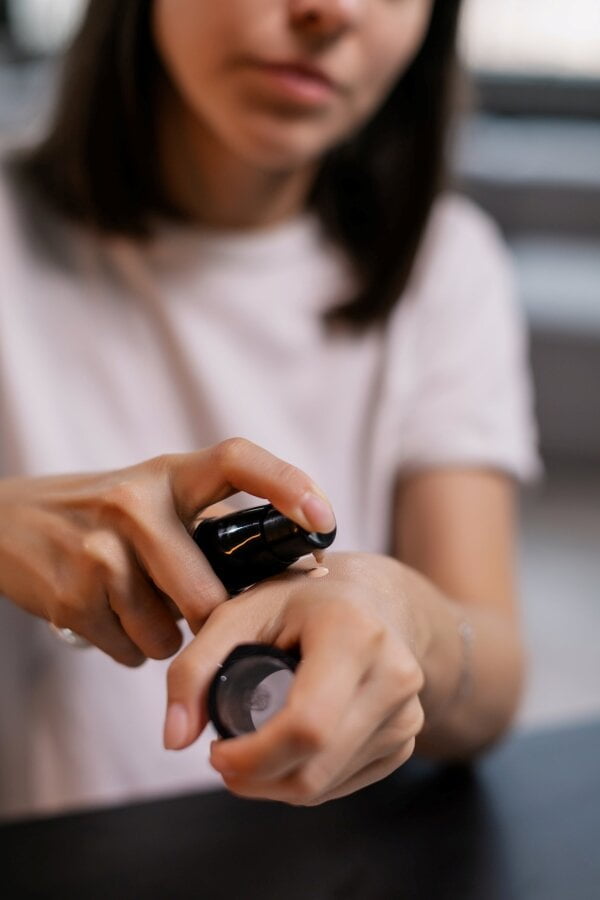
Check ingredients of your foundation for microplastics and other substances.
Octinoxate and oxybenzone in make-up
Some foundations contain SPF to protect your skin from the sun. Handy, of course, but even then it's wise to check the ingredients. Two substances that are regularly discussed are octinoxate and oxybenzone. These UV filters have been linked to damage to nature such as coral and underwater life. Fortunately, there are alternatives. You can read more about this in the article on sunburn. What you can also do, and we think this is a better tip: opt for a foundation without SPF and apply a separate sunscreen underneath. This often provides better protection, as most people simply don't use enough foundation to adequately protect themselves from the sun.
PEG, silicones and mineral oils in make-up
Then there are ingredients like PEGs, silicones, and mineral oils. Substances you'll often find in foundation and concealer because they make products smoother, easier to apply, or make your skin feel soft. For example, PEGs help ingredients mix well and give products a creamy texture. Silicones create a smooth layer over your skin, making makeup look even. Mineral oils help to retain moisture. It all sounds quite useful, but these ingredients also have drawbacks. Silicones, PEGs, and mineral oils are often derived from petroleum and are therefore not exactly the most environmentally friendly choice. Fortunately, more and more beauty brands are showing that it's perfectly possible without these ingredients.


In (cheap) make-up, for example from Chinese webshops, there can be harmful substances that do not comply with European laws and regulations. For example, PFAS has even been found in make-up. The tip therefore is: always buy your make-up from trusted shops. You can read more about PFAS here!
Sustainable foundation and concealer: vegan and animal-free
Vegan or cruelty-free sounds pretty sustainable, right? Unfortunately, these terms don't tell the whole story. A vegan beauty product contains no animal ingredients. Cruelty-free means a product is not tested on animals, but it can still contain animal ingredients. So, if you only use vegan products, you actually need to pay attention to both. ‘But animal testing on cosmetics is forbidden, isn't it?’ we hear you think. That's right, but it's a bit more complicated than that. In Europe, cosmetics and personal care products are indeed not allowed to be tested on animals. However, some brands sell products here that have been tested on animals outside of Europe, for example, because it's mandatory in certain countries. Additionally, there are excepties under European regulations, which means that not all cosmetics sold here are automatically 100% cruelty-free.
Would you prefer to choose a brand that scores well on animal welfare? Then you can look out for certifications such as The Vegan Society's sunflower, PETA-Approved, and Leaping Bunny. Also on the website of Animal Rights Netherlands Are you looking for helpful lists of brands that are completely vegan and cruelty-free?.
Well, it's good to know that vegan and cruelty-free don't say anything about how eco-friendly make-up is. A foundation can still contain microplastics, PFAS, or other questionable ingredients. And ‘natural’ sounds nice, but it's not automatically sustainable either. Some natural ingredients actually cause a lot of land use or pollution. You can read more about this in the article: Why the term ‘natural’ isn't always telling. In short, it remains a bit of a treasure hunt when you're looking for a foundation or concealer that's a better choice on multiple fronts.
Choosing sustainable foundation and concealer, what should you look out for?
Right, by now you’ve got a bit of an idea about which ingredients to steer clear of. But what should you actually look out for if you’re searching for a more sustainable foundation or concealer? After all, simply seeing ‘vegan’ or ‘100% natural’ on the packaging doesn’t really tell you much. A product may still contain questionable substances or be made from ingredients that required intensive farming or deforestation. That’s why it’s wise to look for certification labels too. When it comes to foundation and concealer, Ecocert and COSMOS are particularly good labels to look out for. They set stricter requirements for ingredients and production. If you see a certification label you don’t recognise, you can always check it via The Quality Marks Guide from Milieu Centraal. Also handy: apps that scrutinise ingredients for you. We ourselves like to use INCI Beauty or Think Dirty To quickly see exactly what's in a product. You take a photo of the ingredients list and the app does the rest for you.
And if you want to avoid microplastics, then the free PlasticFree Future app highly recommended by the Plastic Soup Foundation (formerly Beat the Microbead). A handy tip when shopping for make-up online: take a screenshot of the ingredients list for the product you want to buy. It's often found under the ‘ingredients’ heading. This way, you can check a foundation or concealer in a few seconds without having to decipher all the complicated names yourself.


Left: with the app INCI Beauty Can you check if a product is free from harmful ingredients.
Are there more sustainable foundation and concealer options? Yes!
Let's start with the good news: there are an increasing number of sustainable beauty brands bringing sustainable foundations and concealers to the market. In fact, during our search for better, more sustainable options, we found so many brands that it's impossible to create a complete guide. But we wouldn't be the greener list if we didn't give you a few tips!
- Mádara Skincare: vegan, cruelty-free, microplastic-free and with an Ecocert seal. Some products contain mica, which the brand states is responsibly sourced.
- Aprilvegan, cruelty-free, microplastic-free, ECOCERT and COSMOS certified, and often wonderfully affordable.
- Benecos: vegan, cruelty-free, and COSMOS ORGANIC certified. Some products do contain mica, but according to the brand, it comes from certified mines.
- InikaVegan, cruelty-free and free from harmful substances according to INCI Beauty.
- PHB Ethical Beautyvegan, cruelty-free and free from harmful substances according to INCI Beauty. Some products contain mica, which the brand states is free from child labour.
Are you looking for better beauty brands for both make-up and daily care? We previously made a rather complete list. Handy though, take advantage of it!
Keeping foundation and concealer longer
Naturally, it's sustainable to make your beauty products last as long as possible. However, when it comes to foundation and concealer, pay attention to the expiry date. Products used daily with your hands or a sponge can become less fresh over time. You'll usually find the expiry date on the packaging in the icon of an open jar with a lid. The M stands for the number of months the product remains good after opening. For foundation and concealer, this is usually around one year, sometimes a bit longer. Has your foundation become thicker or lumpy? Then it can help to place the product in a cup of warm water for a while, or mixing it on your skin with a drop of skin oil also works wonders. Additionally, it's best not to store make-up in warm places and always close packaging tightly. This way, products often stay good for longer. More storage tips for beauty products can be read here.
Will you choose sustainable foundation and concealer from now on?
Fortunately, more sustainable make-up doesn't have to be complicated at all. Even with a ‘regular’ foundation or concealer, you can quickly make a better choice by paying a little more attention to ingredients and kitemarks. Hopefully, this article has given you more insight into what these products actually contain and what to look out for if you want to make a kinder choice for yourself and for the planet. Fortunately, there are plenty of choices nowadays, so there's a good chance there's a great option among them that suits your skin and make-up routine. And do you have a favourite foundation, concealer, or handy tip? Be sure to share it with us!
You might also find this interesting!
- Looking for long-lasting mascara? We figured that out for you too.
- Or wondering what's wrong with shampoo? Read all about it.
Sources: Niks Nieuws, wherezitwarin.nl, Beat the Microbead, the Washington Post, Dr Jetske Ultee, Oekotest.de, Dutch Health Store, European Commission. Photo credits: main image: Pixabay (Pexels), woman with foundation: Alena Darmel (Pexels), make-up with light background: Hitesh Dewasi (Unsplash), make-up brushes: Raphael Lovaski (Unsplash), hands with foundation: Karolina Grabowska (Pexels).