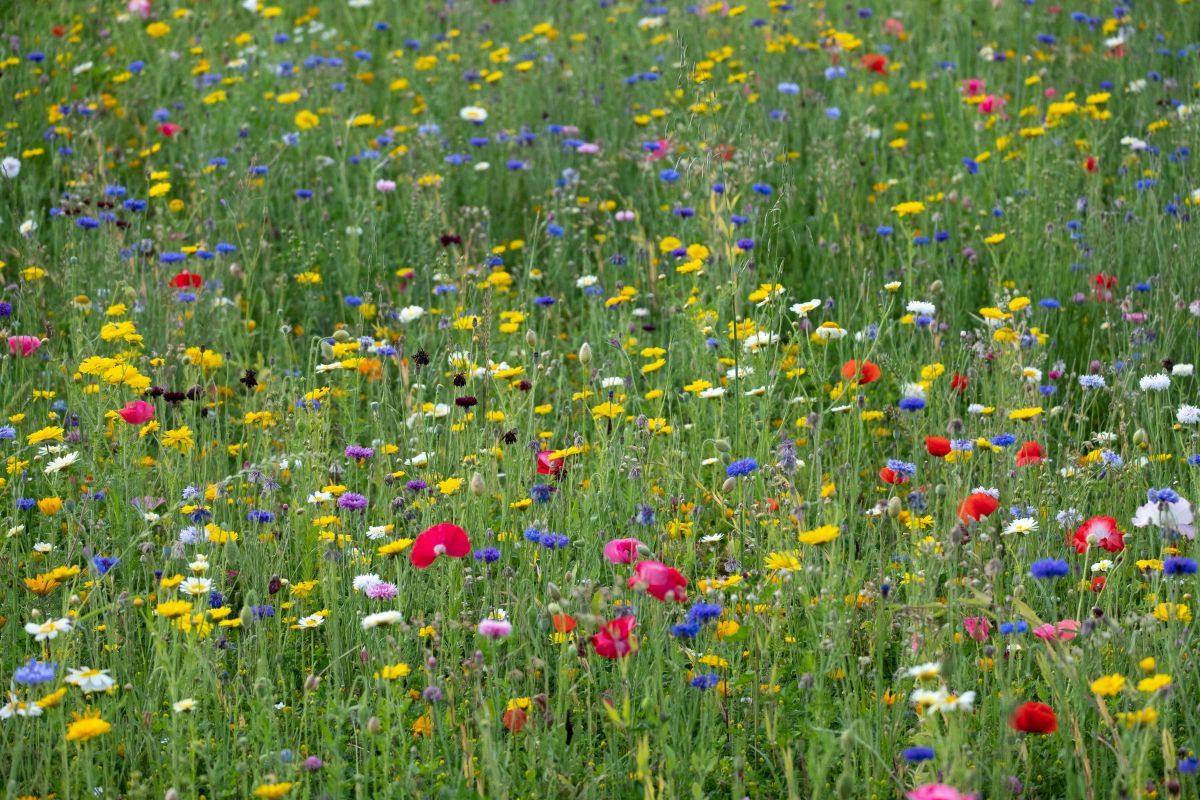

Each year in May, the same appeal surfaces: ‘Don't Mow May’ or ‘Mow Less’. There's little French about it: let your lawn grow a bit wild more often so that flowers can bloom and bees and other insects can find food. More and more garden owners are enthusiastically joining in. Lovely! But that's why each year we're also a little surprised when we see that councils nonetheless send mowers through verges or parks. Hadn't we agreed that we would do less of that precisely now? Is that a bit inconsiderate, or is there a definite thought behind it? We found out and are swallowing our prejudice.
Worms are more important for nature than you think
It might surprise you, but in the Netherlands, those dreary verges play a surprisingly significant role in biodiversity. They form connections between nature reserves and provide food and shelter for insects and other animals. And research from Utrecht University even shows that about 60% of Dutch plant species are found in verges. Because the Netherlands has over three hundred thousand kilometres of verges, they collectively form an enormous network of habitats for plants and insects. This is precisely why municipalities and provinces are increasingly managing these areas with ecological mowing: a method of mowing that takes flowers, insects, and birds into account. It might sound contradictory, but mowing – even in May – can actually help to encourage more flowers.
Well-managed verges have even more benefits: ecological mowing management can improve soil structure and contribute to water storage and drainage.
Sometimes you need to mow the lawn to get flowers.
This also makes it immediately clear why municipalities sometimes mow anyway, while there are also calls to let your own lawn grow wild. On nutrient-rich soil, strong grasses often grow so fast that flowers are pushed out. And what also doesn't help: nitrogen in the soil and mild winters. As a result, grasses often grow extra fast these days. Mowing at specific times gives herbs and flowers room to grow again. Municipalities sometimes mow precisely when grasses are flowering: this draws energy from the grasses and gives herbs more of a chance later in the season (when insects need the most food). Removing the cut grass also has a positive effect: this removes nutrients from the soil, allowing herb-rich grassland to emerge. Ecologists call this ‘shifting’: the soil becomes less nutrient-rich, allowing flowers and herbs to outcompete dominant grasses. So mowing is not as horrible as it seems.
More native species by mowing
Mindblowing: create more flowers and plants by first mowing the lot down? And yet, that's how it is! Typical plants that benefit from this mowing management are knapweed, bird's-foot trefoil and meadow saxifrage, species that you often find in species-rich verges and flowery grasslands. The fact that mowing is necessary also has a historical reason. Many flowery grasslands are part of our old cultural landscape. In the past, grazing animals and farmers who mowed hay kept these areas open. Without management, grasses initially take over, followed by nettles and brambles, then shrubs – and eventually the area slowly turns into woodland (and therefore a less diverse landscape).
Mowing often happens after flowering
Many councils consciously plan a mowing session after spring, for example at the end of May or the beginning of June. By then, many flowers will have already bloomed and dispersed seeds, and insects will have developed. Afterwards, the grass can grow again, often resulting in a second flowering period later in the summer. This means that mowing doesn't spell the end of flowers, but sometimes even the start of a new flowering phase. Moreover, those who look closely will see that verges are often not mown everywhere at once. This is called staged mowing. With this method, patches of grass and flowers always remain standing, so that insects and other animals have a place to shelter and find food, while other areas can *redevelop*. The goal is variety: a landscape in which different stages of grass, flowers, and herbs exist side by side.
Phased mowing also helps insects in another way: many caterpillars feed on young leaves, and butterflies like to lay their eggs on newly sprouted plants. By mowing only a portion of the vegetation at a time, new young plants emerge that insects can benefit from. Some managers also leave the mown grass for a few days before it is removed. This gives insects a chance to crawl away and allows mature seeds to fall to the ground. Afterwards, the clippings are still removed.
ALSO INTERESTING: Mulching for beginners!
Safety also plays a part
Besides biodiversity, municipalities have other responsibilities. For example, visibility must be maintained at intersections, cycle paths, and roads. Regular mowing is therefore necessary to guarantee road safety. Excessively tall and dry grass can also increase the risk of verge fires, especially during hot and dry summers. Furthermore, managers often want to prevent verges from becoming completely overgrown: without management, grasses can initially dominate, followed by nettles, brambles, and eventually shrubs and trees.
But May Or May Not?
Conclusion: so leave that mower standing more often. But don't be too critical of that parks and gardens manager who drives the mower through a verge or park in May. While it often helps in your own garden to not mow for a while, it's slightly different for public green spaces. For these areas, mowing at the right time can actually help to give flowers and herbs more space. In practice, nature-friendly green management is therefore increasingly about smart mowing: less often, at the right time, and with space for flowers and insects. So if you see a municipal mower driving past in May, it might well be that they are actually working to make a verge fuller of flowers, while you leave your mower in the shed at home for a while longer. In short, relax!
You might also find this interesting
- Also see: Improve biodiversity, buy pesticide-free plants!
- Also see: Useful list for better potting soil and garden soil.
- Also see: Bee food banks (Free native flower seeds).
Sources: fidelity.nl, naturetoday.com, maaiminder.nl, uu.nl, vlinderstichting.nl, Cruydthoeck.nl, cnme.nl. Photo credits: Francesco Ungaro, Pexels.