
Plant a few bee-friendly plants in your garden, that's a great start. But did you know that bees need food from early spring to late autumn? In some months there is plenty to be found, but at other times not so much. With a so-called 'bee arch' you ensure that something blooms throughout the season. A handy tool for this is the free bee calendar from IVN, which shows which plants are important for bees and when!
With the Bee Arch, you no longer need a gardener for your garden planning.
Many flowers bloom profusely between May and August. Lavender, butterfly bush, marjoram, and catmint are in full bloom then, attracting masses of insects. Which is, of course, lovely. But for bees and other pollinators, the edges of the season are often the trickiest. In early spring, there’s little to be found, just as many bumblebees and wild bees are waking up. And in autumn, insects are still flying around, while many flowers have already finished blooming. That’s where the bee arch comes in. It’s really nothing more than a smart planning of plants that bloom at different times of the year. This way, you ensure there’s always something for bees and butterflies to eat, from early spring to late autumn. The nice thing is that you really don’t need a garden designer for this. The free bee calendar from IVN shows exactly which plants bloom when and what pollinators benefit most from.
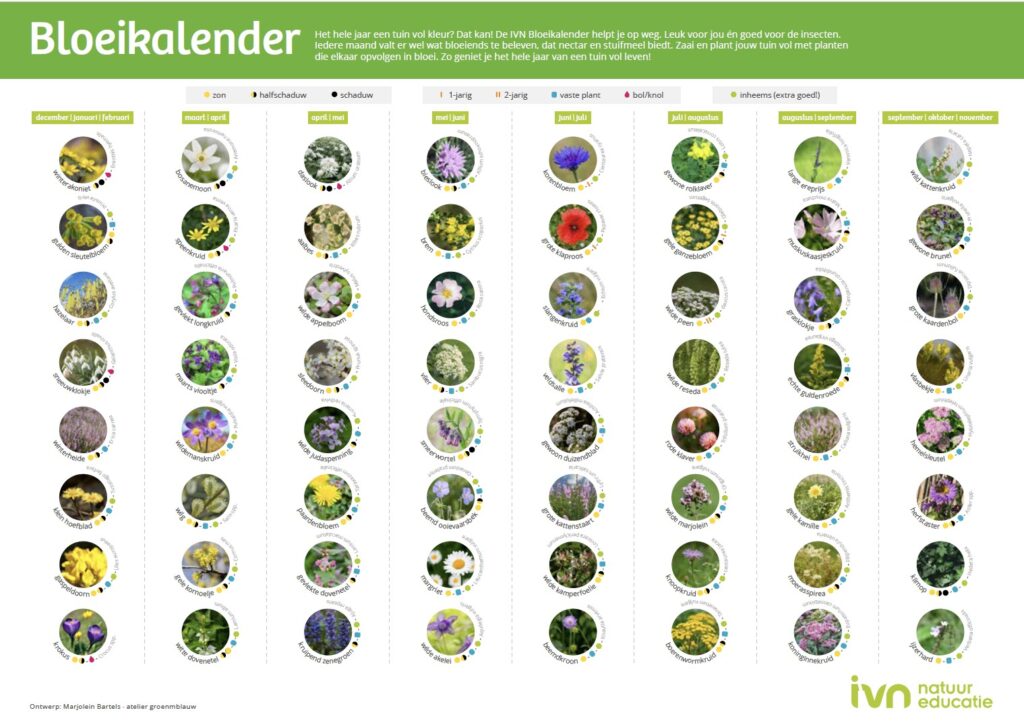
The IVN bee arch lets you download here for free!
How to use the bee-bow in practice
How do you approach that with the bee bow? With the IVN bee bow calendar you can see exactly which months plants are in bloom. This way, you can easily see where in your garden or balcony there are still ‘bloom gaps’ (or perhaps you've already noticed this yourself in previous years). For example, is there little blooming in early spring or in autumn? Then you can specifically look for plants that provide flowers precisely during that period.
The calendar will help you with this. At a glance, you can see when plants are in bloom and what could therefore be interesting additions for your garden or balcony. You can then look up when to sow or plant them. It often also states whether a plant prefers sun, partial shade, or shade, and whether it is an annual, biennial, or perennial. This way, you can gradually create a garden or balcony where there is something for bees from early spring to late autumn.
The calendar also features plants that aren't native. Native species do have an advantage, as they naturally suit our insects. However, to have flowers throughout the entire season, you sometimes can't avoid adding a few other, non-invasive species as well.
ALSO INTERESTING: Top ten native flowers for bees (which often land in your garden spontaneously).
The best bee bow is an organic bee bow
Whatever plants you choose for your bee border, it's best to opt for organic plants, bulbs and seeds. This way, you can be sure they haven't been treated with pesticides that could be harmful to bees and other insects.You can read why pesticide-free plants are important here.By cleverly combining plants that bloom at different times, you ensure there's food for them from early spring to late autumn. And this not only makes your garden or balcony a lot more enjoyable for bees and butterflies, but also for yourself!
You might also find this interesting!
- Also see: 4 simple tips for an animal-friendly garden!
- Also see: flower bulbs that are free of mites are also a good idea.
- Also see: list of better potting soil and garden soil.
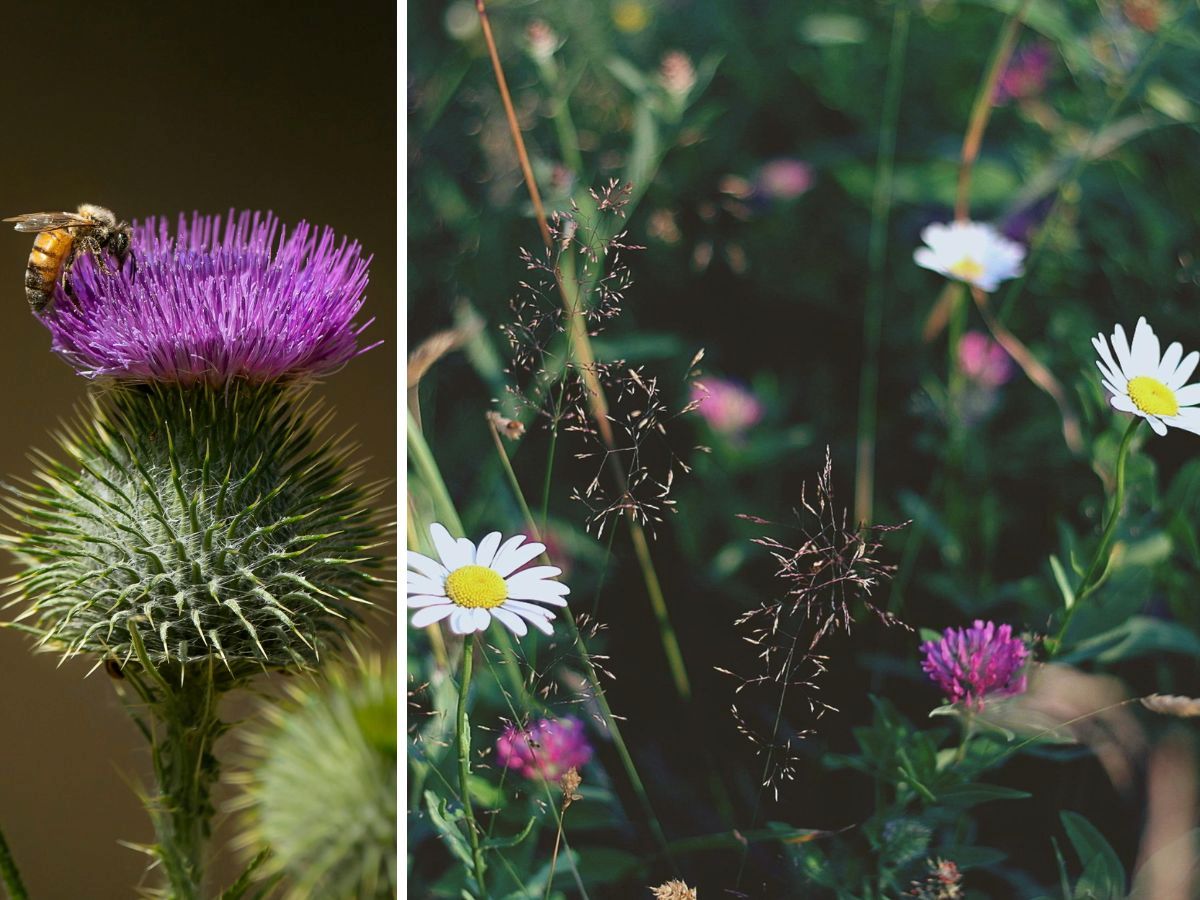
Photo credits main image: Syed Redwan Hoque, Pexels (large fuller's teasel with bee), Hendrikas Mackevicius, Pexels (daisy and clover), other; IVN (flowering calendar).