

Flower bulbs are an easy way to get months of colour in your garden or on your balcony. And with a bit of smart choice, bees, bumblebees and other insects will benefit too. Go for organic flower bulbs and combine species that flower one after the other. When do you plant which bulb and how do you ensure that it returns next year? We explain it step by step.
What is an organic flower bulb anyway?
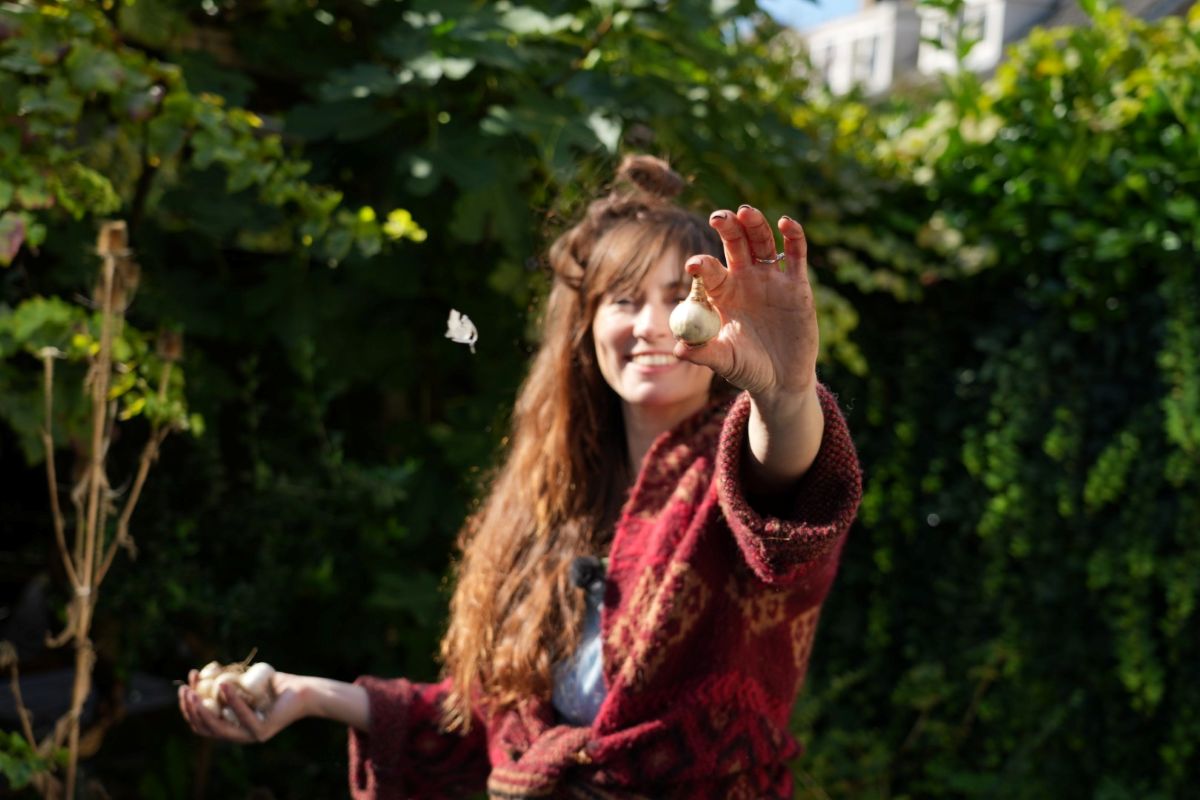
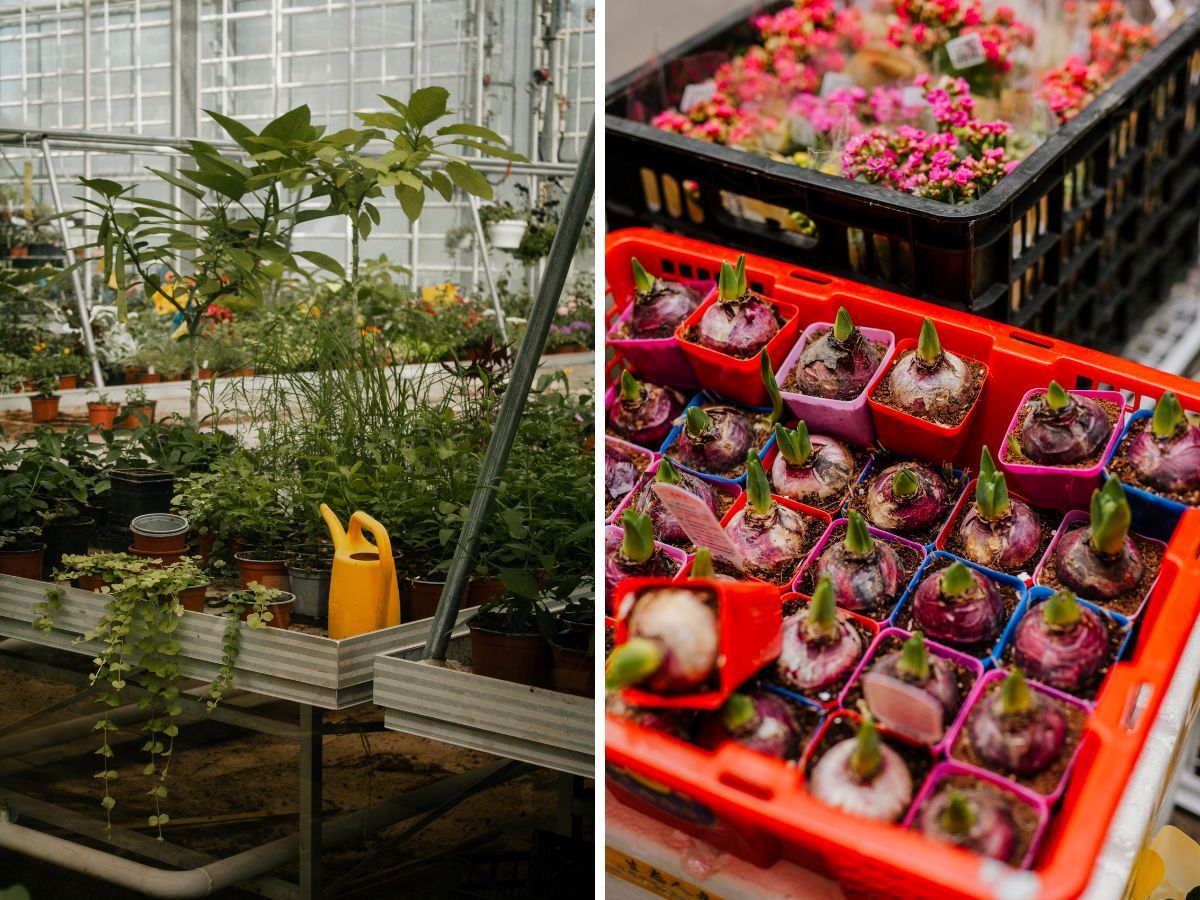
Let's start at the beginning: what exactly is a flower bulb and what is the difference between organic and non-organic? A flower bulb is an underground part of a plant in which nutrients are stored. At its heart is the germ from which the plant and flower will later grow. Surrounding this are fleshy leaves, also known as scales. These provide the bulb with enough reserves to sprout and flower. Incidentally, tubers and rhizomes are also commonly referred to as flower bulbs in everyday speech. Botanically speaking, that is slightly different, but at the garden centre they are usually all lumped together happily. And for the sake of convenience, we will lump them together too, because gardening should be a relaxing activity and not homework.
Here is a short summary of the difference between organic and non-organic flower bulbs. It mainly comes down to how they are grown. Organic bulbs are cultivated without chemical fertilisers and synthetic pesticides. As a result, fewer harmful substances end up in the soil and water during cultivation, which is better for soil life and insects. That does not mean nothing at all is used against diseases and pests: certain natural agents are permitted in organic cultivation. With conventional flower bulbs, chemical fertilisers and synthetic pesticides are allowed to be used, with all the consequences that entails for biodiversity during cultivation and also in your garden, because those pesticide residues do not disappear when the bulb is planted in your garden.
Not all organic flower bulbs are the same
Right, so you have organic and non-organic flower bulbs. But there are more differences! Some flower bulbs put on a lavish show mainly in the first year, while others return for years or even spread on their own. Roughly speaking, you can use them in three ways:
- For one season: You plant these bulbs primarily for a magnificent sea of flowers in the first year. They may return the following year, but will often bloom less profusely. Many tulips are used in this way.
- For several years: leave these bulbs in the ground after flowering. If they like the spot, they will come back every year just like perennials. Think of certain daffodils, hyacinths and tulips.
- For naturalising: these bulbs not only come back, but can also multiply. In this way, you slowly get more and more of them. Snowdrops, crocuses, squills, snowflakes and various daffodils are well-known naturalising bulbs.


Organic flower bulbs are grown without chemical-synthetic pesticides and artificial fertilisers, and are therefore a kinder choice for soil life and insects.
Why choose organic flower bulbs?
On the outside you can barely see the difference between a conventional and an organic flower bulb. The way it is grown does differ, however. In conventional bulb growing, a relatively large number of crop protection products are used. The cultivation of lily bulbs in particular is among the most chemical-intensive crops in the Netherlands. Tulips are also high on that list. That doesn't always stay neatly on the bulb field. The RIVM found pesticide residues in the ambient air around homes near flower bulb fields, on doormats and in house dust. Residues were also found in the urine of local residents. The measured quantities in air and urine were not above the risk thresholds, but according to the RIVM, more research is needed into the risk of all substances combined. Moreover, the scale of flower bulb cultivation is substantial: according to the CBS flower bulbs were grown on over 27 thousand hectares of Dutch soil in 2024. Plenty of reason, therefore, to make a conscious choice even with something as small as a bulb.
What are organic flower bulbs
An organic grower does not get that certification for free. They have to comply with European rules for organic agriculture. Artificial fertilisers and chemical-synthetic pesticides are not permitted, although organic does not mean that a product to combat diseases or pests is never used. For this purpose, there is a limited list of products that may be used under certain conditions. The organic grower tries to prevent diseases and pests as much as possible, for example with a healthy soil, wide crop rotation and green manures. Sometimes flowering field margins are also created to attract beneficial insects. This requires more space and the harvest can turn out lower. Therefore, organic flower bulbs are usually somewhat more expensive.
On the other hand, soil and water are put under less pressure and there remains more room on and around the bulb field for soil organisms, insects and other animals. That advantage does not stop at the bulb field. Residues of pesticides can remain in a conventional bulb and later end up in the plant, the pollen and the nectar. Bees and other insects can then ingest those pesticide residues. So you plant flowers to help them with food, while at the same time they ingest pesticides. You avoid that with organic flower bulbs.
Buy your organic bulbs in the right season
With flower bulbs, timing is everything. Spring-flowering bulbs are bought and planted in autumn. Summer-flowering varieties, such as dahlias, lilies and gladioli, go into the ground in spring instead, as soon as the risk of night frost has passed. No time to plant your new bulbs right away? Open the packaging so that air can get to them, and store them temporarily in a dark, dry and cool place. It is best not to leave them lying around for months: the sooner they are in their final spot, the smaller the chance that they will dry out or go mouldy. And here is a nice, sustainable shopping tip to make your choice completely eco-friendly: when selecting your flower bulbs, also take a look at varieties that naturally occur in our region. Examples include the wild daffodil, wild tulip, wood anemone, wild garlic and autumn crocus. Would you like to know why native species are so valuable in your garden? Find out more about native plants here. And what about that quintessential Dutch tulip? It doesn't actually originate from the Netherlands at all, but ended up here in the sixteenth century. That doesn't make it any less lovely, of course: in spring, tulips provide a hefty dose of colour and do brilliantly in the garden as well as in pots. But make sure you buy them organic, then!
Extend the flowering period with flower bulbs
Those organic flower bulbs are truly indispensable in your sustainable garden, as they are also incredibly useful for filling gaps in the flowering calendar—you know, the schedule you use to ensure that something is blooming in your garden in every season. Snowdrops and winter aconites already show their faces when the rest of the garden still seems to be sleeping. Precisely in those early months, there is still little nectar and pollen to be found for the first bees and bumblebees. By using different varieties one after another, you extend the blossom arch and something stays in bloom for months. That is not only good news for insects. The insects that are drawn to the flowers are, in turn, food for birds and other animals. And for ourselves, such a first snowdrop amongst all the wintery greyness is certainly no punishment either.
With these flower bulbs you spread the flowering over a large part of the year:
- January and February: snowdrop and winter aconite
- February and March: crocus and snowflake
- March and April: daffodil and squill
- April: hyacinth and grape hyacinth
- April and May: snake's head fritillary, tulip and summer snowflake
- lily of the valley
- May and June: bluebell
- May to July: allium
- Augustus: dahlia
- September to November inclusive: autumn crocus, autumn daffodil and cyclamen
The exact flowering time depends of course on the species, the weather and the spot where the bulb is planted. A sunny, sheltered garden is often slightly ahead of a cooler garden.


A handy visual of spring-flowering bulbs can be found here and beautiful colour combinations you will find here.
Planting and caring for organic flower bulbs
Spring-flowering bulbs, such as tulips, daffodils, hyacinths and snowdrops, are planted in the autumn. This can usually be done from September to December inclusive, as long as the ground is not frozen or soaking wet. Summer-flowering bulbs such as dahlias are planted in the spring, after the risk of night frost has passed.
How to plant flower bulbs
- Choose a spot where rainwater can drain away well. In soil that stays wet for a long time, the bulbs can rot.
- Plant naturalising bulbs in a quiet spot where you do not constantly hoe. This gives them the space to spread out.
- Use a trowel or bulb planter. Especially if you are planting a lot of bulbs, a bulb planter saves a lot of fussing about.
- Place the bulb with the point upwards and the rounded side downwards. Can't you see a clear top or bottom? Then lay it on its side; the shoot will find its own way up.
- As a rule of thumb, maintain a planting depth of approximately three times the height of the bulb.
- Leave a space of about three times the width of the bulb between the bulbs. For a natural effect, you can scatter them loosely first and plant them where they land.
- Water the soil a little after planting if it is dry.
How to care for flower bulbs after flowering
- Deadhead tulips and daffodils by cutting off the faded flowers. That way, the plant does not waste its energy on seed production, but puts it into the bulb instead.
- Allow the leaf and stem to die back naturally. Through the leaf, the bulb stores energy again for the following year.
- Do not remove the stems and leaves until they are completely yellow and withered. Not the prettiest moment for the border, but important if you want flowers again next year.
Make a bulb lasagne in a pot
No large garden? No problem. Organic flower bulbs also do very well in a pot on your patio or balcony. By planting bulbs with different flowering times in layers on top of each other, you make a bulb lasagne. The late-flowering and usually largest bulbs go at the bottom, the early-flowering and smaller bulbs at the top. This way, something new emerges from the ground for months on end. On top, you can place evergreen plants, such as coral bells, winter heather or pansies. Choose a pot that is deep enough and make sure there is a hole in the bottom so that excess water can drain away. Even in a pot, maintain a planting depth of about three times the height of the bulb for each layer. A small balcony, but soon a whole spring parade. Fancy some flower bulbs? This is our list of organic garden centres, plant shops and webshops!
You might also find this interesting
- Also see: sustainable gardening: thought about peat-free potting soil yet?
- Also see: This is how you help birds through the winter.
- Also see: tips for getting your garden ready for winter (also for garden animals).
Sources: RIVM, allaboutflowerbulbs.nl, growth.nl, gardenersworldmagazine.nl. Photo credits: Lisa Fotios (Pexels)