
Blimey, it's hot! Our weather seems to be lurching from one extreme to another more and more often. And it's not just us struggling with it. Birds, hedgehogs, insects and other garden critters are also finding it increasingly difficult when water becomes scarce. Biologists and foresters are worried about this. The good news? You don't need to create a large wildlife garden to give animals a helping hand. With a few simple adjustments, you can already provide more water in your garden, which can greatly benefit the animals. Our garden expert Amanda shares her best tips.
Help the animals through the summer!
Animals need water for drinking, washing, and sometimes even living in. Normally they find this in puddles, ditches, gutters and other small bodies of water. But due to climate change, we are increasingly experiencing longer periods of drought. And then many of those water sources disappear. Birds, insects, amphibians and other garden animals have a tough time because of this. Without enough water, they weaken and in the worst-case scenario, they can even die. Do you have a garden or a balcony? Then you can easily help, thankfully. The animals can certainly use that help. And it only takes a few minutes a day. What do we say? A week!
The secret? More water in the garden!
When you think of more water in the garden, you probably immediately think of a pond. Which is, of course, fantastic. If you can, we say: go for it. Research shows that garden ponds are an oasis for frogs, newts, and all sorts of other animals. They come to drink, eat, shelter, and sometimes even live there. So, it's nice and busy. But a pond doesn't suit every garden. Perhaps you have a balcony, a small city garden, or young children running around. Fortunately, that doesn't have to be a problem. Even without a pond, you can create water spots that animals will appreciate. Before you know it, you'll be welcoming birds, insects, frogs, dragonflies, and damselflies into your garden. And that's a lot easier than you might think.
This is how you think of all the animals
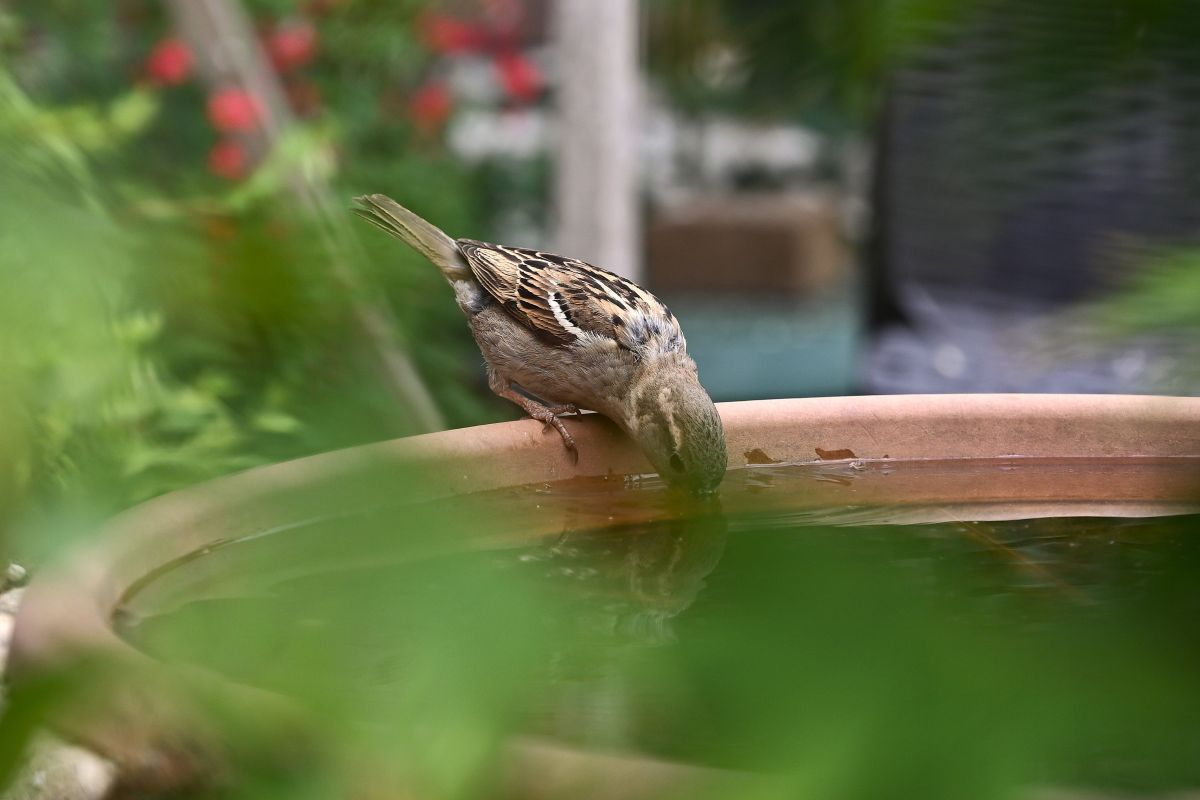
Pop into a charity shop and see if you can find some nice bowls, dishes or plant pots. There's a good chance you'll have something at home too. It's best to provide various types of water spots, as not every animal has the same needs. For birds, a bowl can be a little deeper. Insects, on the other hand, benefit more from a shallow water source. A simple solution is to place one or more stones in the water, preferably sloping. This way, insects can land safely and drink without drowning. You could also opt for several small bowls and pots. Don't have a garden and at most a French balcony? Then you can even fill a few bottle caps with water. A small gesture, big pleasure for bees and other insects.
For birds and insects, it makes little difference whether a drinking bowl is on the ground, raised, or hanging. This is different for hedgehogs. They prefer to drink from a shallow dish on the ground. An old tapas dish or a food bowl for rodents works fine. And where do you put such a water spot? Preferably in the shade. In direct sunlight, the water heats up quickly and, what's more, algae develop faster. A cool spot is therefore not only more pleasant for the animals, but also ensures that the water stays fresh longer.


Insects need so little: a piece of fruit or a soda cap with water is enough for them!
Organic fruit in the garden
Leaving out water isn't the only way to help animals during dry spells. Ranger Arjan Postma suggests also putting out some organic fruit in your garden or on your balcony. Fruit is largely made up of moisture, and many animals can benefit from that. Don't leave the fruit out for longer than a day to avoid unwanted visitors. By leaving it out both day and night, you'll also help both diurnal and nocturnal animals. Just make sure to choose unsprayed, organic fruit. That way, you'll prevent animals from coming into contact with pesticides.
Caring for butterflies in the garden
Do you want to help butterflies and admire them more closely more often? Then place some overripe or rotting fruit on a saucer. This is a clever move, especially in the autumn. Perhaps you've harvested more apples or pears than you can eat, or there's fruit that's past its best. While many flowers have already finished blooming then and offer less nectar, rotting fruit provides a valuable food source for butterflies. Do place the saucer in a sunny spot. Butterflies are true sun-worshippers and like to show themselves there. Do you want to attract even more butterflies to your garden? Then also check out the tips from butterfly man Nicky: This is how to ensure more butterflies in the backyard.
Mini pond without fish
Do you find a couple of watering bowls a bit too modest and want to take it a step further? Then a mini-pond is a fun and accessible option. Think of an in-ground cement tub filled with rainwater and aquatic plants. You can build such a mini-pond relatively easily yourself, and it can quickly become a popular meeting place for all sorts of animals. It's best to choose aquatic plants that purify the water and add oxygen. It's better to skip the fish. They pollute the water and also like to eat the eggs and larvae of amphibians. Aquatic plants, on the other hand, help keep the water clear. Some animals, such as newts, even depend on certain aquatic plants. And... don't forget the edges either. Place a few stones along them to create a gentle slope. This allows animals to easily get in and out of the water. Bonus tip from us: pond stones are regularly offered for free on Marktplaats. Read more about building a natural pond yourself here!


Left: a mini pond in the making, still missing stones needed so that animals can easily get in and out. Right: a gardeny pool measuring 1 x 1.25 metres inhabited by 15 frogs.
Don't you get bitten by mosquitoes with all that water in the garden?
We get this question often. Because it's lovely, all that extra water in the garden, but won't you soon be surrounded by mosquitoes? Luckily, that's not the case at all. Mosquitoes like stagnant and polluted water. Do you have a water dish? Then change the water regularly. It takes a minute at most. Do you have a mini or regular pond? Then you could consider a small fountain (lovely soothing sound) or a aeration pump. This keeps the water moving and helps make it less attractive to mosquitoes. Furthermore, such a babbling sound immediately creates a bit of extra atmosphere in the garden. Even better news: nature helps out. Frogs love mosquitoes, mosquito larvae and snails. By placing aquatic plants in and around your pond, you make your garden more attractive to these natural mosquito predators. So, having a frog in the garden is not only pleasant but also very useful.
More water in the garden to brave the drought
Whether you opt for a bottle cap full of water, a bird bath, or even a complete mini pond, every extra water source helps. Due to climate change, animals are increasingly facing dry periods, and it is precisely then that small gestures like these can make a big difference. The beauty is that you don't need a large garden, green fingers, or hours of free time. Just a few minutes a week are often enough to give birds, insects, hedgehogs, and other garden animals a helping hand. Do you have any clever tips for helping animals during dry periods? Please let us know via the contact or follow buttons at the bottom of the page. We are always eager to hear good ideas!
More green tips from thegreenlist.nl
- Also see: More animals in the garden? Go for a green garden fence!
- Also see: what's wrong with potting soil and how can you sustainably replace it?
- Also see: buy poison-free plants and bulbs!
Sources: butterflies. Photo credits: main image: Patrick Nizan (Pexels), others: Amanda Sniekers.