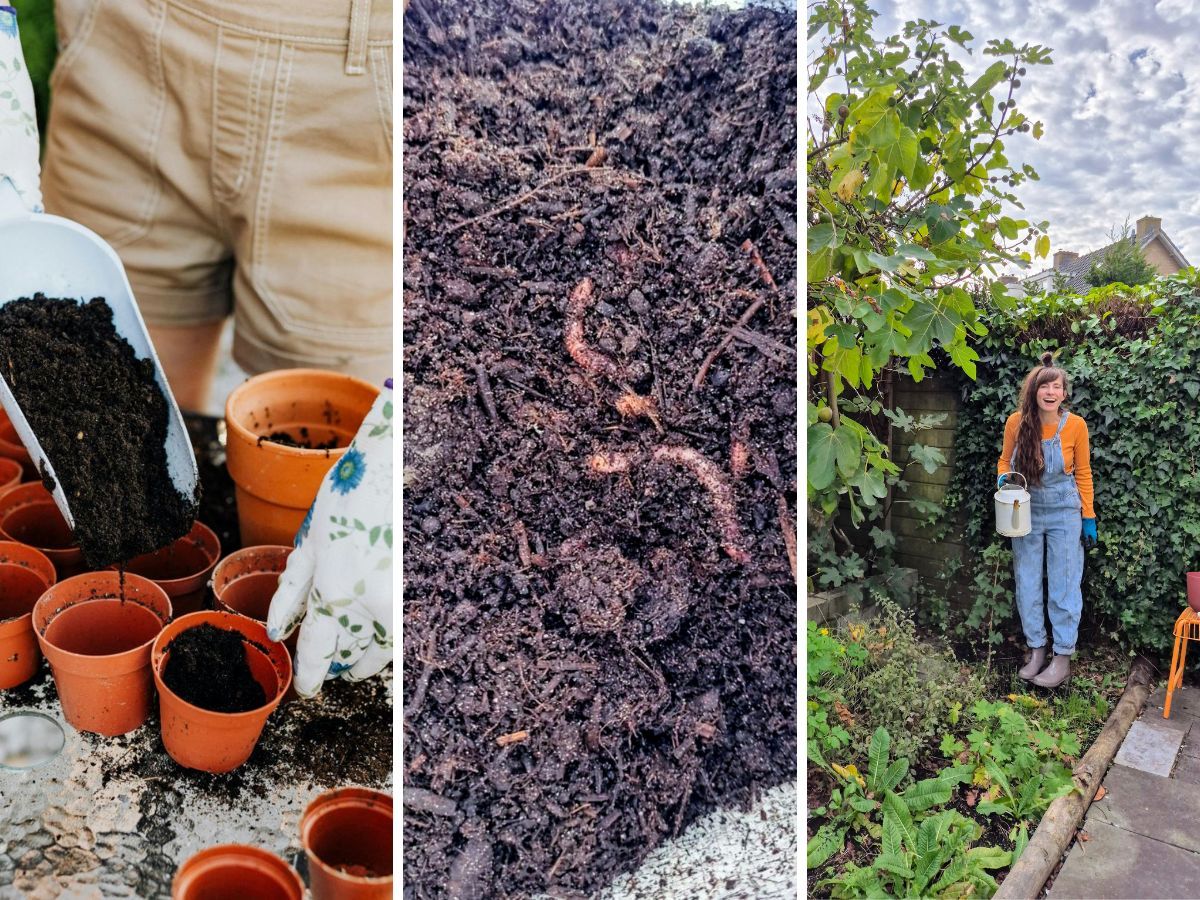
How often do you drive to the garden centre for a bag of potting soil, without thinking about what's in it? There's a good chance that bag contains peat. And that's quite odd, because peat-based potting soil is not only bad for the climate, but actually not that great for your garden either. While you thought you were being wonderfully sustainable with your plants and green fingers, it turns out there's a rather polluting story hidden behind that innocent bag of potting soil. What exactly is wrong with peat, and what alternatives are there?
Sustainable gardening without peat
Most potting soil contains peat. That might sound fairly harmless, but peat is extracted from peatlands: wet natural areas where huge amounts of CO₂ are stored. To extract peat, these areas are first drained and then dug up. And that’s precisely where things go wrong. The stored carbon is released and unique natural habitats disappear. It’s rather ironic, really, because many people buy potting soil precisely because they want to enjoy gardening. Yet peat-based potting soil isn’t a particularly sustainable choice at all. Moreover, because Dutch peatlands are protected, we import a lot of peat from other countries. This adds a significant number of hidden transport miles and emissions to the equation.
What's wrong with potting soil?
The problem with a lot of potting compost lies primarily with peat. It's a popular ingredient in potting compost because it's cheap, retains water well, and plants grow easily in it. Handy for growers, then, but less handy for the climate. Peat is harvested from peatlands: wet, marshy natural areas where plants and mosses have been accumulating for thousands of years. Perhaps not the sexiest landscape on earth, but incredibly important. This is because peatlands store gigantic amounts of carbon. In fact, globally, more carbon is stored in peat soil than in all the world's forests combined.
To extract peat, these areas are first drained and then excavated. And that is precisely where things go wrong. The stored CO₂ is released and unique natural habitats are lost. Globally, the destruction of peatlands is estimated to account for 5 to 7% of all CO2 emissions. That is even more than emissions from aviation. It is not for nothing that peatlands are sometimes called ‘underground rainforests’. They not only help to store CO2, but also contribute to biodiversity, water management and cooling during extreme heat. And recovery is incredibly slow: new peat grows by an average of just one metre every thousand years. So it’s rather bizarre that we’re excavating such ancient soil for something that ultimately ends up in a flowerpot or garden border.
The Netherlands is now one of Europe's largest users of peat. Because Dutch peatlands are protected, we import enormous quantities of peat annually from countries such as Estonia, Latvia, and Finland. And no, all that peat doesn't just end up in our back gardens. By far the largest proportion is used in the horticultural sector. So there's also a lot of work to be done there. But fortunately, you can also do something about it.
Sustainable gardening: what can you do?
The main message is actually very simple: avoid peat-based potting soil as much as possible. However, that's sometimes easier said than done. In the world of potting soil and garden soil, terms like ‘bio’, ‘biological’ and ‘natural’ are also thrown around a lot. Sounds sustainable, but that doesn't always say anything about what's inside the bag. A small pot greenwashing so, pun intended. To make matters even worse: Potting soil that is officially organic doesn't really exist at all., while it often stands on a bag. Usually, ‘organic’ just means that no artificial fertiliser has been used and that the soil is suitable for organic farming. But in the meantime, peat can still be included. In fact, that's often the case.
Sustainable alternatives to potting soil
Fortunately, there are now plenty of better alternatives to peat-based potting soil. These are great options to start with:
- Nowadays, there are increasingly more peat-free alternatives based on, for example, coconut fibre, wood fibres or rice husks. Here you'll find a list of better types of potting soil and garden soil.
- An even better alternative is leaf mould: composted leaves full of nutrients and soil life. Also see: mulching for beginners: what is it and what are the benefits?
- Even more sustainable: make your own compost from organic waste. This can easily be done in a compost bin, wooden box, or even a heap in a corner of the garden. We're fans of the Worm farm of the Worm Hotel. Do you have little space? Then a Bokashi bucket A great solution. It's no coincidence that many gardening enthusiasts call compost ‘black gold’.
- Are you vegan? Also, check if your potting soil is vegan. Because unfortunately that is not always the case.
- Ask your garden centre if they're willing to sell more peat-free products. As long as there's demand for them, the supply will change more quickly too.


Left: getting started with a worm hotel to make your own compost from vegetable, fruit and garden (GFT) waste and right: visiting a large worm farm where compost has already been made by the worms.
Go for peat-free compost!
The solution for our gardens is surprisingly simple: don't use peat-based potting soil! This is also much better for your garden. It is actually not a suitable product for our little gardens at all. It is acidic (which is bad for many plants) and it contains no life. Moreover, the added nutrients are already depleted after three months. Therefore, the advice is to use peat-free soil for garden and houseplants. Take a critical look at the bag of potting soil in your shed and leave it in the shop when it contains peat. Because as long as it is sold, it will be made! And don't forget to keep on levering up tiles. The more greenery, the better for the planet!
You might also find this interesting
- Also see: help nature, buy poison-free plants!
- Also see: From organic waste to compost: how does it work?
Sources: IUCN, Wed , Parole, peat-free.nl, Dave Goulson - the garden jungle. Photo credits: main image Karolina Grabowska (Pexels), other: thegreenlist.nl.