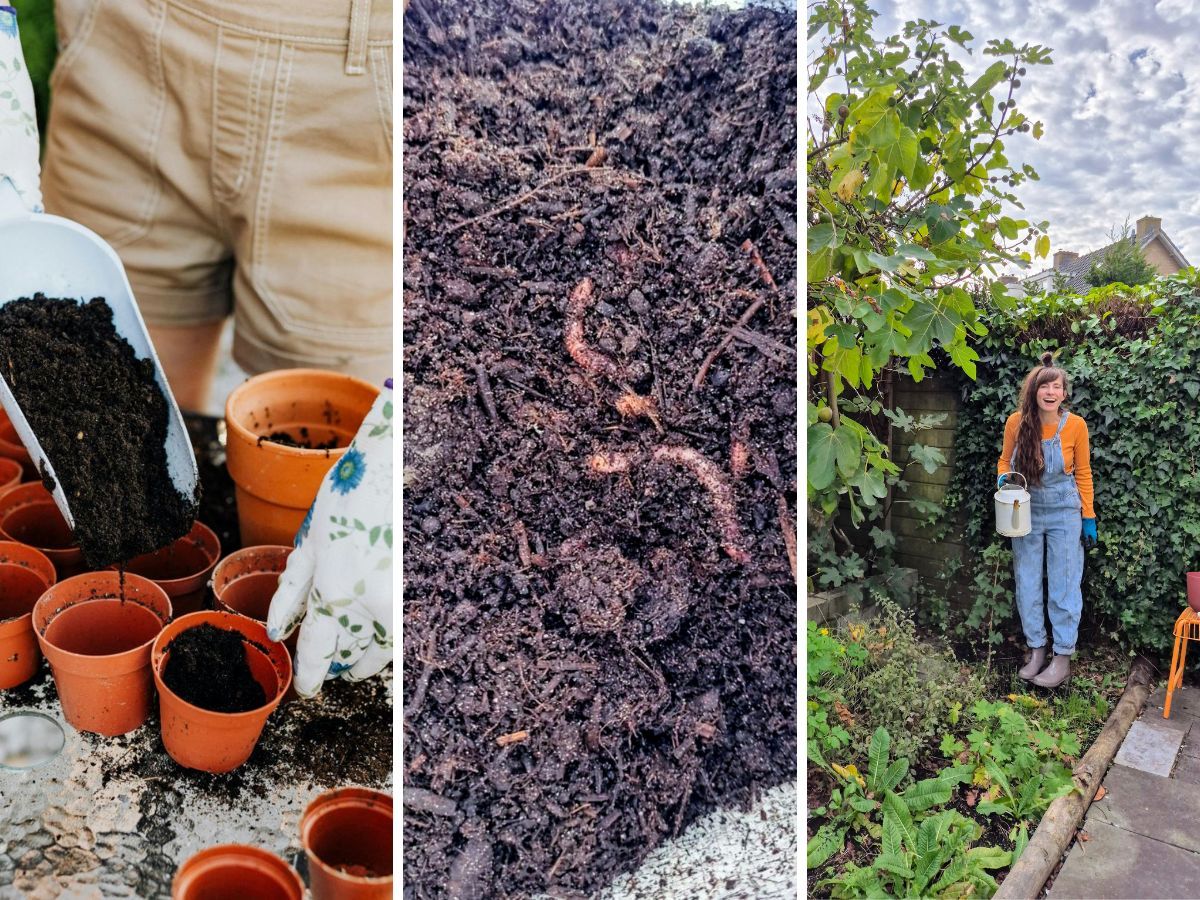
Everyone who thought they were doing their bit for the environment by using organic potting soil or organic garden soil should pay attention. Because there's a good chance you've put something in your garden that you thought was a sustainable choice, when it's not that simple at all. Officially, organic potting soil doesn't exist. Not even if it's written in big green letters on the packaging. In fact, if you *really* want to buy greener potting soil or garden soil, you'd be better off looking at something else.
Why organic potting soil (and garden soil) actually doesn't exist
It's hugely confusing when you go looking for ‘better’ potting compost or garden soil at the garden centre. Because organic products are usually a good choice in everyday life, it feels very logical to go for a bag with big words like ‘bio’ and ‘organic’. But what are you actually buying? Well, erm... it turns out not to be an organic product. Because, surprise, ‘Organic potting soil' doesn't officially exist. Potting soil is not a biological product and therefore cannot receive an organic label. What manufacturers usually mean by 'biological' is that the potting soil is suitable for organic farming because it contains no artificial fertilisers. That sounds good, of course, but it says nothing about the rest of the contents. And that's often where the biggest problem lies. Because organic potting soil can still contain peat. In fact, it very often does. And that's precisely an ingredient you'd rather avoid.
Why peat is a problem
Peat is found in a lot of potting compost because it is a convenient ingredient for growers and manufacturers. It is light, cheap, retains water well and plants grow easily in it. For this reason, it has been used in potting compost and garden soil for years. Sounds ideal, you might think. Except there is a rather significant downside.
Peat is actually harvested from peatlands: wet, marshy natural areas where plants and mosses have decayed very slowly over thousands of years. Enormous amounts of CO2 are stored in that wet soil. To extract peat, these areas are first drained. Then the peat can be dug up and processed into potting soil. And that's precisely where things go wrong. The draining and excavation release a lot of stored CO2 and destroy unique natural habitats that are hardly able to recover. Restoration is incredibly slow. It takes about a thousand years to form just one metre of new peat.
Because Dutch peatlands are protected, much of the peat for our potting soil comes from countries such as Estonia, Latvia, Finland and Sweden. After extraction, dry, barren areas often remain there. And all for something that eventually disappears into a plant pot or garden border. Moreover, peat is naturally quite acidic, meaning manufacturers often have to add extra substances to make it suitable for plants. That is why more and more experts and organisations are saying: when buying potting soil, it's better to first check if it is peat-free.
Here are some things to look out for when buying potting soil and garden soil.
Okay, so you're standing in the garden centre in front of a wall of bags of potting soil and garden soil. Chances are they all have terms like ‘organic’, ‘eco-friendly’, and ‘natural’ on them. But what's actually the best choice? As far as we're concerned, this is the most useful order to follow:
Prefer peat-free potting compost and garden soil
This is actually the most important step. Does the packaging clearly state ‘peat-free’? Then you're usually making a much better choice. Fortunately, there are increasingly more alternatives nowadays based on compost, coconut fibre or wood fibres, for example. Wool pellets, such as those made by Gold Wheat Grains. They are made from sheep's wool and actually work a bit like a natural sponge in the earth. They retain water well, release nutrients slowly, and thereby help plants to stay healthy for longer. So, handy, especially during dry periods in the summer, and then you won't need any potting soil or garden soil at all!
2. Can't seem to get a turf-free product? Then look for a better label.
Sometimes you can't avoid potting soil that still contains peat. If that's the case, at least check if it has a kite mark, such as the MPS mark. This means that the raw materials have been harvested in a more responsible way and, for example, do not come from protected nature reserves. That is, of course, better than no kite mark at all. But it's still not completely green. Peat is still allowed to be used within this kite mark, and a lot of stored CO2 is still released when it's dug up. That's why our preference remains: peat-free first, then look at kite marks. If you're unsure about a kite mark, you can always check the Labels Guide check Milieu Centraal to see what a hallmark really means.
3. Do you only see ‘bio’ or ‘organic’? Then look beyond that term
Organic might sound like the best choice, but it only means that no artificial fertilisers have been used and that it is suitable for organic farming. It says nothing about peat or how harmful the rest of the contents are. Ideally, you should therefore look for potting soil that is suitable for organic farming and is peat-free!
Biological and peat-free potting compost (or garden soil) is actually your brief
It's quite bizarre, really: you try to make a better choice at the garden centre, and precisely there you're mainly influenced by words like ‘bio’ and ‘organic’. Meanwhile, the truly important information is often hidden away in small print on the back. Fortunately, stricter European legislation is in the pipeline (September 2026) that will ... greenwashing must be addressed. Until then, it's mainly a case of paying close attention yourself. Our advice? First, check if potting soil is peat-free. And is it also suitable for organic farming? Then you're all set.
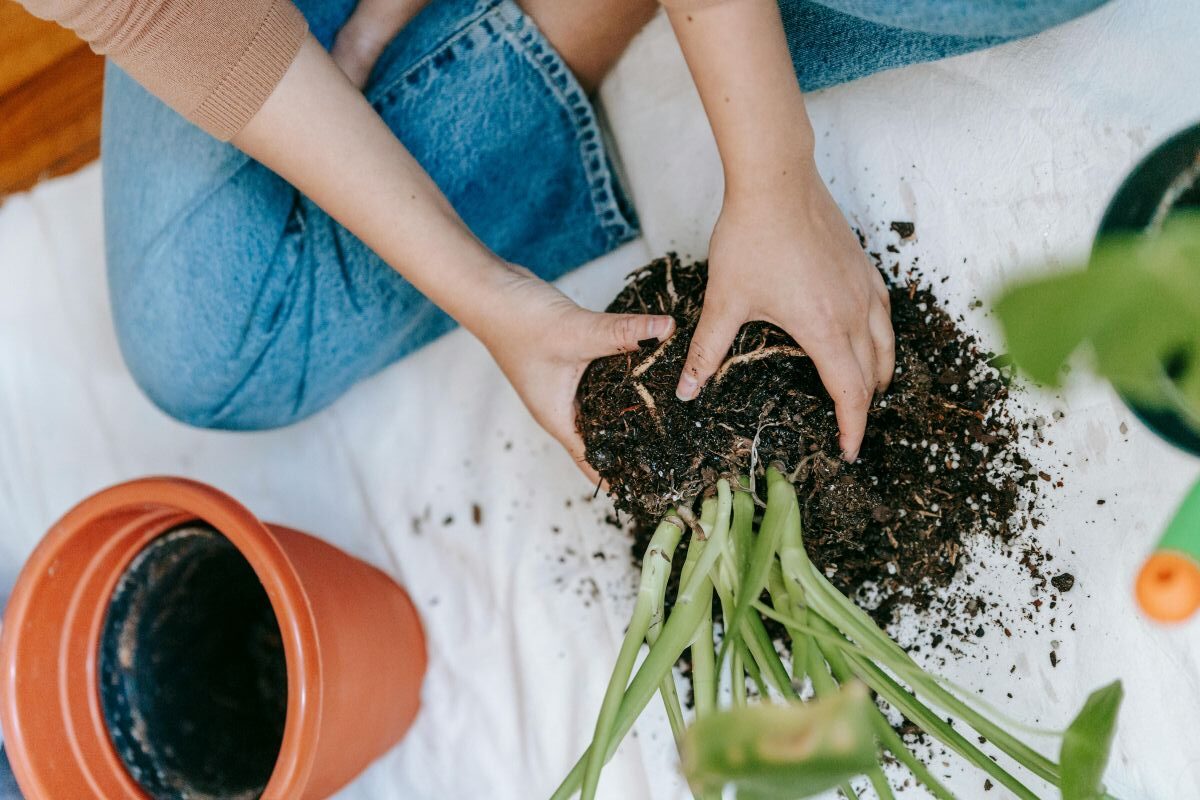
Sources: Radar 20 April 2026, Consumer Association. Photo credit: Teona Swift (Pexels).